


Report Confirms Seattle’s 2024 ‘Gig Worker’ Law Has Been a Miserable Failure
“A new National Bureau of Economic Research study confirmed what the numbers already showed: higher per-delivery pay was completely offset by fewer deliveries and lower tips. Active drivers saw zero net gain in monthly earnings.”
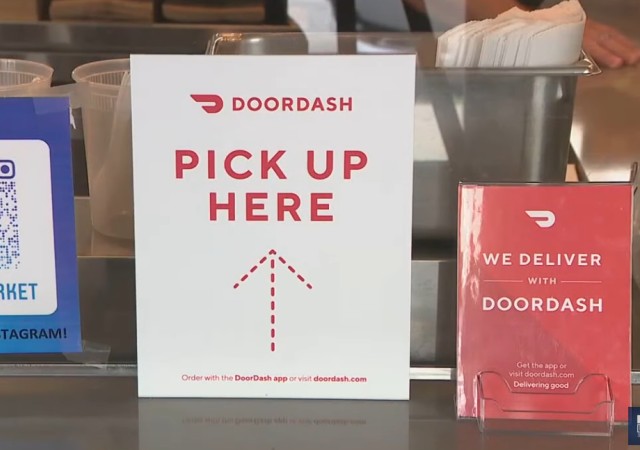
Back in 2024, Washington state was seeing “the second-highest price hikes for fast food menu items, which rose 6.1%” in early 2024. This was thanks in part to a Seattle ordinance that took effect at the beginning of that year, which raised the minimum wage for gig workers and delivery drivers. It backfired when people started deleting food/grocery delivery apps like DoorDash in protest of the insane add-on fees and price increases.
Here we are, some two years later, and unfortunately for those who pushed for this ordinance, not much has changed:
Things slowed down [a few months after the ordinance took effect]. Orders weren’t coming in; they still aren’t coming in like they used to. One worker told me she can be logged on for hours without receiving an order. Customers still want the convenience, but many balked at the fees that the apps tacked on after the new law. The companies say the fees are necessary.
That pattern is consistent with a recent study by the National Bureau of Economic Research —wages were higher in the first few months and then dropped. The study also found that months later, drivers have more unpaid idle time, and drive longer distances between orders.
The National Bureau of Economic Research study (PDF) came out in December, and the information it laid out about the devastating effects the law had on the gig worker community in Seattle was staggering:
In the first few weeks after the new minimum wage was enacted, DoorDash reported a decline of 30,000 orders, while UberEats saw a 30 percent drop in order volume. Reports indicated that drivers were earning less than half of what they had prior to the ordinance’s passage.
[…]
While finding that per-task base pay doubled under the new wage, researchers also saw a corresponding decline in driver tips and a reduction in the number of tasks completed by each driver. As a result, within one month of the law’s implementation, the most active drivers had experienced no increase in monthly total earnings, according to the researchers. There was also evidence of increased wait times between tasks and more idle (i.e., non-earning) time spent by deliverers.
The researchers conclude that in a labor market with free entry—which is the case with gig-based delivery work, given that new drivers can always sign up and join a platform—increases in base pay are fully offset by these declines in tips and order volume.
In July 2025, DoorDash revealed that it “operated at a loss in 2024” because of the law, and as a result, fees would be increasing again (bolded emphasis theirs):
Starting this month, consumers in Seattle will see increased service fees on all deliveries. To be clear, we are increasing some fees in an effort to continue delivering in the city–a market in which DoorDash operated at a loss in 2024. Despite clear data showing that Seattle’s delivery policies have led to lower earnings for Dashers, fewer orders for merchant partners, and a more expensive experience for consumers, Seattle’s leaders have once again forced through extreme regulations that will increase the costs of operating. Under these regulations, Seattle is now the most expensive market to facilitate delivery in the United States.
Seattle’s NPR news station, KUOW, revived the debate over the bill on Thursday during a segment about its impact, in which it was also noted that the law had negatively impacted restaurants:
I checked back with Uttam Mukherjee, co-owner of Spice Waala, that serves Indian street food on Capitol Hill, Columbia City, and Ballard. Mukherjee has expressed concerns early on. Those concerns he says have become real — he’s getting fewer orders coming through those apps because of the added fees that customers are now paying.
“A meal might be $12 or $15 in our restaurant,” Uttam Mukherjee told me. “By the time a customer gets it through these apps, it becomes $35, $40 so I wouldn’t buy our own food for that price. Why should we expect customers to do that?”
The renewed discussion comes at an inconvenient time for some Democrats in the Washington state legislature, where a group of senators recently proposed SB 6346, a bill that would raise taxes on millionaires. This is how the bill is referred to on the website: “Establishing a tax on millionaires.”
Seattle-based tax attorney Joe Wallin noted on X that the lessons that should have been learned over the failed gig worker law should, in an ideal world, mean SB 6346 would be DOA:
A new National Bureau of Economic Research study confirmed what the numbers already showed: higher per-delivery pay was completely offset by fewer deliveries and lower tips. Active drivers saw zero net gain in monthly earnings.
KUOW reported this week that two years in, the results are undeniable — Seattle is now the most expensive delivery market in the country. Denver, Portland, and San Francisco, cities without these laws, saw delivery revenue grow 20-40%. Seattle stagnated.
The parallel to what’s happening with WA tax proposals is obvious. SB 6346 would impose a 9.9% income tax on high earners. The QSBS add-back bills would strip federal tax exclusions from founders. The argument is always “just a small tax on those who can afford it.” But capital moves. Founders move. Companies incorporate elsewhere.
The DoorDash data gives us a controlled experiment: same company, same product, same time period, different policy environments. The city with the heaviest regulation saw the worst outcomes — including for the workers it tried to protect.
Let's take a look at how Seattle's DoorDash law actually turned out.
In 2024, Seattle implemented "PayUp" — a minimum wage law for food delivery drivers, setting the rate at $26.40/hour. The intent was to protect workers. Here's what actually happened:
DoorDash added a $5 fee…
— Joe Wallin (@joewallin) February 14, 2026
Congrats on the “progress”! https://t.co/467JmhHh9k
— Guy Benson (@guypbenson) February 14, 2026
If we just simply “raise the minimum wage”, or “tax the billionaires” it’ll solve all of our problems…..just like this “progress”. https://t.co/gk31z4tsRH
— Adam Schultz (@adamDschultz) February 14, 2026
I think we can safely conclude at this point that the “progress” part of “progressive” actually refers to Democrat policies getting progressively worse over time.
– Stacey Matthews has also written under the pseudonym “Sister Toldjah” and can be reached via X. –
Donations tax deductible
to the full extent allowed by law.






Comments
The left is utterly economically illiterate, and is incapable of learning from their errors. When faced with the failure of one of their ideas, they reflexively blame Trump (as is suffering from Turrets) and double down on failure. Every single time.
They actually believe the 🐂 💩 that Marx & Engles came up with.
The State of Washington would be better served by getting out of the business of trying to manipulate the marketplace altogether.
Laissez-faire > socialism/communism every day and twice on Sumdays.
Not just the Left. George Herbert Walker Bush signed a new tax on luxury items, under the mistaken impression that it would generate more revenue. As predicted by others, it did not. In fact, in some boutique industries, it was a disaster. Still living in New England at the time, I particularly remember the effect it had on the yacht building business. Orders for new yachts dropped to practically nothing, and several long-established boat builders closed their doors permanently. And, as predicted, the tax resulted in a decrease in revenue from that particular sector of the economy. So disastrous was it that Congress(!) repealed it within three years. The US went from being a net exporter of luxury yachts to a net importer due to the loss of production capacity.
Yep, economic illiteracy is definitely not confined to the leftists. Plenty on the right have some ‘things they know that just ain’t so’.
Bush pere was a Progressive.
“Compassionate conservative” was the dogwhistle, and we were the dogs.
these clowns “running” the show (“ruining…..?) need to read Thomas Sowell.
When you say ‘signed a new tax in’, what you mean is ‘was forced, through threat of government shutdown and relentless media pressure, to sign a new tax into existence so that he would break his no new taxes pledge so that the Democrats could use the breaking of that pledge against him’.
Which they did.
But it was a DEMOCRAT law. The idea that it was Bush is part of that leftist lie.
Back in the days when colleges actually taught instead of indoctrinated, basic economics was a required course and I recall three topics.
First we learned that Government involvement in free markets always led to negative effects if not outright ruin. The only time Government should involve itself is to provide a service when the market could not provide it economically.
Also I recall that all social engineering programs (aka wealth transfer) only worked mathematically with a growing economy and a young demographic majority as they are nothing more than pyramid schemes that quickly exhaust all funds when those two conditions are not met.
Finally, all inflation is due to government spending and controlling that was a discipline all parties must adopt.
I just wish that these three things were still taught. Might save us all a lot of hard life lessons.
Back in the day, some economists were already socialists. In 1960 I was given an assignment by the grad student teaching my basic economics class to write a paper describing the advantages of the Soviet economic system. Simple enough. Just copy down the propaganda and ignore the facts.
The one other thing gov’t provides to the market is protection from fraud and theft.
And, that’s it.
Except when the government is the entity committing fraud and theft…
“I just wish that these three things were still taught.”
In schools run by that very government? Inconceivable.
There is no situation that is bad enough that marixsts can’t make worse.
No one could’ve predicted the law of unintended consequences would remain undefeated.
A fundamental and inviolable rule of socialist government is that the regulations socialists enact NEVER EVER affect the politicians themselves.
‘Bad luck’ strikes again.
Does history record any leftist program that has actually worked as advertised?
Between lies and a disconnect from reality? Not a one.
Mass murder.
TANSTAAFL
(pun intended)
Seattle accomplished what I wanted to. It never really cared about the drivers. Its main objective was to make sure that the employers made less money, and I’m sure that they succeeded in that.
BWAHAHAHA!!!
More of those “unintended” consequences!
Seattle: We did our part by passing laws that keep bread AFFORDABLE!
If there is none in the stores, blame them for not stocking it!
If a product is too expensive, people will not buy it. You can not force someone to buy something in the private market unless the government mandates it as a condition like car insurance. In delivery of fast food a person can just not buy it which they are finding out. My wife and I used to eat out once a week on Saturday. Nothing fancy like Subway or chinese. Prices have skyrocketed so we stopped. Yesterday we stopped at a local fast food chain and spent $35 which is why our weekly went to monthly or 6 weeks.
Before I retired I worked for a NYSE listed company based in Los Angles, LA has a ‘gross receipts” tax which means an LA based company pays a tax on gross receipts collected in all 50 states. Since we were a cost-p[us property management firm, those taxes were passed on to landlords in other. cities and states.
We lost national clients all the time who refused to pay their “share” of taxes in LA. What did the company do? Move their HQ to Texas. Now ten years later those four floors where our HQ was located in a downtown LA high rise are still for lease.
Investment money is fluid, it flows down the path of least resistance. Los Angeles, Seattle, the states of California, Washington and Oregon are playing a dangerous game of tax, tax, tax. Pretty soon all those jurisdictions will lose all their tax PAYERS and the only people left will be the takers fighting over a smaller and smaller tax base.
Remember the alternative hypothesis. Politicians pandering for profit to the programmed progressive plebiscite is one possibility, but their long game here is to destroy the economy that has created the wealth necessary to sustain a Middle Class. The bourgeoisie are enemies of the proletariat, and must be neutralized as a political force. Thus the actual goals of such blatantly stupid policies may be to eliminate the wealth of the Middle Class, and thereby create more of the desperation necessary to induce widespread disorder. Class warfare can only be effective if there seems to be nothing left to lose from it.