


Economy Adds 130,000 in January, Most Since December 2024
However, the report shows the U.S. only added 181,000 jobs in 2025.
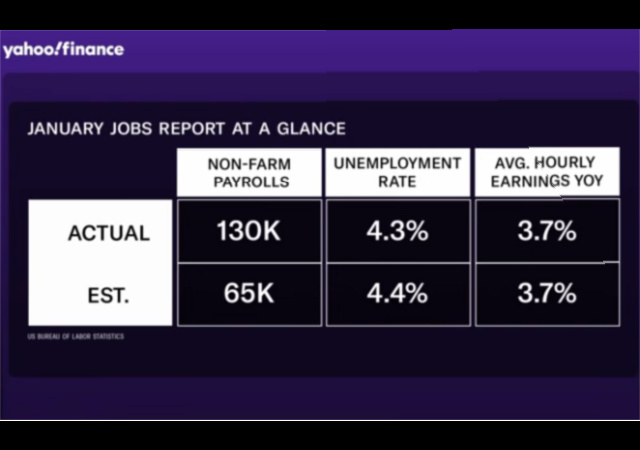
The January 2026 jobs report isn’t bad.
The economy added 130,000 jobs while the unemployment rate changed little at 4.3%.
The Bureau of Labor Statistics (BLS) revised its November report down by 15,000 to 41,000 jobs. December went down by 2,000 to 48,000.
I bet we see a downward revision of the January report in February. I mean, 25 of the last 26 jobs reports saw lower revisions. Yikes.
But hey, the private sector skyrocketed while federal jobs went down by 34,000!
“Since reaching a peak in October 2024, federal government employment is down by 327,000, or 10.9 percent,” according to the BLS.
The labor force participation rate went up to 62.5% from 62.4%.
Average hourly earnings rose by 15 cents (0.4%) to $37.17.
The major job gains came in health care, social assistance, and construction:
Health care added 82,000 jobs in January, with gains in ambulatory health care services (+50,000), hospitals (+18,000), and nursing and residential care facilities (+13,000). Job growth in health care averaged 33,000 per month in 2025.
Employment in social assistance increased by 42,000 in January, primarily in individual and family services (+38,000).
Construction added 33,000 jobs in January, reflecting an employment gain in nonresidential specialty trade contractors (+25,000). Employment in construction was essentially flat in 2025.
Financial activities lost 22,000 jobs, with 11,000 jobs coming from insurance carriers and related activities.
President Donald Trump wants more manufacturing in America. I know it will take time, but the country only added 5,000 new manufacturing jobs.
Unfortunately, the country barely added any jobs in 2025:
As we noted, the establishment survey data released today was re-benchmarked to reflect comprehensive counts of payroll jobs for March 2025. These counts are derived principally from the Quarterly Census of Employment and Wages (QCEW), which counts jobs covered by the Unemployment Insurance (UI) tax system. The benchmark process results in revisions to not seasonally adjusted data from April 2024 forward. Seasonally adjusted data from January 2021 forward are subject to revision. In addition, data for some series prior to 2021, both seasonally adjusted and unadjusted, incorporate other revisions.
The seasonally adjusted total nonfarm employment level for March 2025 was revised downward by 898,000. On a not seasonally adjusted basis, the total nonfarm employment level for March 2025 was revised downward by 862,000, or -0.5 percent.
AS a result, the change in total nonfarm employment for 2025 was revised from +584,000 to +181,000 (seasonally adjusted), which means that the US barely generated any jobs in 2025, and that instead of creating 49K average jobs per month, the US only added 15K jobs.
We’ll get the inflation report on Friday.
[Featured image via YouTube]
Donations tax deductible
to the full extent allowed by law.






Comments
thank godd obama and fjb are in charge
on eperson who wont have their job is some pro american from one of those real housfrau shows who said:
the bad bunny show wasnt inclusive as there were not any wht people in his set
fired! for that
the trans shooter in canada still getting protected by the left as they wont show its name/face
any patriotic person(s) should post the known names and/or faces of any criminals when the msm wont
That’s a gunperson according to canaduh. Picture now up.
https://x.com/libsoftiktok/status/2021524998112899582
I was wondering why all the reports were referncing a man in a dress. Now we know.
“federal jobs went down by 34,000”
That’s the biggest takeaway in my opinion. Unlike private sector jobs, federal jobs don’t create wealth they squander it. Every dollar not spent on paying a federal worker is a dollar that can go toward reducing that unsustainable deficit, which is a boon to the entire economy.
Yep. If I had my way govt spending wouldn’t be counted in GDP to avoid the temptation to boost the % by shoving cash out on boondoggles nor would govt employment be counted in the top line employment #.
Instead were gonna have paradoxical situation where when we, eventually, cut govt spending, the GDP takes a hit in the same way cutting the number of govt employees drops the employment %. This despite the fact that everyone understands there’s all sorts of waste, fraud, abuse and malfeasance in the govt sector and that cutting the size/scope of govt and the # of bureaucrats will improve the economy by pushing folks into the private sector, reducing deficit spending and the boost to overall economic productivity.
It’s a bit more complicated than that.
50% of all “healthcare” in the US is governmet funded. That would make 41,000
of those “healthcare” workers, in essence, government workers. That will drive more federal debt, not less.
Does spending 19% of our GDP in that sector provide as much verifiable “healthcare” as the 11% of GDP spent by the Swiss? Asking for a friend.