


Colorado In-State Tuition Discount for Illegals Requires DOJ Investigation – Equal Protection Project
In Letter to DOJ, EPP called for an investigation into Colorado’s ASSET law, which provides in-state tuition benefits to illegal aliens while denying the same in-state benefits to out-of-state U.S. citizens.
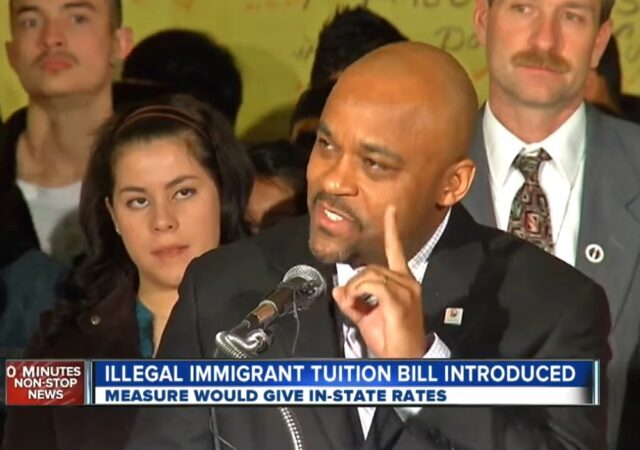
The Equal Protection Project has sent a Request to the Department of Justice calling for an investigation and possible enforcement action against Colorado’s Advancing Students for a Stronger Economy Tomorrow (ASSET) law, which, among other things, provides in-state tuition discounts to students illegally in the country while denying similar benefits to American citizens resident in other states.
Discrimination against American-born students has been a focus at EPP for a while. You may recall that in July 2025, after EPP complaints against five universities for DACA/”Undocumented” only scholarships, the Department of Education opened investigations and launched an initiative to address discrimination against Americans, creating a media firestorm:

Recently, we challenged Race and DACA/”Undocumented” Scholarships at Metro State Denver, and it was in the course of researching those scholarships that we learned of the ASSET program.
DOJ has brought legal actions against several other states, notably California and Virginia, since preferencing illegal aliens violates federal law, so we wanted to call the Colorado ASSET program to DOJ’s attention.
From the Request:
The Equal Protection Project (EPP) of the Legal Insurrection Foundation is a non-profit that, among other things, seeks to ensure equal protection under the law and opposes unlawful discrimination in all forms. EPP respectfully requests that the Department of Justice (DOJ) open an investigation into Colorado’s Advancing Students for a Stronger Economy Tomorrow (ASSET) law, which provides in-state tuition and related postsecondary education benefits to aliens not lawfully present in the United States, while denying the same in-state benefits to out-of-state U.S. citizens.1
For the reasons set forth below, Colorado’s ASSET law arguably presents an even stronger conflict with federal law2 than the state practices DOJ has recently challenged in California, Virginia, and elsewhere. DOJ should investigate taking similar enforcement action against Colorado.
Federal law, 8 U.S.C. § 1623(a), expressly prohibits states from providing “a postsecondary education benefit” to an alien who is not lawfully present “on the basis of residence within a State” unless the same benefit is also available to all U.S. citizens “without regard to whether the citizen or national is such a resident.” The Department of Justice has relied on this specific provision—together with Supremacy Clause preemption principles—to challenge state laws and regulations that grant resident tuition, scholarships, and other subsidies to unlawfully present aliens while withholding the same benefits from out-of-state U.S. citizens.3
***
ASSET operates as a residence-based substitute for lawful presence, permitting aliens who are not lawfully present in the United States to receive in-state tuition at Colorado public institutions while denying the same benefit to out-of-state U.S. citizens. That structure squarely implicates the limitation Congress imposed in 8 U.S.C. § 1623(a).7
This conflict is not limited to tuition classification alone. Because ASSET eligibility is integrated into Colorado’s broader system of postsecondary education benefits, it extends to additional taxpayer-funded subsidies beyond tuition rates. Colorado institutions describe ASSET eligibility as enabling qualifying undocumented students, where otherwise eligible, to access the College Opportunity Fund (COF)8 stipend and other forms of state financial assistance.9
The ASSET law also impacts numerous scholarship programs in the state. For example, EPP previously filed a complaint with the U.S. Department of Education’s Office for Civil Rights challenging scholarships at Metropolitan State University of Denver that gave preference to, or were restricted to, students eligible under the ASSET program.10
***
Federal law does not permit Colorado to preference illegal aliens over out-of-state U.S. citizens. Section 1623(a) bars the provision of any postsecondary education benefit to unlawfully present aliens on a residence-based basis unless U.S. citizens may obtain the same benefit without regard to residency. While Colorado’s law shares the core features that prompted the Department’s recent enforcement actions against California and Virginia,11 Colorado’s statutory structure goes further than those laws by allowing eligibility after substantially shorter periods of in-state high school attendance or physical presence and by integrating that eligibility across additional state-funded postsecondary benefits beyond tuition classification.
Unlike Virginia,12 which requires at least two years of in-state high school attendance, and California,13 which generally requires three years of attendance and graduation from a California high school, Colorado’s ASSET law allows a student to qualify for in-state tuition after just one year of in-state high school or physical presence preceding GED completion, coupled with one year of physical presence before enrollment. This comparatively minimal threshold makes Colorado’s law even more permissive, and its conflict with federal law even more significant. By lowering both the educational and residency requirements for illegal alien students to access subsidized in-state tuition, Colorado exacerbates the discrimination against out-of-state U.S. citizens who remain excluded from the same benefits absent full state residency. 14

The NY Post reported on the Request:
A Colorado law that allows illegal immigrants to receive in-state tuition should be investigated for “discriminating against American-born students,” a civil rights watchdog charges.
The Equal Protection Project is calling on the Justice Department’s Division of Civil Rights to probe Colorado’s Advancing Students for a Stronger Tomorrow (ASSET) tuition program, arguing it is giving illegal aliens benefits that out-of-state Americans don’t get.
Existing federal law prohibits higher education institutions from giving benefits to illegal immigrants that are not afforded to American citizens.
“We have found a number of schools and indeed statewide systems that maintain scholarships that are available only to DACA and undocumented students, thereby discriminating against American-born students,” William Jacobson, Equal Protection Project president and founder, told The Post.
“These in-state tuition break laws are simply a variation on a theme which privileges people who are in the country illegally over US citizens. And so we think that’s an important issue.” ….
The Equal Protection Project team stumbled upon the ASSET program while investigating scholarships at Colorado’s Metropolitan State University that appeared exclusive to non-white students. Some of those programs were specific to ASSET students.
“Colorado’s ASSET law crosses that line by conferring in-state tuition and related taxpayer-funded postsecondary education benefits based on lenient Colorado residence criteria, while similarly situated U.S. out-of-state citizens remain ineligible,” the Equal Protection Project wrote in its Friday complaint.
Jacobson’s group highlighted examples of how the DOJ has filed lawsuits over similar laws in California and Virginia, while contending that Colorado’s ASSET program might even be worse, because it has looser requirements to accept illegal immigrants.
“Our view is that this law is as bad, if not worse, than California and Virginia,” Jacobson explained. “And so I would think the Justice Department would be interested in this. We want to call it to their attention very directly by filing a request for investigation.”
The Equal Protection Project compiled a list of 19 state laws that provide some form of tuition benefit to illegal immigrants, including Colorado, California, and Virginia.
“We will review each state, and if we think it’s warranted, request an investigation,” Jacoson [sic] explained. “We’re going to take it one state at a time. We’re not going to treat them with one broad brush, because they’re not identical, although they’re similar in theme.”
A spokesperson for Gov. Jared Polis (D) contended that the “bipartisan Colorado ASSET initiative helps Colorado students access educational opportunities and save money.”
“By investing in all our students regardless of their background, we ensure all Colordans [sic] can thrive and fill the in-demand jobs needed to boost our economy, and grow industries across the state,” the spokesperson told The Post.
Jacobson stressed that the Equal Protection Project is not challenging whether or not “students in the country illegally can go to school, can participate at university,” and that it is strictly focused on benefits given to illegal immigrants that some American citizens don’t get.
[Featured Image: YouTube 2013]
Reminder: we are a small organization going up against powerful and wealthy government and private institutions devoted to DEI discrimination. Donations are greatly needed and appreciated.
=======================
Donations tax deductible
to the full extent allowed by law.







Comments
Q: Are you saying that citizens from foreign countries get lower tuition rates in Colorado than citizens from this country?
A: Only if they are here illegally.
No, even if they’re here legally. But if they’re here legally then the practice is legal. They are, after all, Colorado residents. What’s illegal is to extend this practice to Colorado residents who are residing there illegally.
Yes. I paid out of state tuition the first two years we lived in Colorado, while an illegal could get in state rates the day they cross the border. Which they don’t pay anyway because there are publicly and privately funded “scholarships” for illegals.
That is not true. Illegal residents are subject to the exact same criteria as legal ones.
And you know this how? If you have information about such a scholarship (why the scare quotes?) you should inform the Equal Protection Project so they can report it.
And so it does. But federal law says you can’t do that.
A student from another country is primarily called an international student. They may also be referred to as foreign students or foreign exchange students. Calling them “Colorado students” doesn’t change who they are and reducing their tuition doesn’t save Colorado any money.
They don’t live in another country. Legally or not, they live in Colorado. They are residents, though not legal ones. From the state’s point of view it makes sense to give charge the same in-state tuition that they charge Colorado residents who are here legally. Unfortunately for the state, federal law forbids it.
In my home state of Colorado we used to see “Don’t Californicate Colorado” 40 years ago. It didn’t work.
Bumper stickers. Edit feature? Oh well.
Dream on.
So some poor schlub from an adjacent state can’t get the benefits bestowed upon the ultimate “out of stater,” in fact, an out of country-er.
International students (are there any?) who are here legally on student visas and pay through the nose for tuition should thus present themselves as illegal, An example of leftist prog logic.
That would not get them anything. Either they’re resident in Colorado or they aren’t. Illegal residents are subject to the same criteria as legal ones. Legal status doesn’t affect it one way or the other. The only problem is that there is a federal law that specifically forbids this, and the state is ignoring that law.
A young man I know is a student at Oregon State University, just a few miles from where I sit now. He is a US citizen, and his family lives in Washington; he maintains a Washington driver license and address. His family is not rich, but has the funding to pay 100% of the cost of OSU, so they do that. Oregon in general, and OSU in particular, is very free to give in-state tuition to illegal aliens.
There are a few thousand people in the same position: paying too much. Federal law specifically forbids this behavior: OSU cannot legally do this. But it does. Imagine a class action lawsuit seeking current and recent overpayment because of Oregon’s illegal policy. Oregon does not deny this is going on. Seems like a slam-dunk for summary judgement.
Does federal law permit private action in this area? Can I as taxpayer sue for illegal, fraudulent behavior of each and every layer of administration at OSU, then the Oregon DOE, then the legislature and then the governor? They all really have conspired to violate federal law and waste public funds. Guilty on a few hundred thousand counts.
What say you? – Have ICE show up on 1st morning of classes! Well, that might end up being messy… How about DOJ demand records of the tuition recipients? After all, We’re quite sure it’s Fed money somehow as they never use their own money…
Just wondering if the aliens who illegally entered the USA and illegally remain in the USA will be afforded ESL classes? for a degree in illegal immigration tactics?
What about the fact that they are here illegally that people can’t seem to wrap their hair around? The only thing they should get is sent right back to where they came from, and that as fast as humanly possible. Full stop.