


Appeals Court Greenlights Trump Anti-DEI Executive Orders
4th Circuit Court of Appeals rejects and vacates nationwide injunction issued by Maryland federal district court judge.
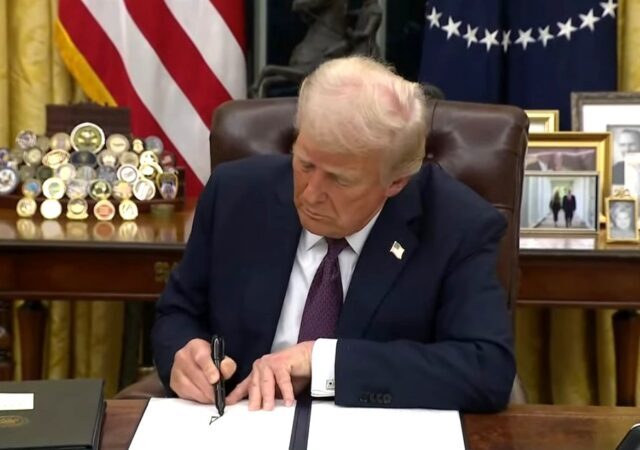
I’ve been predicting for most of the last year that the primary purpose of the pre-planned avalanche of lawsuits against the Trump administration over everything was to obtain delay, to run out the Trump 2.0 clock, but that eventually Trump would prevail on most of his important initiatives. Key among those initiatives were two of the Executive Orders issued in the first days of the administration to drive “Diversity, Equity, and Inclusion” out of the federal government and those who contract with the federal government.
I discussed these Executive Order at our online event on February 23, 2025.
Since then cases have meandered through the judicial system, so many that it’s hard to keep track. A big blow was dealt the DEI EO’s by a federal judge in Maryland on the same day as our online event, issuing a preliminary injunction. That later was “stayed” a month later by the 4th Circuit Court of Appeals. Here is our prior coverage by Jane Coleman:
- Judge Halts Key Parts of Trump’s DEI Orders
- Federal Appeals Court Temporarily Reinstates Trump’s Challenged DEI Executive Orders
The plaintiff then tried to withdraw the case – but was rejected in that maneuver by the appeals court.
The appeals court earlier today decided the case on the merits, vacating the preliminary injunction in full. The ruling turned on the “facial” challenge to the Executive Orders – meaning the challenger claimed they were unconstitutional on their face and could not be applied to anyone. This achieved in the district court — before the stay — the equivalent of a nationwide injunction against implementation of the EOs against anyone, not just the plaintiff. That facial challenge was rejected, leaving it up to particular groups to challenge how the law was applied to them individually.
From the Order Vacating Preliminary Injunction:
In the first days of his second term, President Donald J. Trump issued two Executive Orders that directed executive agencies to end “diversity, equity, and inclusion” (“DEI”) programs within federal grant and contract processes. See Exec. Order No. 14,151, 90 Fed. Reg. 8339 (Jan 20, 2025); Exec. Order No. 14,173, 90 Fed. Reg. 8633 (Jan. 21, 2025). Plaintiffs—the Mayor and City Council of Baltimore; the American Association of University Professors; and the National Association of Diversity Officers in Higher Education1—sued and sought to preliminarily enjoin three of the Orders’ provisions on First and Fifth Amendment grounds.
The district court entered a preliminary injunction, but we stayed it pending appeal. We now vacate the district court’s injunction and remand.
Consistent with his campaign promises, newly inaugurated President Trump acted swiftly to eliminate DEI programming and funding in the federal government and private sectors. Two Executive Orders he issued sought to do just that…. Implementation of the Orders soon followed….
The district court found the provisions likely unconstitutional and granted a nationwide injunction ….
Defendants then appealed and moved for a stay of the preliminary injunction, which we granted. Soon after, plaintiffs moved to vacate the injunction so that they could amend their complaint. But the district court denied the motion because it “remain[ed] of the view that [p]laintiffs have shown a strong likelihood of success on the merits of their [constitutional] claims.” Nat’l Ass’n of Diversity Officers in Higher Ed. v. Trump, 781 F. Supp. 3d 380, 385–86 (D. Md. 2025). As explained below, we vacate the preliminary injunction….
The President may determine his policy priorities and instruct his agents to make funding decisions based on them. See generally 2 C.F.R. § 200.340(a)(4) (2025). President Trump has decided that equity isn’t a priority in his administration and so has directed his subordinates to terminate funding that supports equity-related projects to the maximum extent allowed by law.9 Whether that’s sound policy or not isn’t our call. We ask only whether the policy is unconstitutionally vague for funding recipients….
But here, we’re reviewing the President’s directive to his subordinates about how they should allocate federal funding based on the President’s priorities. If the Supreme Court didn’t [in similar cases] find vagueness concerns in the former, we’re hard pressed to see how we could for the latter….
But if government actors have terminated grants or contracts “without regard to their legality,” Reply Br. at 6, then plaintiffs can sue those actors for terminating those contracts. The Provision’s plain text doesn’t terminate any contracts, nor does it directly regulate nongovernmental conduct, so by relying on this enforcement evidence, plaintiffs blur the line between a facial and as-applied challenge. In short, plaintiffs are unlikely to succeed on their facial challenge to the Termination Provision. So the district court erred in preliminarily enjoining it.
In short, plaintiffs are unlikely to succeed on their facial challenge to the Termination Provision. So the district court erred in preliminarily enjoining it.
We next turn to the plaintiffs’ First Amendment challenge to the Certification Provision….
Plaintiffs suggest that defendants view all DEI programs as illegal under existing antidiscrimination law. Perhaps, but the Certification Provision doesn’t say that.
What plaintiffs are really asking us to do is read subtext into the Provision’s text. And what they’re really challenging is how the Administration and its agency actors interpret antidiscrimination law in relation to plaintiffs’ DEI programming. Neither is fertile ground for a facial attack against the Certification Provision….
If the President, his subordinates, or another grantor misinterprets federal antidiscrimination law, plaintiffs “can challenge that interpretation in a specific enforcement action.” Id. at 103. But we can’t conclude today that a “substantial number of the [Certification Provision’s] applications” will be unconstitutional. Stevens, 559 U.S. at 473 (citation modified). Thus, plaintiffs are unlikely to succeed on their challenge to the Certification Provision. The district court erred in holding otherwise.
This is obviously a big win for the Trump administration because it requires each entity subject to the DEI EOs to proceed individually, not through a single nationwide injunction. That is a much more difficult path since each entity would have to prove its own case.
So two key Trump DEI EOs remain alive, subject to individual litigations on a case-by-case basis.
====================
Donations tax deductible
to the full extent allowed by law.







Comments
EVERYTHING should be set aside under the well known legal understanding called “elections have consequences”.
Absolutely not. That is tyranny. Elections do have consequences, but winning an election doesn’t make someone a dictator. When President Pen and Phone and President Autopen (and Autophone?) were in office we challenged their illegal and unconstitutional actions, and we usually won.
Use your nose to sniff for tar, feathers and pitchforks.
When people want vengeance (rightfully in the case IMO) they’re not interested things like logic…
My point isn’t so much who’s right who’s wrong , rather ‘couldn’t you simply let us have this one since LI comments aren’t legally binding? 🙂
Not ‘everything’…but definitely a bit more urgency within the Judiciary to pull away from substituting their ideological and policy preferences for that of the Executive. If the Judiciary doesn’t do it internally then it will be imposed externally.
Frankly asking the Judges not to jump to impose injunctions before hearing arguments/receiving briefings, to apply consistent, objective standards for whether plaintiff has established v asserted standing (harm), to require plaintiffs post a bond when asking for preliminary or ’emergency’ injuction that reflect the real cost burden should the injuction be withdrawn or overturned, to stop taking up after hours motions asking for injuction on the weekend and to develop a ‘next up’ assignment system to determine which Judge daws the next case onto their docket ….none of those are at all unreasonable.
Once again we see that they’re stupid decisions only last until they get in front of the judge that’s not a retard
What alarms me is the rash of judicial decisions based upon political views rather than the law. What I lack is the historical context of whether this is out of the norm over the last two centuries. I recall FDR’s threat to stack the Supreme Court when their decisions didn’t go his way but I don’t recall such resistance to an Administration at the district court level. How unusual is this situation?
It’s very unusual. The only Presidential term that comes close re the sheer # of District CT injuction/TRO is the first Trump term. The individual Judges which comprise the Judiciary have been, by and large, averse to injecting political preferences or ideological preferences on such a scale b/c they understand they would not only build up a large # of reversals from higher CT but also erode the willingness of everyone outside the Judiciary to respect their rulings. At the end of the day the Judiciary relies upon the respect in which it is held by the other branches of govt and the People themselves to honor their rulings b/c the Judiciary doesn’t have any ‘force’ to apply to compel its rulings. When the day comes that the Judiciary no longer commands sufficient respect to gain willing compliance with its rulings then their rulings will be largely irrelevant.
decades back when I learned of the EO I crowed about its anti americanism
nothing has changed my mind on that
Total Executive Orders: As of now, presidents have issued thousands of executive orders, with Franklin D. Roosevelt holding the record for the most at over 3,700 during his presidency.
and fdr was and is pigscum
What is anti-american about an employer issuing orders to his employees about how they are to do their jobs? That’s all an executive order is.