


Trump Kicks Off 2026 with Coal Plant Retentions, New Oil Leases, and Nuclear Power Push
The nation is poised to enter 2026 with greater energy security and a clear message that American prosperity will be built on a foundation of abundant domestic energy.
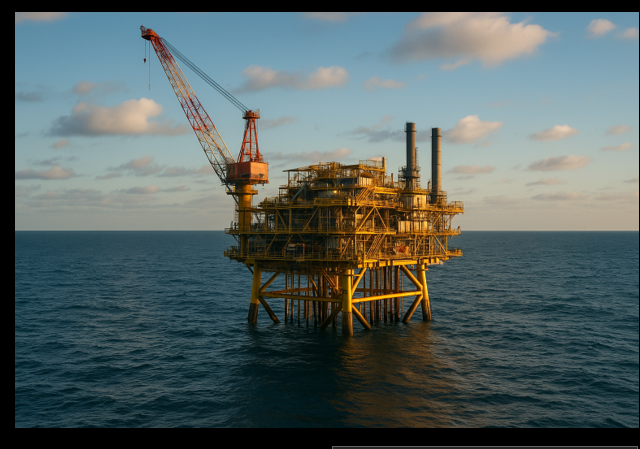
Trump’s administration has started the new year by reinforcing its strategy to boost fossil fuels while also pushing “advanced” nuclear through funding and military applications. Recent moves are less about new laws and more about using executive authority, emergency orders, and finance tools to keep fossil plants online, keep the flow of oil going, and support nuclear projects.
To begin with, in the last days of December, the Department of Energy DOE issued another emergency order forcing a Colorado coal‑fired unit at the Craig Station to remain in operation past its planned retirement.
Compliance will cost Tri-State Generation and Transmission Association and the other owners of the Craig Station power plant in northwestern Colorado. The plant owners will need to fix a broken valve that put the power plant’s 446-megawatt Unit 1 out of operation on Dec. 19, Tri-State said in a statement.
The order from Energy Secretary Chris Wright follows recent Department of Energy moves to keep coal-fired power stations open in Indiana, Washington state and Michigan despite efforts by their owners to close them.
It’s part of President Donald Trump’s push to revive the U.S. coal industry at a time when many utilities are shifting to cheaper, less-polluting energy sources such as natural gas and renewables. The administration, meanwhile, has blocked renewable energy, including wind power.
Kudos to the Trump Administration for ordering another coal plant to remain open. The Colorado plant was scheduled to shut down yesterday, but for now: "The generator must remain operational to address a shortage of electricity and electrical generation in the northwestern U.S."… pic.twitter.com/MdsXcmcIA8
— Steve Milloy (@JunkScience) January 1, 2026
Next, a federal court ruling has allowed the oil to flow off the coast of California.
The Federal Pipeline and Hazardous Materials Safety Administration just gave Sable Offshore Corp. a Christmas present: Sable can begin pumping oil from its three platforms off the coast of Santa Barbara, Calif., after a federal appeals court allowed the restart of a contested pipeline, Bloomberg Law reported.
“Environmental groups lost their bid at the US Court of Appeals for the Ninth Circuit to stay enforcement of the federal Pipeline and Hazardous Materials Safety Administration’s emergency special permit for the Las Flores Pipeline System,” Bloomberg reported.
“The order is the latest win for the Santa Ynez oil operation that has been battered with lawsuits and regulatory scrutiny since Exxon Mobil Corp. handed over the reins to Sable 10 years ago.”
Leftists in California just lost a battle in their war on affordable energy 🛢️💰
Oil production at the Las Flores Pipeline off the coast of Santa Barbara is MOVING FORWARD.
It’s time to DRILL, BABY, DRILL and bring down high energy prices!https://t.co/EYYzcerb23
— Secretary Sean Duffy (@SecDuffy) January 1, 2026
Just ahead of the Christmas holidays, the Trump administration held the first lease sale since 2023 for drilling opportunities off the Gulf of America.
The Bureau of Ocean Energy Management (BOEM) on Dec. 10, 2025, held its Gulf of America Oil and Gas Lease Sale, the first offshore oil and gas lease sale since December 2023 and the first lease sale conducted under the One Big Beautiful Bill Act (OBBB). The sale generated more than $300 million in high bids.
This sale marks a significant milestone in federal offshore energy policy, representing the first of 30 lease sales in the Gulf of America mandated by the OBBB. The sale was also notable as the first to feature the reduced 12.5 percent royalty rate established by the OBBB, down from the 16.67 percent rate that had been in effect under the Inflation Reduction Act of 2022 (IRA), and the lowest rate since 2007.
https://t.co/QimquxWvBS
After years of market swings, regulatory uncertainty, and deep staffing cuts, America’s energy workforce is overdue for a stabilizing signal. December 10th provides exactly that: the first federal Gulf of America lease sale in nearly two years, offering…— lgstarr (@lgstarr) December 14, 2025
Finally, there are reports that the U.S. Army is moving closer to deploying nuclear microreactors.
Unlike traditional nuclear plants that span hundreds of acres, microreactors are designed to generate less than 20 megawatts of electricity and be transported fully assembled. Supporters say the technology could provide dependable power for remote communities, military bases, data centers, and college campuses, especially in areas vulnerable to grid failures.
“Like replacing a remote diesel generator in an Alaskan village or at a remote mine site, the administration is supporting all of these efforts,” Energy Secretary Chris Wright told The National News Desk during an interview in November.
The Army is now evaluating whether to install microreactors at domestic bases under its Janus program, which aims to strengthen energy security for critical military infrastructure. Nine installations are under consideration, including Fort Bragg, Fort Hood, Fort Drum, Joint Base Lewis-McChord, and Redstone Arsenal.
NUCLEAR 101: Microreactors can be used to power military bases, disaster recovery efforts, or remote locations where traditional infrastructure doesn’t exist.
Learn more: https://t.co/pqgJw9WtUC pic.twitter.com/UBpBHim1iV
— Office of Nuclear Energy | US Department of Energy (@GovNuclear) December 7, 2025
Clearly, President Donald Trump’s energy strategy positions the nation to enter 2026 with greater energy security and a clear message that American prosperity will be built on a foundation of abundant domestic energy.
Donations tax deductible
to the full extent allowed by law.







Comments
Considering how vulnerable our power grid is to bad-actor disruption, it makes perfect sense for the Army to investigate using small reactors, paving the way for municipalities to do the same.
A diffuse grid is a safer grid.
I like the idea too. I want one in my basement.
Maybe you don’t. You’d be shocked what it cost me to get the radon out of mine, and I didn’t even get any damn power out of it.
Radon is a gas though, You probably can’t achieve critical mass with it so it would be useless for power generation, All you can use it for is to paint your house numbers and maybe a few political signs. Then again you know all that.
Decades ago, we had a reactor in our dining room every Thanksgiving. Say virtually anything with which he disagreed and my father went critical.
Radioactive gas too?
Hell yeah! But what type of reactor and fuel cycle? Will there be any significant acceleration of Gen IV development?
Meanwhile Europe continues to hunker down on its net zero insanity powered by Gasprom oil and gas.
I’m fine with that, They want to devolve into 6th century Islamic theocracies let them live in the cold and dark like those theocracies did,
Military bases in California and Washington have to become independent of the increasingly fragile power grid of those states. The cultists and Rat exploiters are doing their best to destroy the grid reliability.
Is gas on JBLM exempt from the stupid carbon tax?
Leases! Drilling! Retention! Until the next Democrat majority and Administration reverses it all.
I’d tell you where I’d like them to drill next but this is a family site.
So much winning!
Year 1 of Trump 2.0 has exceeded my wildest dreams.
The SOTU this year should open with AC / DC Thunderstruck.
Skeptical, I read the article.
“[Energy Secretary Chris Wright] said construction on small modular reactors could begin as early as next year.”
Will this be “always a year away”?
Also:
“Supporters say the technology could provide dependable power for remote communities, military bases, data centers, and college campuses, especially in areas vulnerable to grid failures.”
“College campuses”? Our ability to reform higher ed being highly questionable, why would we want to provide college campuses with reliable power?