


Snowmageddon 2026 Sparks Appreciation for the Reliability of Energy From Coal, Oil
The record‑breaking storm exposed the Northeast’s fragile energy infrastructure, highlighting how political resistance to natural gas pipelines has left the region dependent on costly oil and vulnerable to future cold‑weather crises.
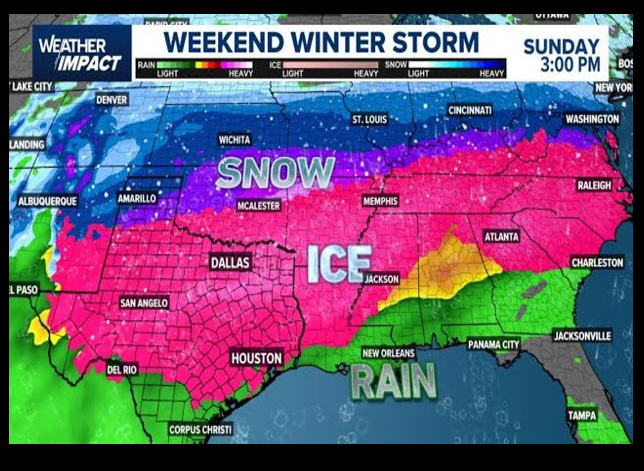
The sprawling January winter storm, a 2,000‑mile‑long behemoth stretching from Mexico and Texas all the way to Maine and into Canada, has been unofficially dubbed Winter Storm Fern by The Weather Channel and “Snowmageddon 2026” by everyone stuck shoveling their driveway twice a day.
It spun up from an upper‑level low over the Pacific on January 22, then organized over the central U.S., flinging out bands of snow, sleet, and freezing rain as it marched east.
A massive winter storm dumped sleet, freezing rain and snow across much of the U.S. on Sunday, bringing subzero temperatures and halting air and road traffic. Tree branches and power lines snapped under the weight of ice, and hundreds of thousands of homes and businesses in the Southeast were left without electricity.
The ice and snowfall were expected to continue into Monday followed by very low temperatures which could cause “dangerous travel and infrastructure impacts” for days, the National Weather Service said.
Heavy snow was falling from the Ohio Valley to the Northeast, while “catastrophic ice accumulation” threatened from the Lower Mississippi Valley to the Mid-Atlantic and Southeast.
“It is a unique storm in the sense that it is so widespread,” weather service meteorologist Allison Santorelli said in a phone interview. “It was affecting areas all the way from New Mexico, Texas, all the way into New England, so we’re talking like a 2,000-mile spread.”
Snowmeggedon 2026
And so it begins (Washington OK) pic.twitter.com/xszUK7gqlG— Wendelyn Perceful (@PercefulWendee) January 24, 2026
And as several Northeastern states have supposedly embraced “clean energy” and “renewables”, the region relied heavily on oil (and some remaining coal) during this severe weather event because natural‑gas supply is constrained, and those constraints are tied to limited pipeline capacity that has been politically and regulatorily difficult to expand.
On January 21, below average temperatures led to a recorded peak hourly demand of 19,600 megawatts (MW) in ISO-New England (ISO-NE), the region’s grid operator.
Although demand was elevated, it was lower than the 20,308 MW that ISO-NE forecast peak demand would be in its 2024/2025 winter assessment, EIA said. However, a significant share of generating capacity to meet demand during this time came from sources that rarely operate.
Between the hours of 11:00 a.m. and 4:00 p.m. eastern time (ET) on January 20, and between the hours of 10:00 a.m. and 1:00 p.m. on January 21, oil-burning plants provided more electricity to the ISO-NE grid than gas burners, which is relatively uncommon. That group of oil burners provided more than 4,000 MW of electricity per hour to the grid between 7:00 a.m. and 11:00 p.m.
The Northeast is burning oil and coal to keep the lights on during this winter storm. Why?
Because they don't have enough natural gas pipeline capacity.
And they don't have pipeline capacity because they spent a decade blocking every proposal.
Some examples:
Constitution… https://t.co/XQpAPIndl2
— Tracy Shuchart (𝒞𝒽𝒾 ) (@chigrl) January 24, 2026
The following pipelines that could have been serviced the Northeast include the following:
- Constitution Pipeline (PA to NY): Approved by Federal Energy Regulatory Commission in 2014, killed by Williams (the company constructing it) over a New York water permit denial 2016. Subsequently, the project may be revived in exchange for the Empire Wind offshore windfarm.
- Northeast Energy Direct (PA to MA): Blocked in 2016 after strong organized opposition from towns in Massachusetts and New Hampshire, environmental groups, and local politicians.
- Northeast Supply Enhancement: Initially rejected by New York in 2020, blocking construction.
Access Northeast: Killed by environmental activist and political opposition 2017.
When the energy bills come due next month, the expense may seem like “inflation,” but it is actually the result of poor choices by politicos who don’t understand the difference between aspiration and engineering.
The good news for Americans living in the Northeast who may regret their political leaders’ eco-activist minions is that at least two of the pipelines may actually get built.
To begin with, and as noted above, the Constitution Pipeline is in a revival and permitting phase, though not yet under active construction. The project remains highly contested but is being pushed forward again by its developer, Williams Companies, with strong backing from the Trump administration.
On Jan. 8, Williams applied to the Federal Energy Regulatory Commission (FERC) to reissue a certificate to allow the construction of the Constitution Pipeline, a 124-mile pipeline to carry gas from Susquehanna County, Pennsylvania, to markets in New York and New England.
FERC had originally authorized the pipeline in 2014, but Williams cancelled it in 2020 following years of opposition from environmental groups and landowners. The company also struggled to get required permits to fell trees and disturb wetlands from federal and state regulators.
President Donald Trump last April said he wants to see the pipeline built, suggesting he might “use the extraordinary powers of the federal government.”
Additionally, the FERC reissued its certificate of public convenience and necessity for the Northeast Supply Enhancement project (NESE) this past summer. The pipeline is now fully permitted at the state and federal levels and re‑certified, with construction targeted to start in 2026 and in‑service in late 2027.
According to Williams Transco, the NESE pipeline project will add enough capacity to supply natural gas to the equivalent of 2.3 million homes, create about 2,000 jobs, and generate $548 million in economic activity.
As of now, the NESE project is greenlit, with construction expected to commence before the end of the year and completion slated for the end of 2027. The project, however, will be closely monitored by environmental groups and other opponents of the plan, many of which indicated their intent to bring lawsuits for each purported violation of state and federal environmental laws. The Natural Resources Defense Council, for example, has already announced that it will be challenging the New York and New Jersey permit approvals in federal court.
As another brutal winter bears down and there are reports indicating a “new ice age”, the lesson from Snowmeggedon 2026 couldn’t be clearer: energy security begins with accessibility.
Natural gas remains the most practical bridge between affordability and reliability, yet Northeast political leadership still treats it like a political taboo. Expanding pipeline capacity isn’t a step backward, but an insurance policy against freezing homes, blackouts, and skyrocketing fuel costs when wind turbines clog, and solar panels vanish under snow.
If the climate really is tilting colder, investing in robust gas infrastructure may prove not just wise policy, but a matter of survival..both economically and in reality.
The only places to go to escape the cold are southern California / Arizona or Florida. 🏝️
The rest of the Lower 48 is in the ice box. 🧊
Unless you have a real fireplace or pellet / wood stove (increasingly rare in new homes), the reason that you're not freezing to death… pic.twitter.com/hT77WOdh92
— Chris Martz (@ChrisMartzWX) January 25, 2026
Donations tax deductible
to the full extent allowed by law.






Comments
What do PRESIDENT Trump and fossil fuels have in common?
The leftists hate both of them completely and nonsensically. It demonstrates their positioning of politics over the needs of the people.
How many would be dead if the NE went fully “green?”
Well, maybe we should let all the blue states go fully green. “Petri dishes of democracy” and stuff. Let them deal with the consequences – without any federal aid. Might change voting patterns.
The vile, stupid and evil Dhimmi-crats’ irrational, dishonest, infantile, stupid and fact-averse environmental histrionics, hysterics, agitation, demagoguery and obstructionism with respect to fossil fuels extraction, refining and transport, as well as nuclear power plant construction, have been undermining and hindering American energy policy, economic growth and national security, since at least the 1960’s.
Sounds like present day Germany coping with cold after the same type of nitwit energy ideology failed.
The record‑breaking storm
Oh, bullhockey. I grew up with storms like this. All this is panic porn.
(We were supposed to get some inches, and got less than half an inch of slush. Yes, some people got what was predicted. But none of this was really all that “historic.”)
When I hear this I’ve started asking “Oh really? Which record, specifically, are you referring to? When did they start keeping those records?”
noon 1-26-2026 mid maine, 12+ inches and still snowing. issue is that its 6 deg F out with 9-15mph winds. presently wind chill is -4 f.
making cleanups very hard.
And it did that more than once when I lived near Loring AFB in the early 90s.
NYC got something like 13 inches, and here in Montgomery County MD, we got something like 8 inches. I just wish lying AlGore et al had not lied when proclaiming that snow would be a thing of the past.
Report from Central Texas. Icy roads, and automobile travel not recommended until mid day Monday. No power interruptions. I get my propane gas from a large tank buried in my yard. I need only import water and electricity. Considering installing an emergency electrical generator which can run off propane. The propane supplier fills my tank twice a year. I can always bury an additional tank so I can ride out a major electrical failure for a long time.
So Snowmageddon 2026 has little to no effect on me personally. Others are not so lucky, especially the residents of blue states. Lesson learned: be as independent of government as you can.
5-6 inches of sleet over the weekend in southeastern Oklahoma. Re-froze overnight and formed a hard crust. No major outages AFAIK. Temps are climbing and the sun is out so it should be down to slush by tomorrow.
As part of our move to the Hill Country, we built some features into our new home with an eye towards being able to ride out short term grid failures. Electric and fiber telcom are all buried with Starlink as Internet backup. We have 2,000 gal buried propane tanks, whole house propane generator, water well with elevated 3k gal tank (which can drip feed water into the house even in the event of no power) and a 40k gal rainwater collection tank which is our primary source of potable water.
Meanwhile, in Austin…. fu*k Austin, we’re gone.
40,000 gallon rainwater tank? Crikey. Does your yard get any rain? LOL
Normal rainfall in this area is 30 inches annually, but with this drought it’s been around 20 some years. And we tend to get most of it in a couple of really wet months, so I need to grab it when I can get it.
I want my nuke plants. Yesterday.
if god didnt want us to use fossil fuels he would have put it all in china
maga
The right way to say it is, “If God didn’t want us to use fossil fuels, he wouldn’t have killed all the dinosaurs.”
“If God had intended us to fly, He would have given us plane tickets.”
Snowmageddon highlights the importance of everyone to go out and buy an electric car.
Now Paula, that was just a mean thing to say. 😉
Where do you think the electricity comes from to charge your electric car? It comes from gas- and oil- and coal- and nuclear-based power plants. You’re fooling yourself if you think electric cars magically get charged just by plugging in. The old reliable power plants are needed.
Freezing rain. Ice everywhere and I don’t like ICE. I’m trying to decide whether to sprinkle some salt on it or go out and protest.
In Texas, ERCOT’s dashboard shows a large fraction of the power came from wind and solar today, a sunny day. Together they were 48% of the total when I checked about 2:45 pm Central. The wind and solar together was about 30 GW, the output of 30 one gigawatt nuclear plants.
Many people wonder why Texas doesn’t just burn gas and skip building solar farms and wind farms. I think it is also a valid question to ask why should Texas pay for gas when the energy in sunshine and wind arrive for free and can be equivalent to 30 nuclear plants in the daytime. The wind blows stronger at night and is often equivalent to 10 or 15 nuclear plants all night. (I understand there are capital costs and operating costs besides fuel.)
When Texas is using sunshine and wind that means more gas is available for people farther north to use. I think that is a good thing.
Because for every megawatt of capacity you have in windmills you need an equivalent megawatt of capacity in a reliable traditional power supply.
BOTH of which ratepayers have to pay for. One of which will always be idle.
Then, obviously, is the fact that vastly more energy is consumed in building a windmill that it can ever conceivably produce in its lifespan. Wind, and solar, are not energy sources but energy sinks. They are, always, a net loss.
Again, obviously, is the fact that even WITH the massive taxpayer and ratepayer subsidies at every stage of construction of “green energy” (without which no company would ever build one) the electricity they produce is still vastly more expensive than traditional, reliable, sources of energy.
For years, recently, I bid on electricity by the megawatt for my company in PJM’s market. Nuclear averaged about $28/megawatt, coal/nat gas $65, wind was never below $115. Offshore wind (when any was available) > $300. Solar essentially non-existent in my region on a commercial scale.
What’s insane is that, unlike say the NASDAQ market (which I also traded in regularly in my previous career), no one is allowed to bid on the lowest priced source. Ever. You have to buy a “basket” of suppliers. And it is rigged so that 100% of all wind/solar that is ever produced is purchased first.
Read that again.
Everyone is REQUIRED to purchase the most expense bulk electricity FIRST.
That’s precisely the opposite of how any free market would work.
And, note that there’s zero difference in quality – electricity is electricity. its all the same. No sane person would ever pay more for a supplier if they weren’t required to by law.
BONUS: In TX, the wind farms are nowhere near the demand, so hundreds of miles of transmission lines had to be built. Rather than have the companies that developed the wind farms pay for this, TX (back when it had a D governor) forced taxpayers to pony up for the entire cost. Oh, and each windmill gets massive federal and state subsidies just for existing, so long as it is connected to the grid. It works out to roughly $500,000 profit per windmill guaranteed before even considering the production/sale of any electricity. And, of course, the longer your transmission lines and the more power you are putting through them, the more power loss you suffer before any of it reaches any consumer.
The above is just the tip of the iceberg on the insanity of “green” energy. And, of course, the only thing that’s ever been “green” about any of it is the taxpayer and ratepayer money that flows to the companies profiting from it – most of which are owned and operated by the Chinese Communist Dictatorship.
And that’s not even considering the fact that a wind turbine lasts a maximum of less than 20 years, and after that comes the cost of dismantling it and safely disposing of its parts, which can’t be recycled and are highly polluting.
“The only places to go to escape the cold are southern California / Arizona or Florida.”
I actually had to switch to long pants Saturday.
New York State doesn’t need gas pipelines from Pennsylvania or anywhere else, not with the snow shoveling of Hochul and Mamdani taking care of things!!
“Snowmaggedon?” Here in NEGA it was barely an inconvenience. Live at the top of a ridge so it’s colder and exposed. Our all electric house never lost power. And our rural road is lined with trees leaning heavily on the electric wires. We are convinced that Georgia Power does nothing to clean up dead trees that will eventually fall and need repair. Linemen make more money at our inconvenience.
As we drive past the line-supported trees, they mockingly say to us, “We’re just looking for an excuse to break your connection be it a gust of wind, excess rain, ice and snow, or we just want a bit of fun today.”
Nothing happened. Not really. Sure we got snow and ice. Yeah, it’s cold. But we are transplants from the Great Lakes area and have survived much worse inclement weather.
I am weary of weather people over-hyping storms with overblown predictions just to keep people afraid. And when no weather approaches? Fear of fire hazard becomes their cry.
Funny that these people don’t ever lose their jobs.