


Science-Based Analysis Suggests Microplastic Hype Brews Faster Than Supportive Evidence
Hard on the heels of the lawsuit targeting Ziploc bags comes a report linking microplastic exposure to coffee consumption.
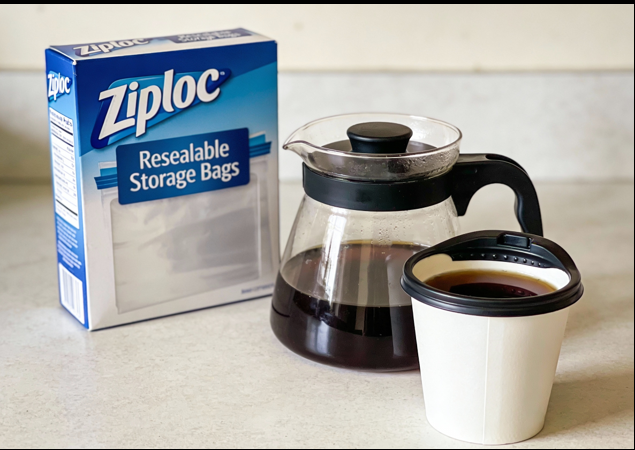
I recently reported that a woman was suing the makers of Ziploc bags for failure to warn about microplastic exposure.
I have covered the topic of microplastics before, as it looks like it might be revving up to be the next big environmental cause to target big business and corporate dollars. For example, hard on the heels of the lawsuit comes a report linking microplastic exposure to coffee consumption.
Your coffee cups might be a factory of microplastics, and you are likely drinking a bunch of them. Grabbing a to-go cup of hot beverage while running errands or heading for office is oddly satisfying, but you may not know the damage those plastic cups can do.
According to the Environmental Protection Agency, the U.S. produces an approximate of 25 billion polystyrene cups every year, or about 82 cups per person, as per Medium. In Australia, 1.45 billion single-use coffee or hot beverage cups are thrown out annually.
In a new study published in the Journal of Hazardous Materials: Plastics, researchers focused on the impact of heat on plastic cups, and the results were concerning. The finding revealed that heat causes microplastilcs to release, making consumers prone to drinking them.
Interestingly, The Guardian had published several stories about microplastics. Now the publication is sharing a detailed account of the challenges faced by studies that have reported microplastics collecting in tissues. The piece highlighted one of their own reports, which asserted that human brain tissue was being affected.
However, by November, the study had been challenged by a group of scientists with the publication of a “Matters arising” letter in the journal. In the formal, diplomatic language of scientific publishing, the scientists said: “The study as reported appears to face methodological challenges, such as limited contamination controls and lack of validation steps, which may affect the reliability of the reported concentrations.”
One of the team behind the letter was blunt. “The brain microplastic paper is a joke,” said Dr Dušan Materić, at the Helmholtz Centre for Environmental Research in Germany. “Fat is known to make false-positives for polyethylene. The brain has [approximately] 60% fat.” Materić and his colleagues suggested rising obesity levels could be an alternative explanation for the trend reported in the study.
Materić said: “That paper is really bad, and it is very explainable why it is wrong.” He thinks there are serious doubts over “more than half of the very high impact papers” reporting microplastics in biological tissue.
.@Mutnodjmet Relevant to your LI article on microplastics and loony lawsuits, you might find this article interesting. https://t.co/NpotO2Ks8V
— Phineas Fahrquar (@irishspy) January 21, 2026
Another article, published in Toxicological Sciences, criticizes a study that claims to find microplastics in dog and human testicles and links them to lower sperm counts and changes in organ weight.
The authors of the letter argue that the original study’s methods were insufficient to support such claims, mainly because there was insufficient information about how samples were collected, stored, and processed to rule out contamination. They note that important quality checks—like blanks, controls, and clear detection limits—were not reported, so it is impossible to know whether the reported microplastic levels are real or could be false positives. They also point out missing details on how tissues were digested and separated, and that the study did not visually confirm particle size and shape, which are important for understanding how particles might affect biology.
The authors further question the use and validation of the pyrolysis–GC/MS method for measuring microplastics in biological tissues in this context, noting that key performance characteristics, such as precision, detection limits, the use of internal standards, and handling of difficult polymers like PVC and PET, were not addressed.
Finally, the contributors to this piece argue that real science must be applied to the study of microplastics. They argue that only with robust, reproducible methods and larger, well‑designed studies can researchers truly determine whether microplastics accumulate in the brain and whether they affect human health.
Given the amount of fraud in science publication, and the pressure for academics to fund their laboratories using our tax dollars to “save the planet” and “protect the children”, it is heartening to see news publications beginning to share articles that challenge a newly emerging narrative.
Image by perplexity.ai
Donations tax deductible
to the full extent allowed by law.







Comments
1967: ‘Dire famine by 1975.’
1970: Ice age by 2000
1970: ‘America subject to water rationing by 1974 and food rationing by 1980.’
1971: ‘New Ice Age Coming’
1972: New ice age by 2070
1974: ‘New Ice Age Coming Fast’
1974: ‘Another Ice Age?’
1974: Ozone Depletion a ‘Great Peril to Life’
1976: ‘The Cooling’
1980: ‘Acid Rain Kills Life in Lakes’
1978: ‘No End in Sight’ to 30-Year Cooling Trend
1988: James Hansen forecasts increase regional drought in 1990s
1988: Washington DC days over 90F to from 35 to 85
1988: Maldives completely under water in 30 years
1989: Rising seas to ‘obliterate’ nations by 2000
1989: New York City’s West Side Highway underwater by 2019
1995 to Present: Climate Model Failure
2000: ‘Children won’t know what snow is.’
2002: Famine in 10 years
2004: Britain to have Siberian climate by 2020
2008: Arctic will be ice-free by 2018
2008: Al Gore warns of ice-free Arctic by 2013
2009: Prince Charles says only 8 years to save the planet
2009: UK prime minister says 50 days to ‘save the planet from catastrophe’
2009: Arctic ice-free by 2014
2013: Arctic ice-free by 2015
2013: Arctic ice-free by 2016
2014: Only 500 days before ‘climate chaos’
ISTR the “Coming Ice Age” got a big boost after the winters of ’77 and ’78.
1957 or 8: cranberries cause cancer
You left out the wars against fat and cholesterol (eggs), the equally problematic rapid adoption/acceptance of highly processed foods (e.g., margarine, meat replacements) and some seed oils, and the slander of red meat.
What is the reason they switched from plastic straws to paper straws? The plastic does not decompose easily.
…and paper straws decompose half way through your milkshake; not exactly a victory.
But it does decompose. Because it’s a hydrocarbon. There are bacteria that consume plastics, just like there are bacteria that consume oil products.
Because some ten-year-old guestimated some numbers for his science fair project, and someone took a photo of a turtle with a straw in its nose.
Plastic is fantastic. I am old enough to remember we had to switch to plastic to save the trees. Now, plastic is public enemy #1.
Same is true for PFAS.
The “forever chemical”.
I might mention that the highly hazardous chemical dihydrogen monoxide is also a forever chemical and has killed more people today than PFAS.
Gold is also a “forever chemical”.
The so-called “Great Pacific Garbage Patch” that the environuts want us all to worry about, consists mostly of microplastic particles. Not only is it not visible from space, it’s not even visible on the surface. You can be happily sailing through it and not notice anything different about it.
Leftists turned science into an object of worship when they rejected religion, Humans are wired for spirituality and even bad science is “good” if it makes them feel better about themselves and their place in the universe.
The only constant in the “list’ of disasters prognostication? Money from Uncle Sugar to study the problem–no solutions, just money.
Not the only constant. You forgot the lack of a solution.
Of course, the lack of solution is a feature, rather than a bug. When a solution is reached and the problem is gone, so is the funding gone. If they solve their “problem” they have to invent a new problem to generate continued funding. Like illegal immigration: if the problem is solved the left will have to invent something else to beat on Republicans at election time.
Plastics do not shed easily. As a chemist, we used to store strong acids in plastic jugs for stability and particle tests. We measured the particles at periodic intervals to make sure the acids weren’t contaminated since they were used in Semi-Conductor manufacturing.
We never found much of anything because the jugs wee inert. How micro plastics are breaking down due to water is beyond me. Also, their measurement of micoplastics is tough since they look like other hydrocarbons.
My person belief, BS.
Micro plastics are about as real as unicorns.
I wouldn’t go that far. They’re real. But they’re not a problem.