Government transparency is frequently promised but rarely delivered in a form the public can actually use. When data is released, it is often buried in spreadsheets, filtered through press releases, or reduced to statistics that obscure more than they clarify. Immigration enforcement, in particular, is typically debated in abstractions rather than examined through verifiable, case-level records.
That is what makes the administration’s immigration “Worst of the Worst (WOW)” database worth closer scrutiny. Rather than functioning as a policy explainer or messaging tool, the site presents itself as a public-facing record of individual cases involving convicted criminal aliens. It does not argue a case. It documents one.
Maintained by Immigration and Customs Enforcement (ICE), under the Department of Homeland Security (DHS), the database allows users to examine enforcement at the case level rather than through aggregated claims. By tying names to crimes of conviction, countries of origin, and arrest locations, it provides a level of specificity that has historically been absent from public discussions of immigration enforcement. That structure does not tell readers what to conclude, but it does give them the material necessary to reach conclusions independently.
The front page is notable for what it does not do. It does not editorialize or frame the data with sweeping claims. Instead, it explains the scope of the database and invites users to explore it directly. From there, readers can scroll through nearly 1,700 individual entries, each tied to a specific case.
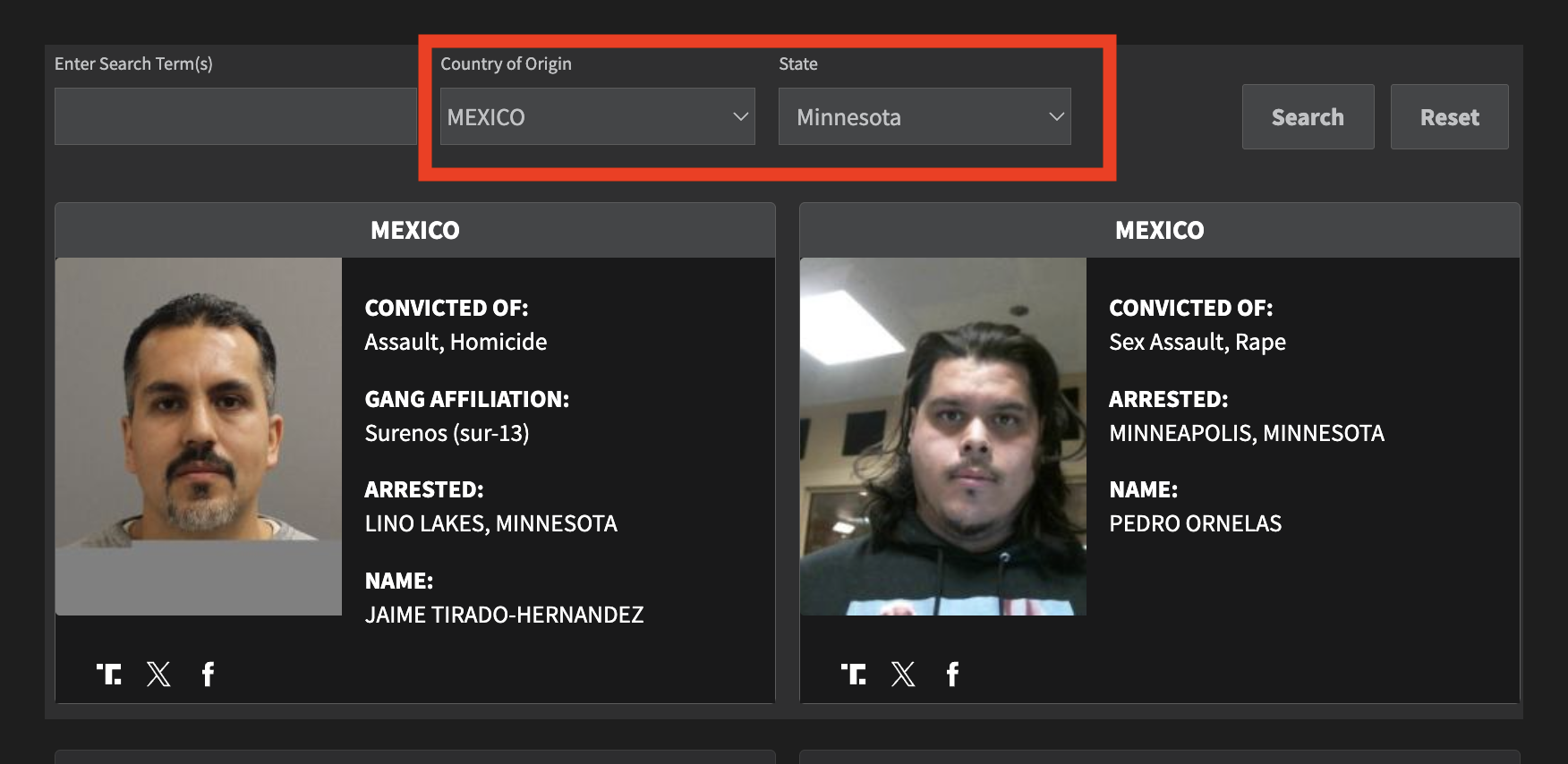
Each entry follows a standardized format that allows patterns to emerge quickly. The individual’s country of origin is displayed prominently at the top. Beneath it, the crime for which the individual was convicted is listed, followed by the city and state where the arrest occurred. This consistency makes the database readable not just as a collection of incidents, but as a broader record of enforcement activity.
Where additional context exists, a “>>” marker links directly to the original press release announcing the arrest. That link matters. It allows readers to move beyond a single-line description and review the government’s contemporaneous account of the case, including timing, circumstances, and charges.
The database becomes more revealing when users begin to interact with it. Keyword search allows readers to isolate specific crimes, such as robbery, assault, or drug-related offenses, and see how many cases fall under each category.
Filters also allow searches by state, exposing where enforcement actions are concentrated geographically, or by country of origin, making it possible to identify recurring source countries across cases. In Minnesota alone, for example, the database returns 16 full pages of individuals whose country of origin is listed as Mexico.
This is where the database stops being a static list and starts functioning as evidence. By allowing users to sort, filter, and compare entries, the site enables independent analysis rather than passive consumption. Readers are not asked to accept a conclusion. They are given the ability to test one.
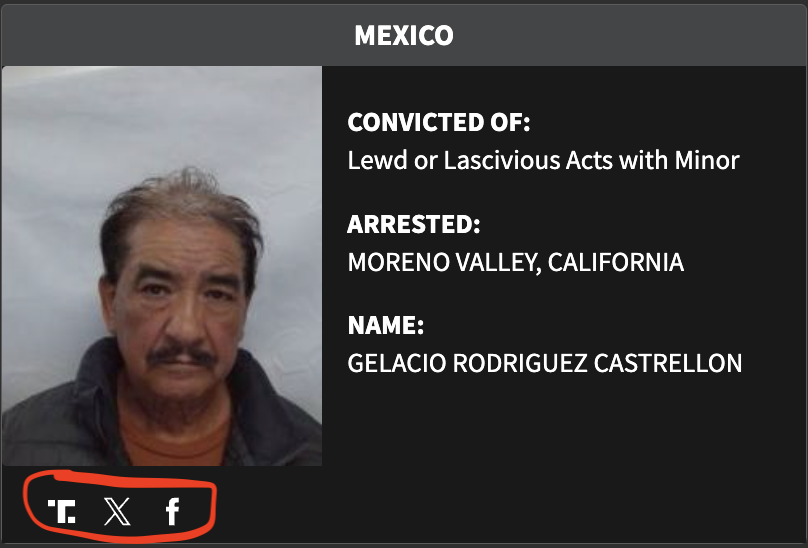
Each entry also includes built-in sharing tools for Truth Social, X, and Facebook, reinforcing that these are public records intended for scrutiny, not internal memos meant to disappear into bureaucracy.
What emerges from this examination is not a campaign message, but a ledger. Each entry represents a documented case tied to a crime, a location, and often an additional press release. By making that record searchable and publicly accessible, the administration has subjected its enforcement claims to verification over time. That openness deserves recognition. But transparency is not a one-time gesture. Once enforcement is reduced to a public record, omissions matter as much as inclusions, and consistency becomes the test. A searchable database does not merely invite scrutiny; it creates it, and it does not forget.
CLICK HERE FOR FULL VERSION OF THIS STORY