


Alberta’s Independence Push Continues as 2026 Referendum Drive Kicks into Gear
“It’s virtually certain that by fall of 2026, a referendum ballot will include the question: “Do you agree that the Province of Alberta should cease to be a part of Canada to become an independent state?”
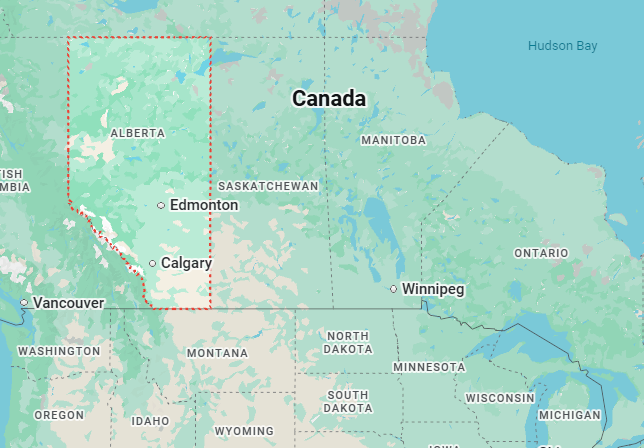
Last year, I noted that Canadian Prime Minister and climate cult leader Mark Carney decided to raise the carbon tax in Alberta, a fossil-fuel-rich region.
The province responded robustly, promptly freezing the industrial carbon tax. Albertans also began questioning whether an Alb-Exit was in order, and it appeared that an independence movement was gaining in popularity since Carney took the helm.
As we conclude 2025, it appears Alberta’s push for independence will continue into 2026. The backers of the movement have received permission to start gathering signatures to place a referendum on secession on the ballot.
Alberta’s election agency announced Monday it has approved a proposed referendum question on the province separating from Canada.
The question seeks a yes or no answer to: “Do you agree that the province of Alberta should cease to be a part of Canada to become an independent state?”
Elections Alberta said the proponents — the Alberta Prosperity Project and its chief executive officer, Mitch Sylvestre — have until early January to appoint a financial officer for its petition campaign, after which signature collection can begin.
Sylvestre, a constituency association president for Premier Danielle Smith’s United Conservative Party, has four months to collect just under 178,000 signatures. If he does so, the question would be put to Albertans in a referendum.
A piece published in the Calgary Herald indicates that the required level of signatures to get the measure before Alberta’s voters is achievable.
A genuine, province-wide vote on separation is upon us. It’s virtually certain that by fall of 2026, a referendum ballot will include the question: “Do you agree that the Province of Alberta should cease to be a part of Canada to become an independent state?”
To force this referendum, the separatists only need 178,000 signatures. Thomas Lukaszuk’s Forever Canadian movement, by contrast, required 293,000.
He got far more than the target, of course, but the shape-changing rules are typical of government favoritism that coddles the separatist cause, for fear of splitting the UCP.
It appears many Albertans are tired of their wealth being diverted to a system in which “free healthcare” leads to one-quarter of all deaths being attributable to medically assisted suicide, which includes a side of organ-harvesting tourism.
In 2026 Albertans will get a choice for greater Independence from Ottawa
Voting Yes starts the negotiations
Voting No dooms Albertans to another century of abuse
Vote Yes#AlbertaSeparation pic.twitter.com/SW2B6Cphys
— Alberta Separation (@albertaseparate) December 28, 2025
Meanwhile, the neighboring province of Saskatchewan is gearing up for a similar vote in the future.
A group promoting the idea of Saskatchewan separating from Canada says its public information sessions are drawing crowds.
The Saskatchewan Prosperity Project (SPP) says its presentations are meant to teach people about the benefits of Saskatchewan becoming a sovereign nation.
“Right now in Canada, it’s a sinking ship. And if we don’t take our lifeboat and throw it out and get off while we can, we’re going down with the ship and we don’t have to,” SPP president Brad Williams said.
SPP is aligned with the Alberta Prosperity Project, a group with similar goals for that province.
Like the residents of Alberta, those in Saskatchewan have noticed Canada’s top bureaucrats seem more interested in helping anyone other than Canadians.
Canada commits help to all other citizens but their own.
The citizens of Canada seem determined to see themselves through to the end result of suicidal empathy.
It's little wonder why Alberta and Saskatchewan want to sever ties and seek their own destiny through independence. https://t.co/4saSYhvRJY
— Jan Schaafsma (@JanSchaafsma2) December 28, 2025
It will be interesting to see the status of both of these movements at the end of 2026.
Donations tax deductible
to the full extent allowed by law.





Comments
Sounds like western Canada might want to remain Canadian while the ‘liberal’ east wants to follow some kind of British-socialist model.
Perhaps a trade for Minnezuela could be arranged?
Minnedishu?
Minnemalia?
Somalasota?
big deal
unless they are willing to shed their own blood..its all talk
A significant part of the Canadian population is watching this and cheering. There are other regions expressing similar thoughts which are completely surpressed by the government and the MSM (But I repeat myself). When it happens, ‘and it will. expect Ottawa to try to force the subjection with the military, then they find out just how out of touch the are.
BREAKING NEWS: US Federal District Judge James Boasberg issues a worldwide injunction halting the gathering of signatures in Alberta. The injunction also orders the names and addresses already collected to be turned over to a special prosecutor he intends to appoint later today.
In a separate ruling the US Supreme Court ruled 6-3 that any random Federal district judge has the authority to order US troops into Alberta “to protect Canada’s precious democracy.”
Would the referendum be legally binding?
No. A judge had already ruled that the question was unconstitutional and therefore the signature gathering should not go ahead, but the legislature changed the law to say that questions don’t have to be constitutional to be put to the voters. If the voters pass one that isn’t constitutional then it just won’t have any effect.
Instagram is loaded with content from Premier Smith on the exit. Log on and watch the fireworks. Talks are already going on about pipelines to the south for oil. Alberta’s mineral / oil wealth makes it the richest province in Canada.
Yeah looks like the liberal party gets about 25% of the vote in Alberta and Saskatchewan but since the eastern provinces have way more population and the liberals get about 53% of that they still win all the national posts.
That’s not quite how it works. Population is a factor but it’s whoever captures the most voting districts gets to form the government. Even then it is often a coalition government as it is at present.
Nothing will happen.
I had friends from BC I would see every summer in the 1980s at various shooting schools in WY. Back then, their gun laws were in many ways even easier than ours (no longer).
They joked about being adopted as the 51st state.
Is there a similar movement in British Columbia? If BC, Alberta, and Saskatchewan all secede, I can imagine them forming their own country (West Canada?) with a very long Pacific shore line for commerce and tourism, not to mention rich natural resources.
.
I get the feeling that there is some cultural or psychological reason that states/territories with shoreline tend to tilt blue.
I think Carney should mandate the disposal of all internal combustion engines including small one for boat motors and yard maintenance and only allow motors that are electric.
Especially in the winter when the temps drop to -12 with a couple feet of snow. It will be worth it to save the earth canuckistan.
Secession in Canada is governed by the Clarity Act of 2000.
Right now secession is unconstitutional, but the constitution can be amended. The Clarity Act says that if a province’s voters at a referendum express their wish to secede, the House of Commons must first determine whether the result reflected a clear expression of the province’s voters’ wishes.
The referendum question must have dealt only with secession and not any other matter, and the House may decide that the majority wasn’t big enough, or turnout wasn’t high enough, to be a clear expression of what the people actually want.
If the House of Commons agrees that the people of that province really do want secession, the federal government must then enter into negotiations with the provincial government, all other provinces, and any affected indigenous people, over a potential constitutional amendment to allow the secession. If everyone agrees, the constitution would be amended and the secession could proceed.