


U.S. Department of Justice Ends “Disparate Impact” Liability
While long disputed, disparate impact has still remained legally viable. At least until this week.
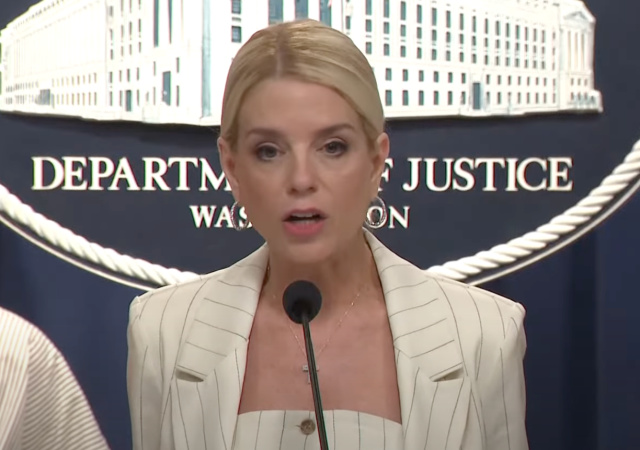
This week, the U.S. Department of Justice issued a final rule eliminating its regulations concerning so-called “disparate impact” liability for discrimination under Title VI of the Civil Rights Act of 1964.
The long-disputed issue was whether Title VI claims require intentional discrimination, or whether unintentional discrimination resulting in different outcomes for different people, allegedly based on discrimination, was actionable in court.
In short, under the disparate impact approach, individuals were encouraged to file lawsuits even where no evidence of intentional discrimination against them existed.
A short primer is in order.
Congress enacted Title VI as part of the landmark Civil Rights Act of 1964 to prohibit discrimination based on race, color, or national origin in programs and activities that receive federal funds.
But in 1973, the federal government added a new regulatory rule, disparate impact, that was not part of the law as originally envisioned by Congress.
While long disputed, disparate impact has still remained legally viable.
At least until this week.
The DOJ’s new rule eliminating disparate impact is based primarily on three justifications: U.S. Supreme Court decisions, an executive order issued by President Trump, and policy concerns.
First, the Supreme Court has found that Title VI only prohibits intentional discrimination, not neutral policies that might result in disparate outcomes. Even as far back as 1978, the Court wrote that Congress intended Title VI to prohibit “only those racial classifications that would violate the Equal Protection Clause” if committed by a government actor. Other cases have echoed this conclusion.
Given the Court’s recent affirmation that “statutes… have a single, best meaning” that is “fixed at the time of enactment,” the DOJ argues that the single, best meaning of Title VI is that it prohibits only intentional discrimination.
Second, on April 23, 2025, President Trump issued Executive Order 14281, which restated the “bedrock principle of the United States . . . that all citizens are treated equally under the law.” The Order further explained that this “principle guarantees equality of opportunity, not equal outcomes.”
Specifically regarding disparate impact liability, the President wrote that disparate impact endangers the foundational principle of equality before the law. Because of this conflict with constitutional principles, “[i]t is the policy of the United States to eliminate the use of disparate-impact liability in all contexts to the maximum degree possible…”
Third, the DOJ bases its new rule, which rolls back disparate impact liability, on serious policy concerns about how the law affects and incentivizes those subject to its restrictions.
Instead of reducing or eliminating discrimination, the original purpose of Title VI, disparate impact liability requires individuals and businesses receiving federal money to consider race and engage in racial balancing to avoid getting sued.
Instead of institutions or businesses receiving federal funding, making hiring and other decisions based on merit and skill, because this process could lead to disparate outcomes for a given group, they are forced to engage in the very kind of discrimination Title VI was meant to fix.
Attorney General Pam Bondi has definitively now settled the issue with a lot of help from Harmeet Dhillon, head of the Civil Rights Division.
Per her press release concerning the new rule: “For decades, the Justice Department has used disparate-impact liability to undermine the constitutional principle that all Americans must be treated equally under the law. No longer.”
With the DOJ’s new rule, the Department rolls back over fifty years of disputed legal territory concerning disparate impact. For some activists, this move will be decried as taking away an important tool to fight discrimination.
But for those of us who think individuals should be judged by their intentions and actions, rather than what racial group they belong to, this change is a cause of celebration.
Reminder: we are a small organization going up against powerful and wealthy government and private institutions devoted to DEI discrimination. Donations are greatly needed and appreciated.
———–
Timothy R. Snowball is a Senior Attorney at the Equal Protection Project.
Donations tax deductible
to the full extent allowed by law.







Comments
Like so many things the Trump administration does, this is part of a larger puzzle. The CRA of 1964 was not fully implemented until the Griggs v Duke Power result in 1971. It was therein that the turd known as “disparate impact” was first dropped into the public sphere.
We should send that to the dustbin of history.
Why act now? Yes, the time is ripe. But the real reason is that the arguments and reasoning were sealed for 45 years. Thus they will become available to the public next year. Somebody has read the sealed transcripts and knows the reasoning (or payola, or whatever … there was some inside dealing almost certainly) is not going to look good when examined. So it is best to get the left worked up into a lather now.
The parallels to the Epstein papers approach are kinda clear.
Can we get Griggs into the dustbin of history using the logic of SJ O’Connor, the bit about affirmative action being obsolete 25 years after 2003? One can hope.
This is utter bullshit. Utter and obvious bullshit, so the fact that it got (as of now) six upvotes means there are at least six utter idiots who thought this was true, or at least plausible.
Not only is it bullshit, but even if in some bizarro alternative universe the claim about the sealing were true, 1971 + 45 = 2016, so the claim on the timing would still be false.
Small typo. Yes, off by 10. The Griggs decision was “utter bullshit” when it came out, and has been show to be utter bullshit since. It has caused a whole lifetime of grief and a trillion dollars in waste. Had Congress *really* meant to specify what happened in Griggs as the conclusion of the CRA ’64, it would have said so.
One can get a sense of the irregularity by reading “Towards a Definitive History of Griggs vs. Duke Power”. Three generations ago my family helped bring CRA ’64 through Congress, and the whole story is not yet clearly documented. The guilty are dying off slowly, and there will be more info coming out.
No, it’s not just the “off by 10”. The claim that the arguments and reasoning were sealed, for any number of years, is obvious bullshit that you made up.
You make a very good point about the ‘larger puzzle’. The Trump Admin 2.0 is moving across gov’t to undo/rollback the Cray Cray policies the wokiesta/leftists (assisted by the country club compassionate types aka Ned Flanders, Fredo Con wing) have imposed over the last five or so decades. Much of this will be a frustratingly slow process with ‘resistance’ efforts by entrenched ideological bureaucracy, law fare by Blue States/lefty orgs, and internal reluctance by many GoP elected officials to ‘rock the boat’ for fear of ending their go along/get along grift. It’s gonna be a long, slow slog through the courts to make headway, follow APA public notice requirements then law fare to change regulations, overcome successive claims in multiple Judicial Circuits. The foundation is the most important piece and Trump 2.0 is working on it, but first gotta clear the ground from overgrown Cray Cray Wokiesta/leftist policies and legal interpretations. The last 18 months of the.2nd Trump term and hopefully his GoP successor in ’29 will face far fewer obstacles, but it is gonna take consistent effort through at least a decade to get it done.
Damn! Milhouse! I thought we were going to miss you….
Instead we have
Milhouse UNLEASHED!
LOL
Yeah, I’m still in the city, and it’s now looking like the move might not happen until the spring. Which I’m reasonably happy about, since I was not looking forward to being out in the middle of nowhere in the dead of winter.
I’m still fairly busy, and am trying to waste less time here, but when I come across something as absurd as a claim that a supreme court decision has been “sealed” I have to react.
Finally!
The whole idea that any number not corresponding directly* to the exact makeup of the whole is somehow malfeasance is ludicrous. Unless you believe that literally all people are exact widgets, copies of each other. It’s a major failing (there are soooo many) in Progressivism: lack of acknowledgement of human nature.
(* For those of the DEI cult within Progressivism, corresponding directly is the minimum for any group except those deemed to have all the power – white males. So, the ‘oppressed’ can go over the number in the general population, but not below.)
Having done their very best over the last 60 years to destroy black culture, black families and black excellence, progressives now believe fervently but privately in the inherent inferiority of black people.
And because the Left believe darker skinned people are incapable of excelling on their own, they must be propped up with a rickety and unconstitutional structure of racial favoritism because “nah fair!”
If US blacks have an average IQ of 86, you want disparate impact. It’s a positive good.
Each community and individual has a responsibility to be an owner of their actions and failures. IQ is an excuse for reprobate behavior and willful ignorance and slovenliness.
IQ also accounts for low average scores on the lieutenants’ exam, which is called a test with disparate impact.
A sane, legally laudable and morally upright decision, that was long overdue.
This is excellent news. Disparate impact allowed groups who practice no responsibility for their own behaviors to skirt responsibility. It has robbed honest brokers of billions of dollars in fines and shackled businesses.
Outstanding news!
So will this affect the disparate impact on white basketball players making the NBA?