


Federal Judges Block Texas From Using New Congressional Map
The judges told Texas to use the boundaries drawn in the 2021 map after finding that the state appeared to have gerrymandered based on race.
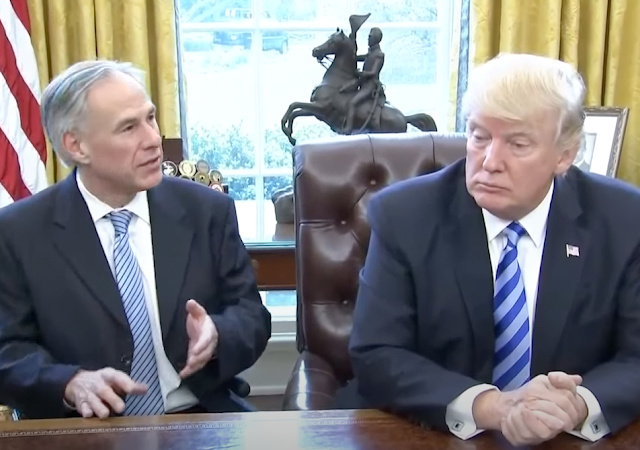
A three-judge panel of the U.S. District Court of the Western District of Texas – El Paso Division ruled 2-1 against Texas’s new Congressional map.
The judges told Texas to use the boundaries drawn in the 2021 map after finding that the state appeared to have gerrymandered based on race.
The court concluded that the plaintiffs have strong direct evidence that supports their claim that Texas took part in racial gerrymandering.
The Senate passed the new map in August 2025. Texas Gov. Greg Abbott signed it into law.
The plaintiffs, including the League of United Latin American Citizens, filed a lawsuit.
The Trump administration asked Texas to redistrict to flip five Democratic districts to Republican, prompting legislators to hesitate.
But then race came into the equation:
But when the Trump Administration reframed its request as a demand to redistrict congressional seats based on their racial makeup, Texas lawmakers immediately jumped on board. On July 7, Harmeet Dhillon, the head of the Civil Rights Division at the Department of Justice (“DOJ”), sent a letter (“the DOJ Letter”) to the Governor and Attorney General of Texas making the legally incorrect assertion that four congressional districts in Texas were “unconstitutional” because they were “coalition districts”—majority-non-White districts in which no single racial group constituted a 50% majority. In the letter, DOJ threatened legal action if Texas didn’t immediately dismantle and redraw these districts—a threat based entirely on their racial makeup. Notably, the DOJ Letter targeted only majority-non-White districts. Any mention of majority White Democrat districts—which DOJ presumably would have also targeted if its aims were partisan rather than racial—was conspicuously absent.
Two days later, citing the DOJ Letter, the Governor added redistricting to the special session’s legislative agenda. In doing so, the Governor explicitly directed the Legislature to draw a new U.S. House map to resolve DOJ’s concerns. In other words, the Governor explicitly directed the Legislature to redistrict based on race. In press appearances, the Governor plainly and expressly disavowed any partisan objective and instead repeatedly stated that his goal was to eliminate coalition districts and create new majority-Hispanic districts.
“The Legislature adopted those racial objectives,” wrote Judge Jeffrey Brown. “The redistricting bill’s sponsors made numerous statements suggesting that they had intentionally manipulated the districts’ lines to create more majority-Hispanic and majority-Black districts.”
The DOJ letter came out on July 7, addressing four Texas districts and describing them as “unconstitutional ‘coalition districts.'” Dhillon said the DOJ wanted Texas “to rectify these race-based considerations from these districts.”
A coalition district is one “where the combined racial minorities make up a majority of the population and where the voters from these different racial groups vote together to elect the minority-preferred candidate.”
The Voting Rights Act does not make these districts legally required, even though Dhillon said otherwise in her letter: “It is well-established that so called ‘coalition districts’ run afoul the [sic] Voting Rights Act and the Fourteenth Amendment.”
So, from what I’m reading, the Voting Rights Act does not require coalition districts, but there is nothing that stops a state from forming them.
Brown argued that the case Dhillon used, Petteway v. Galveston County, does not fit her case:
Nowhere in Petteway does the Fifth Circuit hold that merely having a coalition district in an electoral map is per se unconstitutional. The Petteway court had no occasion to opine about the constitutionality of coalition districts. Instead, the en banc court remanded the case to the district court to consider the plaintiffs’ constitutional claims in the first instance.
“Thus, even though federal courts in this Circuit can no longer force a legislative body to create a coalition district under VRA § 2, that doesn’t prohibit such a body from voluntarily creating a coalition district for political or other race-neutral reasons,” added Brown.
How will this affect other states? I think it depends on the appeals. More than likely, Texas will appeal this decision.
If Texas cannot use the new map, then it wouldn’t shock me if the new California map doesn’t hold up.
California Republicans and the DOJ already sued the state over Prop 50, which allows the Democrat-led legislature to draw a new Congressional map.
The new map flips five Republican districts to Democrats.
Both groups claim that California Democrats redrew the map based on race: “In the press, California’s legislators and governor sold a plan to promote the interests of Democrats in the upcoming midterm elections. But amongst themselves and on the debate floor, the focus was not partisanship, but race.”
Crazy idea! How about we draw the districts based on population and nothing else?
Donations tax deductible
to the full extent allowed by law.







Comments
Appeal and then if you don’t win that, ignore the goddamn judges. They’re overstepping their Authority way too often
You can’t ignore the judges. If the court says the map is illegal the state can’t use it. If Paxton ignores it the judges can and will hold him in contempt and throw him in a cell. And you can only appeal it to SCOTUS. So max pressure needs to be put on SCOTUS to take it up, and a DOJ suit should do the trick.
I think this is another case of you confusing “he shouldn’t” or “he may not” with “he can’t.”
There’s still an issue of “How many divisions does he have?” No one may want to press-to-test that particular COA, but it’s a possibility. (If the DoJ disagrees with the judge, who is it that’s going to arrest Paxton? Not the FBI. Not the Rangers, for sure.)
If the state AG defies a court order, the judges can directly order the US Marshals to arrest him in order to compel him to comply. The President can’t even do anything about that, because it’s not a criminal case.
They can also file criminal charges against him, and if the US Attorney refuses to prosecute they can appoint a private attorney to do so. But in that case the President could pardon him.
Where does the Constitution give judges authority over state districting?
Federal law forbids the states from drawing districts in order to dilute the power of racial groups. The constitution not only makes all federal law the supreme law of the land, binding all states, but in the case of congressional elections it specifically gives Congress the power to order the states how to do it.
And of course it explicitly gives the federal courts the authority to say what it is that federal law requires in any given case.
You surely CAN ignore judges. The question is whether you should. We are approaching that point.
You can only ignore judges when they’re ultra vires, which in this case they’re clearly not. I think they’re wrong, but they’re clearly within their jurisdiction. So SCOTUS needs to correct them.
Oh, but you can. It’s getting to the point where the country is going to start unraveling if someone doesn’t stand up to these robed peawits. They know exactly what they are doing.
You can most definitely ignore the judges. Joe Biden did that exact thing when the Supreme Court ruled he could not mass forgive student loan debt.
Let these judges enforce their bullshit.
No, he did not do that. When he lost that case he immediately complied with the court’s judgment.
The Supreme Court has never held that there’s some law or constitutional provision that inherently prohibits a president from forgiving debts owed to the USA. The president lacks such a power, but Congress can make a law that authorizes him to do so.
Biden claimed that a specific law did so authorize him, SCOTUS said no, it doesn’t mean that, so he stopped, and started looking for another law that might contain some such authority. He found one that he claimed did authorize a more limited program, so he started relying on that law, and it was in the process of being challenged when Trump was elected and put a stop to it. SCOTUS never got a chance to rule on whether Biden was reading the second law correctly.
You damn well can. The Constitution is Crystal clear, it’s the state legislature not judges that makes those decisions. Screw those goddamn retarded judges
No, the constitution says that federal law is the supreme law of the land, and overrides all state laws and constitutions. And in the case of congressional elections it specifically says that Congress gets to override any state decision except the location of polling places for senate elections. So the judges are well within their jurisdiction, and the constitution gives them the power to say what federal law is.
Only SCOTUS can override them, so it’s urgent to go directly to them for an immediate stay. Having DOJ file suit against TX will help with that, so Dhillon should do so immediately. That way TX goes to SCOTUS and says “We’re in a bind; no matter what we do we risk breaking the law, so we need guidance.”
No matter how much you simp for them, judges won’t love you.
What has loving or hating got to do with anything? Do you think I know any federal judges?!
This is what the US constitution says. The state legislature must obey federal law, and the federal courts say what that law is.
CONGRESS isn’t overrruling anything here, a retarded judge without the authority is.
Congress made the VRA. It is the courts’ job to say what the VRA means, and how it applies to any given situation. That is the judicial power, which the constitution explicitly vests in the federal courts and only in them. These judges say TX violated the VRA; in my opinion they’re wrong, but only SCOTUS can say so.
Indeed it doesn’t. But that’s not how those four districts were drawn in the 2011 map. They were consciously based on race, under the (now rejected) view that the VRA required such districts to be created wherever they could be. Now that that view has been rejected, Dhillon correctly wrote that those districts were now unconstitutional, and that if TX used them DOJ would sue to stop it. Which is still a live option, and DOJ should immediately bring such a suit, demanding that TX not obey this court’s injunction because it’s unconstitutional. That would likely force SCOTUS to step in.
Very good explanation of how/why TX got to this point. When the current CD are drawn, in part, on the prior interpretation of VRA pre Petteway v Galveston and that interpretation has shifted TX has a basis to redraw to come into ‘compliance’ lest they face similar lawsuits as Louisiana. The far better outcome is to junk all race based CD under both 14A and 15A returning us to a regime of individual not collective rights.
“If Texas cannot use the new map, then it wouldn’t shock me if the new California map doesn’t hold up.”
Except the California map will be reviewed by a panel of California judges, not Texas judges.
I have a great idea. Instead of constantly fighting over this crap every time there’s a power shift, require the voting districts to be comprised of contiguous postal zipcodes. The Census bureau uses it. The US Census Bureau creates ZIP Code Tabulation Areas (ZCTAs), which are geographic areas that correspond to ZIP codes. These are updated every 10 years with the Census data and are used for statistical purposes. The five digit codes rarely change and include a variety of races in each.
But, that is a simple and workable solution. Are you trying to put hundreds of bureaucrats out of work?!?
and then we’d watch our zip codes get changed every couple of years. no thanks.
But that would require Post Office work.
That means “every couple of years” would be the absolute best you could hope for, with more likely “every couple of decades.”
I think one problem with that approach is that ZIPs are based on addresses, not population.
Really, the ideal situation would put a bunch of similarly minded-people who live in communities into voting districts. But the Dems have spent decades dividing people and making that harder and harder.
(A “scientific” way would be to pinpoint the geographic center of the state, then draw outward to include the proper number of people. You could also use the census to determine the population center of the state and draw outward from there.)
That won’t change anything, because each district will still have to consist of multiple ZIP codes, that add up to approximately the same total population. So there’ll still be the same wrangling over which ZIP codes to put in which district. All that you would change is the granularity available. So you can’t just say this district is short 1000 people and that district has 1000 too many, so we’ll shift this block from B to A. Instead you have to shift an entire ZIP code, which might create an even worse imbalance.
Just stop that. You, and your logic.
Fifth Circuit will reverse. Count on it.
I don’t think this can go to the 5th Circuit. As I understand it such cases are decided by a mixed panel of the district court and the appeals court, so they can only be appealed directly to SCOTUS. Which needs to happen immediately.
I don’t remember where I read this, though.
I found it.
“Unlike most federal lawsuits, which are heard by a single district judge and then appealed to a circuit court, voting rights lawsuits are initially heard by two district judges and one circuit judge, and their ruling can only be appealed directly to the U.S. Supreme Court.”
28 USC 2284:
A district court of three judges shall be convened when otherwise required by Act of Congress, or when an action is filed challenging the constitutionality of the apportionment of congressional districts or the apportionment of any statewide legislative body.
28 USC 1253:
Except as otherwise provided by law, any party may appeal to the Supreme Court from an order granting or denying, after notice and hearing, an interlocutory or permanent injunction in any civil action, suit or proceeding required by any Act of Congress to be heard and determined by a district court of three judges.
the judiciary is more of a joke than congress now except the pay is better
and you have lifetime tenure with little risk of losing it.
I find it interesting that judges can pre-determine how individual people will vote. I’d like some advice on lottery numbers. And, I’ll say it again: Hispanic is not a race.
They’re not determining that. They’re determining only what considerations went into drawing the map. It’s the legislators who drew it who were doing the guessing about how people would vote.
In this case race was certainly on the legislators’ minds, but the court got it backwards. The legislature’s intent was not to introduce racial considerations into the map, but to eliminate the ones that had gone into the 2011 map.
You know darn well they call Race and then run over you like a tyrant.
Of course this Commissar will tell California they can’t gerrymandering due to cutting off 1/2 the citizens, right?
My understanding is it’s up to the state ( see California) to change the election map as they want. Cry Race shouldn’t cut it to wipe out that State Right.
It is not a state’s right to change the map with the intent or effect of depriving a racial minority of political representation. That violates the VRA, and according to the GOP suit in CA it also violates the 14th and 15th amendments.
Whether a map was drawn for racial reasons is for a federal court to determine. There’s this case against TX, and there’s also the case against CA. Obviously they won’t be decided by the same court, unless they both come before SCOTUS.
Win on appeal, right?
One would hope and expect so, since the new map is not racially gerrymandered, but rather reverses a previous racial gerrymander that DOJ says is no longer lawful. This court disagrees with DOJ, but that doesn’t change its opinion, or its threat to sue TX if it obeys this court order.
Re courts’ authority to enforce contempt orders on their own, see Young v. United States ex rel. Vuitton et Fils, 481 U.S. 787 (1987).
As this Court declared in Michaelson v. United States ex rel. Chicago, St. P., M., & O. R. Co., 266 U. S. 42 (1924):
The ability to punish disobedience to judicial orders is regarded as essential to ensuring that the Judiciary has a means to vindicate its own authority without complete dependence on other Branches.
“If a party can make himself a judge of the validity of orders which have been issued, and by his own act of disobedience set them aside, then are the courts impotent, and what the Constitution now fittingly calls ‘the judicial power of the United States’ would be a mere mockery.” Gompers v. Bucks Stove & Range Co., 221 U. S. 418, 221 U. S. 450 (1911).
As a result, “there could be no more important duty than to render such a decree as would serve to vindicate the jurisdiction and authority of courts to enforce orders and to punish acts of disobedience.” Ibid.
Courts cannot be at the mercy of another Branch in deciding whether such proceedings should be initiated. The ability to appoint a private attorney to prosecute a contempt action satisfies the need for an independent means of self-protection, without which courts would be “mere boards of arbitration whose judgments and decrees would be only advisory.” Ibid.
I thought the 2021 map had been ruled invalid, so Texas cannot use it for 2026. Was it only the DOJ that said it was invalid, or SCOTUS precedent implying such?
While this piece contends that if Texas’ ‘new’ map is invalid, California’s should be too, is that actually valid? California is discriminating against Republicans, and creating race based (pro-Democrat) voting districts, but the Left don’t have an issue with ‘positive discrimination’ only neutrality and ‘negative discrimination’. Thus isn’t it actually plausible that Democrats judges in California rule California’s racially gerrymandered map is permissible for use in the 2026 election whereas Texas’ racially neutral map is illegitimate?
No, the only challenge to its validity comes from Dhillon’s letter, which the court calls “incorrect”.
If the same panel were to hear both cases, it would be hard for it to find against the TX map and for the CA one. But it won’t be heard by the same panel, because it’s in a different circuit and district, so there’s no reason that panel couldn’t find the opposite. SCOTUS would then have to sort it out.
The grounds for the two challenges are different; the TX challenge is based on the VRA, while the CA one is based on the 14th and 15th amendments, so it’s more novel. VRA cases have a lot of precedent; 15A cases don’t. But the principle is the same; political gerrymandering is fine, but racial gerrymandering is not.
And of course what “the left” has an issue with shouldn’t be a factor; where it is, the court will take great pains to hide that and pretend it isn’t, and it take a lot for an appeals court to accuse a lower court of bad faith.
How does one separate racial from partisan gerrymandering? Race and Party are very tightly correlated. Do you distinguish simply by what legislators said on the floor in their debates? What if they are careful and only discuss race in the back rooms and in private chats? In that case, their opponents could discuss race on the floor of the legislature just to torpedo any plan the majority is concocting.
The problem stems from the federal requirement for single member districts for congressional seats. There are ways to elect congressmen statewide that use proportional or cumulative voting, but those are no panacea, as state legislatures could come up with primary election schemes to select the candidates that ensure their congressional delegation is entirely to their liking. [just imagine a proportional representation scheme that uses California’s current jungle primary system to select the A list and B list for the general election to understand what I mean here.] Or you could elect all congressmen statewide on an at-large basis. That would make CA’s delegation all (D) and the Texas delegation all (R).
And in their correspondence. In this case the evidence was Dhillon’s letter, and all the responses to it.
But that is what SCOTUS will now have to decide. Was the motive political or racial? I think it’s obvious that it was political, and I hope SCOTUS sees it the same way. Dhillon’s letter doesn’t say you should racially gerrymander, it says the current map is racially gerrymandered, and that is why you must change it.
To a Cultural Marxist Race is the first defining factor
dems: its all about race
hey what we do isnt about race
and they continue to win with this 5th grader na na na na na policy
gop is handing our country over to them with ease
The question is how do you define racial gerrymandering? There is a current case before SCOTUS that was already heard, and it wouldn’t surprise me if SCOTUS puts both the CA and TX changes on hold and rehears all the cases next year so they can make a bright line definition between partisan and racial gerrymandering – if such a thing is even possible. Because race and party are so tightly correlated, it may not be possible to have a bright line definition. What then?
The LA case was listed for rehearing. But these cases need an immediate response