


After Six-Year Pause, U.S. Sees New Local Chikungunya Case in New York
Meanwhile, Minnesota is dealing with a serious outbreak of another mosquito-borne disease: West Nile Virus.
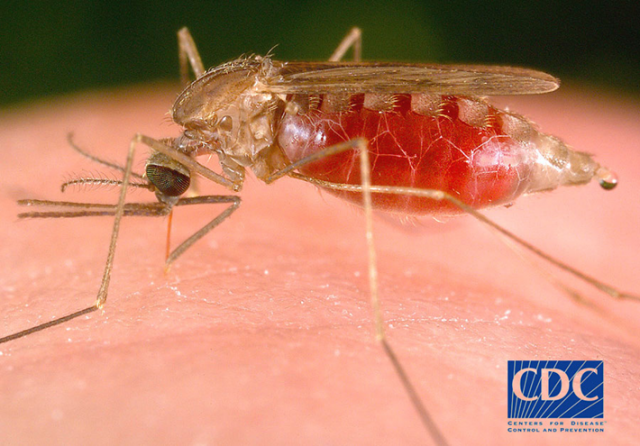
When I reported on the disease known as Chikungunya this August, outbreaks of the mosquito-borne virus were being reported in several regions across the globe, with a significant surge noted in southern China.
The range now has apparently expanded to include New York. Health officials have confirmed that a resident of Nassau County, Long Island, has tested positive for the disease, marking the first locally acquired infection in this country since 2019 and the first ever confirmed in New York State.
The Nassau County Health Department confirmed that the individual began experiencing symptoms in August after traveling outside of the region, but not out of the country.
It’s not clear how the person contracted the virus, but health officials said that they were most likely bitten by an infected mosquito.
In late September, a 60-year-old woman in Nassau County who hadn’t traveled outside of her immediate area said that preliminary testing detected the virus in her blood.
It’s unclear if the woman is the same patient the health departments are referring to.
Chikungunya is a viral disease that causes a wide array of unpleasant symptoms: fever, intense joint pain, headache, muscle aches, rashes, nausea, and fatigue. There is no known cure, other than treating the symptoms as they arise. Most patients improve within a week, though joint symptoms can persist for weeks to years in some cases.
New York health officials are still trying to identify the source of the locally-acquired virus.
So far in 2025, Chikungunya has remained largely an imported disease in the U.S., with 88 travel-associated cases reported among residents as of September 30, according to the Centers for Disease Control and Prevention.
“The case is interesting because the source of exposure for this individual is unclear,” said Dr Amesh Adalja, an infectious disease expert and senior scholar at the Johns Hopkins University Center for Health Security.
“My understanding is that pools of mosquitoes in the patient’s area have not tested positive. However, it could be that specific pools that are not part of the sample harbor the virus.”
He said that the types of mosquitoes that carry the virus do exist in the area, “so all it takes is an infected traveler to seed local mosquitoes, as has happened in Florida and Texas in years prior.”
#NewYork confirms first locally acquired #Chikungunya case in US since 2019 😯🍎🦟https://t.co/7mtMitsi3V
— Vinay P. Saldanha (@SaldanhaVP) October 15, 2025
Meanwhile, Minnesota is dealing with a serious outbreak of another mosquito-borne disease: West Nile Virus.
An unusually severe and deadly West Nile virus season in Minnesota has infected over 100 people, according to health officials.
The Minnesota Department of Health (MDH) on Tuesday said 107 cases have been recorded this year, with 79 people hospitalized and 10 deaths.
The number of West Nile cases confirmed in 2025 represent the state’s worst outbreak season since 2003, when cases reached 148.
…According to MDH, most people who are bitten by a West Nile-infected mosquito will experience either no symptoms or mild flu-like illness.
Symptoms usually show up within one to two weeks after a mosquito bite and less than 1% of people who are infected develop encephalitis or meningitis.
West Nile is found throughout Minnesota, but agricultural regions in the western and central portions of the state are considered the highest risk areas.
The Centers for Disease Control and Prevention (CDC) reports 1,433 confirmed human West Nile cases in 2025, a 40% increase compared with seasonal averages. Cases have been reported in 42 states, with higher concentrations in Colorado (220 cases), Minnesota (107), California, and Texas.
Interestingly, the first case of West Nile Virus in humans in this country was reported in New York City in the summer of 1999. It has subsequently become the most prevalent mosquito-borne disease in the nation.
As the season for the mosquito-borne illness nears a close, states in the region are reporting higher than average cases and deaths. https://t.co/vO1lDpfZlD
— Duluth News Tribune (@duluthnews) October 14, 2025
There used to be a time in this country when the worst experience associated with a mosquito bite was an intense itch. I would welcome a return to those conditions.
Until then, be mindful when you go outdoors to protect yourself, your loved ones, and your pets.
Donations tax deductible
to the full extent allowed by law.







Comments
New chikungunya case in New York?
Yes, and like TDS there is no cure for chikungunya which is spread by a muslim vector called mamdani.
But New York has been bitten with the sucker and it will likely spell doom for big apple.
New York is one state in which environmentalists are bearing down on legislators to ban the use of pesticides for all purposes without regard to risk or benefit. Their doctrine is the precautionary principle which they cling to with a religious zeal. If they believe (correctly or not) that something poses a hazard, then that something must never be used. And good luck to you if you’re a researcher trying to prove a negative.
They couch their emotional arguments with feel good platitudes such as “it’s for the children” (at least the ones they don’t abort) and “pollinator protection” while expecting you to believe that we still live in 1962 America awash in DDT and that Rachel Carson had no effect on eventual environmental policy.
As these environmentalists succeed in banning rodenticides and insecticides, long eradicated human diseases will again cause pandemics (real ones, not imaginary political pandemics like COVID). This story serves as a warning; ignore it at your peril.
These Malthusians should not be listened to, much less followed.
Gee, I wonder where that infected mosquito picked up the disease?
Obviously, they bit an unvetted Biden illegal.