


Gordon Klein v. UCLA Trial Update – Closing Arguments
Awaiting Judge’s Decision in case of faculty member punished for refusing to give Black students preferential treatment.
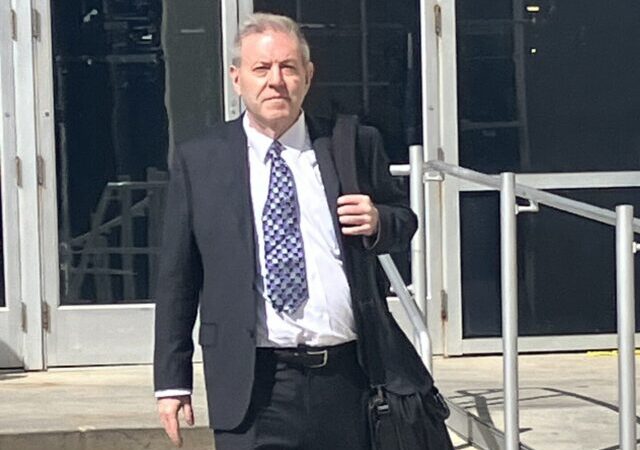
The trial in the case of Prof. Gordon Klein versus the UC Regents and UCLA business school Dean Antonio Bernardo has come to a close with closing arguments earlier this month. The case now rests with the Judge, as this is a non-jury trial.
Legal Insurrection has been following the dispute since inception. Our prior trial reports are here:
- Trial Starts In Suit Against UCLA By Prof. Gordon Klein, Targeted and Smeared For Refusing Exam “Leniency” For Black Students
- Gordon Klein v. UCLA Trial Update – Expert and Student Take The Stand
- Gordon Klein v. UCLA Trial Update – Cross of Prof. Klein Wraps Up, Dean Bernardo Takes The Stand
- Gordon Klein v. UCLA Trial Update – Dean’s Cross-Examination Continues, Supervisor Testifies
- Gordon Klein v. UCLA Trial Update – Plaintiff’s Expert Values Damages At Over $13 Million
- Gordon Klein v. UCLA Trial Update – Dean Bernardo’s Testimony Wraps Up
- Gordon Klein v. UCLA Trial Update – Plaintiff Rests His Case, Defense Motion For Directed Verdict Denied
- Gordon Klein v. UCLA Trial Update – The Defense Puts On Its Case
- Gordon Klein v. UCLA Trial Update – The Defense Rests
The dispute between longtime UCLA lecturer Gordon Klein and the University of California reached a pivotal moment on September 5, 2025, as attorneys for both sides delivered closing arguments in Los Angeles Superior Court. Each side was allotted one hour, with the plaintiff reserved time for rebuttal.
Plaintiff’s Argument
Attorney Steven Goldberg opened by thanking Judge H. Jay Ford III and the court staff for their diligence over four years of proceedings. He then outlined three causes of action against the Regents: breach of contract, breach of the right to academic freedom, breach of confidentiality, and two breaches of the implied covenant of good faith and fair dealing. One covenant breach, he argued, arose from Klein’s removal in June 2020; the other from UCLA’s decision to deny him a merit raise in 2021. In addition, Goldberg asserted that every element had been proven against Dean Antonio Bernardo personally, including tort liability for false light and interference with Klein’s professional business.
The central question, Goldberg argued, was motive: why did the Regents and Dean Bernardo place Klein on leave on June 3, 2020? Although the university insisted this was an “involuntary leave” rather than a suspension, Goldberg pointed to internal emails, public statements, and media coverage, all of which described the action as a suspension. He argued that the defense could not escape the reality that it was treated as punishment both inside and outside the university. According to the plaintiff, the evidence showed two motives at work — to appear strong in the face of controversy and to appease an “angry mob” of students demanding action.
Goldberg accused the defendants of shifting and inconsistent positions, even invoking arguments and cases unrelated to the contract language at issue. On damages, Klein seeks roughly $13 million for lost consulting income, several million dollars more for reputational harm and emotional distress, and punitive damages against Bernardo. His counsel framed the case as a warning: administrators cannot sacrifice faculty rights to public pressure without consequences.
Defense Argument
UCLA countered that Klein was never suspended but placed on paid administrative leave, a lawful and temporary measure taken during a period of social upheaval and student unrest. Defense attorney Sandra McDonough argued that the university had a duty to protect students’ wellbeing and acted fully within its contractual rights. She also emphasized the Regents’ constitutional autonomy, likening their authority to that of a legislative body, and insisted they cannot be second-guessed on such personnel decisions.
The defense challenged the foundation of Klein’s damages, insisting there was no proof that his consulting clients stopped hiring him because of UCLA’s actions. McDonough noted that no client or firm testified to this effect and suggested that any reputational harm stemmed instead from Klein’s own words and his choice to amplify the controversy through national media appearances.
McDonough further argued that Klein failed to mitigate his losses, making no meaningful effort to market his services, develop new referrals, or rebuild his business after 2020. On the false light claim, she maintained that Klein became a limited public figure once the controversy went national, raising the legal bar to actual malice — which she said had not been proven. Ultimately, the defense depicted Klein’s financial and reputational setbacks as exaggerated and self-inflicted, and UCLA’s actions as reasonable, lawful, and necessary.
Judge’s Questions
Judge H. Jay Ford III pressed both sides on weaknesses in their cases. He asked Klein’s attorneys how reputational harm should be valued apart from lost earnings, and whether certain damages could be claimed under breach of contract after dropping a retaliation theory. To the defense, he questioned whether the Regents’ autonomy truly separates them when enforcing policies in ways that may breach agreements. Ford also emphasized that while the Regents have broad authority, their independence may not extend to ignoring contractual obligations or protections.
Next Steps
Judge Ford has taken the matter under submission and will issue a written ruling in the coming weeks.
======================
Jadon Soriano is a recent UCLA graduate with a Bachelors of Arts in Economics.
Donations tax deductible
to the full extent allowed by law.







Comments
This is a case where the “finding of facts ” by the fact finder – in this case the judge, not a jury is critical.
Offically, the documents show he was put on administrative leave. The reality is that he was suspended with the intention of termination. since the official documentation is an administrative leave, the finder of fact (the judge) could accept the Schools bogus cover up.
The appellete court will be hard pressed to override the trial courts finding of fact, especially if it fits the appeals courts preferred outcome.
See the Grutter case, where the CA6 upset the trial courts finding of fact to achieve the preferred outcome.
Which documents state administrative leave, and is that even significant? According to the defence, internal emails, public statements, and media coverage, all said suspension.
Even if there is internal paperwork saying administrative leave, is there an official distinction between (involuntary) administrative leave, and suspension? Is that a formal term used on paperwork in either practice or fact?
If administrations can use the term suspension, but instead use administrative leave even when suspending, so as to provide legal coverage, then it’s a theoretical distinction, not a practical one.
Without evidence showing staff are usually suspended via paperwork, not put on administrative leave – and such evidence could run into privacy issues, this seems an artificial argument.
“suggested that any reputational harm stemmed instead from Klein’s own words and his choice to amplify the controversy through national media appearances.”
So isn’t that outcome also due to the action that the regents/UCLA took against the plaintiff? Seems to me to be an attempt to obscure the argument by a bunch of words.