


Free Speech Win: New York Settles with Christian Photographer Over Same-Sex Wedding Case
A federal court in New York State initially ruled against the photographer but reversed itself after the landmark Supreme Court decision in 303 Creative LLC v. Elenis, a successful challenge to Colorado’s anti-discrimination law, on free speech grounds
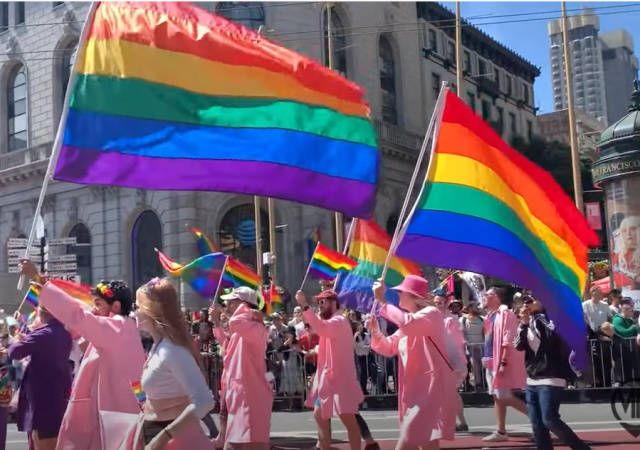
New York State agreed on Tuesday not to enforce its anti-discrimination law against a Christian wedding photographer opposed to photographing same-sex wedding scenes. The agreement also requires the state to pay a substantial sum in attorney fees to the group representing the photographer.
The Alliance Defending Freedom (ADF), which represented the photographer, secured the consent decree on July 22.
Emilee Carpenter, a New York State-based photographer, sued the state in 2021, challenging the state’s anti-discrimination law that compelled her to photograph custom scenes, like same-sex wedding scenes, inconsistent with her beliefs.
Carpenter challenged the law in 2021 in the U.S. District Court for the Western District of New York, which ruled against her in 2021. The court held that the U.S. Constitution allowed New York State to compel her to photograph same-sex wedding scenes if she offered the service for opposite-sex weddings, regardless of her Christian beliefs.
Carpenter appealed to the U.S. Court of Appeals for the Second Circuit in 2022. Before the Second Circuit made its decision, the U.S. Supreme Court decided 303 Creative LLC v. Elenis. The Court held that Colorado’s anti-discrimination law violated the Free Exercise Clause of the First Amendment where it would compel a Christian web designer to create custom websites for same-sex weddings.
In light of this decision, the Second Circuit vacated the district court’s decision and remanded Carpenter’s case to the district court for reconsideration in light of 303 Creative.
The district court then reversed itself, finding that the Free Speech Clause precludes New York State from compelling Carpenter to photograph scenes inconsistent with her beliefs.
Under the terms of the consent decree, New York State agreed to pay the ADF $225,000 in attorney fees and refrain from compelling Carpenter to take photographs she finds objectionable.
Donations tax deductible
to the full extent allowed by law.






Comments
Irrespective of your beliefs for or against gay marriage – Why are the activists trying to force their beliefs onto others. Force/cram down their beliefs
For the same reason progressive want you to drive an EV, live in a 15 minute city, and eat bugs. Because they think they are right about everything and you’re evil if you disagree.
Somewhat similiar to trying to force you to accept transgender – in spite of the obvious evil inflicted on those individuals
This is an example of garbage law brought on by previous legal mistakes. The Civil Rights Law ought to have prohibited freedom of association only in monopoly markets, and preserved freedom of association elsewhere (as with Masterworks Cakes).
As it is, that right is gone and freedom of association has to be reframed as a religious exemption, where it doesn’t make sense. Why should believers have more rights than non-believers to associate as they see fit?
Until the Civil Rights Law mistake is remedied, nothing much will make legal sense.
Interesting conundrum, isn’t it? What if Masterpiece Cake Shop had registered its reservations with the potential customers, telling them that he didn’t think he could do a good job because they were asking him to violate his conscience? They still want his cake, so he does the best he can. Nobody likes the finished product. Do they take him to court? On what basis does the court decide whether he created a “masterpiece” or just a plain, unenthusiastic cake?
Now consider the converse: a Christian couple goes to a satanist’s cake shop and wants them to make a cake for their wedding. They get what they get, which is terrible. What happens when ~ they~ go to court?
In the second hypothetical, the court would likely refuse to hear the case, arguing that the couple should have known what was likely to happen. What’s interesting is the courts, which should have taken the same position for the first [Masterpiece] case, did not.
Food might be viewed as sustenance, and therefore has to be sold to whoever can afford the product. But decorated food is art. Who can compel an artist to render, say, a painting or a photograph making something the artist finds abhorrent to look good? And look good to whom? What if a normal person is required to photograph a satanic sacrifice of a baby? Should that be compelled?
These cases are playgrounds for the devil. They should never have been heard in the first place.
*****************************
Similar things have come up in medicine. Well-established fact is that smokers have much higher complication rates than do non-smokers if they have hemorrhages in their brains. Smokers also have much higher complication rates for pre-emptively treating aneurysms that have not yet ruptured. I always asked patients whether they were smokers, and if they were, I declined treating them until and unless they had stopped smoking for at least a month. I told them that I would be happy to refer them to another surgeon who didn’t impose the same restriction on their patients. Interestingly, not a single patient asked for that. Some decided not to be treated, though.
Rhhardin: IMO that is because the freedom of religion precedents were decided when it was usually a left wing non-christian plaintiff against a majority christian conservative government. 20th century judges were happy to rule for the plaintiff and create a strong religious right. Many modern judges are forced to apply the precedents now that the field is reversed.