


Black and Foreign in the USSR
Russians don’t think of [Alexander] Pushkin as black or not black. He is a mythical creature of mysterious origin — the giver of language.
Calling of the Varangians is a curious paragraph in The Primary Chronicle, the 12th century document narrating Russia’s founding. “Our land is great and rich,” it reads, “but there’s no order in it. Come rule and reign over us.”
The utterance was addressed to the Scandinavian Rurik dynasty. Until the break up of the USSR, Russia had been governed by foreign or, at best, creole elites. Once the Golden Horde swept Kiev Rus in the middle of the 13th century, and especially after it receded, Tatars entered royal service and married into the nobility. One third of Russian noble families were of Tatar origin.
Crowned in 1682 and on a mission to westernize his domain, Peter the Great, imported Dutch and German experts, building settlements for them. In the 18th century, Catherine the Great, a German princess herself, brought in more of her own countrymen. During her reign, Cossacks merged into the upper class. Bolsheviks were as diverse as pre-revolutionary intelligentsia; Stalin was Georgian, and later Soviet rulers — Ukrainian.
In the 1930s, when the Great Depression ripped through the West and Nazi movement drove refugees out of Germany, Stalin lured in foreign specialists for his industrialization and collectivization projects. At the time, the USSR was particularly attractive to black Americans. One of them was George Tynes who was recruited by black Communist Oliver Golden. His great-granddaughter Francine Villa explained that he had an “amazing contract” lined up prior to his arrival. He put to use his American agronomy training, developing poultry farming in the Uzbek Republic. He married a woman from a dekulakized, likely Ukrainian, family exiled to Central Asia. It is worth noting that collectivization, which upturned the lives of Tynes’s in-laws, reestablished serfdom on newly formed collective farms. Nothing of that sort had happened in the post-Civil War USSR.
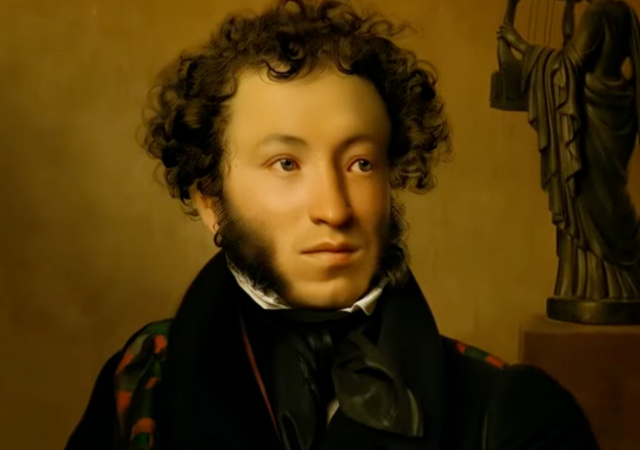
Communists and fellow travelers weren’t the first people of African descent to ever walk on Russian land. Peter the Great once received a gift — two boys kidnapped from Africa and sold in the Ottoman Empire. One of the boys, Abram Gannibal, became a prominent courtier and a general, and his great-grandson, Alexander Pushkin, the founder of the modern Russian language and literature. Russians don’t think of Pushkin as black or not black. He is a mythical creature of mysterious origin — the giver of language.
Hundreds of black Americans moved to the newly formed international socialist homeland following the Bolshevik Revolution — and the Communist regime used that development for propaganda. Most famously, the 1936 musical comedy Circus featured one of the most notorious Stalin-era marches, Wide Are the Stretches of My Native Land. During perestroika, TV documentaries superimposed its verses “I know of no other land where a man breathes so freely” against the portraits of the purged.
Circus tells the story of a fictional American performer with a terrible secret — her black baby. The movie ends with her astonishing discovery that skin color is not an issue under socialism. That was the official position, anyway.
The first rough draft on the history of the Purges was written by the intelligentsia who were naturally predisposed towards documenting their own lives. It was presumed that most of the victims were cultural elites.
Yet as soon as Russia opened the NKVD archives, a different picture began to emerge. Alexander Vatlin noted in Agents of Terror that the most targeted populations were peasants and ethnic minorities. Among the exiled nations were, for instance, the Poles, the Koreans, and the Volga Germans, whose sojourn in Russia began in the 18th century. German speakers, including the original Antifas, ended up in gulags.
American blacks often suffered similar fates. For instance, the first black American communist, Lovett Fort-Whiteman, starved to death in a Soviet concentration camp. Golden narrowly avoided being nabbed by the NKVD. His granddaughter, Russian media personality Yelena Khanga, believes that under Stalin, blacks were hunted not for their skin color but because they were Americans.
In the 1930s, black Russians were negligible in numbers and viewed as curiosities, like Gannibal. The curiosities provided the authorities with an opportunity to poke at the moral failings of the United States. James Lloydovich Patterson, the son of an American father and a Russian mother, and the child star in Circus, became a celebrity. “The film made me,” he recalls. “Stalin knew me.” Contemporary Americans would recognize objectification, but luckily for Patterson, Stalin’s ethnic policies were directed against his own minorities.
Socially, people were interested in blacks because they had access to American music and Circus remained a beloved feature for the duration of the USSR’s existence. It was as beloved as the poem by Korney Chukovsky about the African cannibal named Barmalei. The Soviet people didn’t see a contradiction.
Blacks started to arrive to the USSR in greater numbers after the death of Stalin. Those were typically foreign students or tourists and many of the latter came in 1957 for the World Festival of Youth and Students.
Following the event, some Slavic girls had colored babies. Children of foreign non-white fathers became known as дети фестиваля, or “festival children.” These children and their mothers were treated poorly and many ended up abandoned in orphanages or aborted.
Tynes’s great-granddaughter Francine Villa was born in Moscow but left the USSR in 1989, when the Iron Curtain came down. When she decided to return in 2019, Russia Today showcased Villa in a propaganda film titled Black in the USSR. In it, she claimed, “I was facing discrimination, racism,” explaining that in the U.S., black people live under “a different version of Jim Crow.” She alleged that three white cops threw her to the ground when she called for help — although she didn’t give any specific details of the incident.
Villa says she was inspired by Tynes who arrived in the USSR in the midst of the Purges. She contends that since it was “probably the worst times to go anywhere. Why not me? What if I come here?” Her immigration doesn’t sound particularly well thought-out.
The film shows her twirling through Moscow in a belted maxi and gushing about a cop who presented her a bouquet of flowers. Do we even know of any other land where a black woman feels so appreciated?
Last week, Villa filmed herself sobbing with a bloodied face. Turns out, her neighbors beat her up and called her black ass — a common Russian ethnic slur in front of her son. She was treated in an emergency room. And guess what, the police are ignoring her. Had she talked to me prior to her departure, I’d have warned her that something like that would happen.
The incident was triggered by some sort of domestic dispute. It appears that she was storing water in the common area, prompting the neighbor to yell “we don’t do that in Russia.” The couple that beat her up is racist — no question about it — but I detect a separate, underlying problem. These kinds of quarrels are extremely common in the dense housing units that dominate the former Soviet landscape — something to consider when we discuss 15 minute cities and other experiments with urbanism.
Russians are very aware of the Anglo preference for suburban living. They are now building a village for Americans — the real, white Americans, presumably. One such family of ideological migrants moved to Russia to escape the alphabet mafia in schools and lost all of their money. Another family saw their father go off to Ukraine. If the latter is only fair, losing money — even when gaining lots of media attention — is rather suboptimal.
One thing to understand about Russia is that it’s a country of people, not laws. It’s possible to move there and be happy — and not in the ways one would expect. For instance, the synth pop pioneer Marc Almond lived in Moscow part-time because he was fascinated by the Russian songwriting tradition and loved the gay scene. For a Westerner, it certainly helps to be a celebrity and have wealth. But it’s essential to know people who can help to navigate around difficult neighbors and avoid being swindled.
Almond departed in 2023, following the invasion of Ukraine. When the government is trending totalitarian, assume that it will turn on anyone who sticks out.
Donations tax deductible
to the full extent allowed by law.







Comments
A thoroughly enjoyable article about a topic I didn’t know existed – thank you Katya.
My pleasure. Thank you for reading.
nice article
but why should any race not be included in the delusion that there is something better out there than capitalism
You can critique socialism from the point of view of race.
I recall a book titles: BLACK ON RED about a young black engineer from the US that worked in the USSR in the 1930’s. Eventually, the Soviets took his passport and would not let him leave. He lived there until he managed to escape in the 60’s. It was an expose on the idea that Communist societies are not racist. Russia was racist as hell. Though mostly against the oriental tartars.
Socialism reconstituted serfdom. All peasants had their passports confiscated.
Don’t forget the movie, “White Nights”, where Gregory Hines plays a black American who defected to the USSR and found his new home a bit less than welcoming. He was banished to a Siberian village … until Mikhail Barishnykov gets trapped back in the Soviet Union (airplane forced to make an emergency landing) and Hines proves useful in trying to tame Barishnykov for the party. Good movie.
I was just reading a piece by Vasili Grossman and he mentioned Pushkin’s The Tale of the Golden Cockerel – a Russian favorite told by Village grandmothers. So, of course I had to check it out.
“The link begins with Irving’s The Legend of the Arabian Astrologer (1832), one of the many stories in his Tales of the Alhambra, written during his time as a diplomat in Spain. In it, a wise astrologer gives a king a magical weathercock that protects his realm by signaling danger. In return, the king promises the astrologer a favor …
Pushkin, ever attuned to international literature, borrowed this plot for The Tale of the Golden Cockerel (1834).”
With all due respect, Grossman is not a folklorist. Traditional storylines don’t respect international borders. Different peoples usually tell the same story.
Having said that, he’s right about Pushkin’s cosmopolitanism, of course. So, maybe or maybe not.
Interesting article. I read elsewhere about the woman beaten in Russia. At the same time there was a youtube video about a black woman who moved to Aftica and has since discovered it is not Wakanda. And then there is Britney Griner and her new found realization that she can be more oppressed elsewhere than in the US.