


General Mills Joins Expanding List of Companies Removing Artificial Colors from Its Foods
The company joins Kraft Heinz, PepsiCo, Danone North America, TreeHouse Foods and Tyson in moving away from synthetic food coloring.
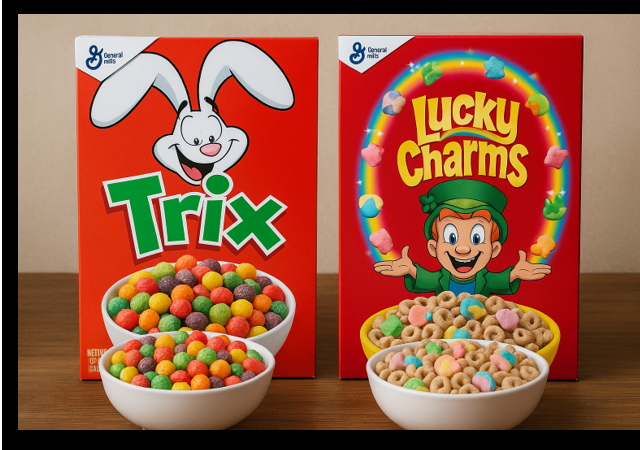
Health and Human Services Secretary Robert F. Kennedy is continuing to rack up wins in his effort to remove artificial food colors from the American diet.
General Mills has announced it will remove synthetic food dyes from all its U.S. retail products by the end of 2027. Furthermore, the company will phase out synthetic coloring agents from all cereals and food items provided to K-12 schools by the summer of 2026.
General Mills added the change will impact only a small portion of the K-12 school portfolio, as nearly all of its school offerings are made without certified colors while 85% of the U.S. retail portfolio is made without artificial colors.
This move comes a few months after Health Secretary Robert F. Kennedy Jr. laid out plans to remove synthetic food dyes from the U.S. food supply to address chronic diseases and conditions such as obesity among Americans.
Just last month, Texas Attorney General Ken Paxton launched an investigation into General Mills regarding the use of artificial food dyes in its products, particularly focusing on cereals such as Trix and Lucky Charms. In his announcement, Paxton noted General Mills had promised their removal ten years ago.
In 2015, General Mills made the pledge to remove, and did remove, artificial dyes from six of its cereals. The company profited from the announcement and garnered significant media support. But a mere two years later, General Mills started reselling its cereals with artificial dyes.
Additionally, despite the growing consensus regarding the potentially harmful effects of these ingredients, General Mills does not currently include any warning or otherwise make American consumers aware of the potential negative health effects of its products. General Mills still sells reformulated cereal without artificial dyes in other countries, and it should absolutely do the same for Texans and all Americans.
Paxton is clearly pleased by the announcement and likely will be monitoring the status of efforts going forward.
BREAKING: General Mills agrees to remove artificial dyes from its products following my investigation into the company for deceptively marketing its cereals that contain petroleum-based food colorings.
This is an incredible win for the health of our children and all Americans. pic.twitter.com/d2fZq0d2Gl
— Attorney General Ken Paxton (@KenPaxtonTX) June 18, 2025
In addition to Kraft Heinz and General Mills, several other major American food companies have recently announced plans to remove synthetic food dyes from their products.
Top executives of PepsiCo, Danone North America, TreeHouse Foods and Tyson in recent weeks said work was underway to remove the synthetic color additives from their products.
Officials from FDA and its parent, Dept. of Health & Human services, on April 22 said they had agreement from leaders of the food & beverage industry and were encouraging others to remove six petroleum-based colorants — Blue 1 & 2, Green 3, Red 40 and Yellow 5 & 6 — from the food supply “by the end of next year.” Red 3 already has been banned as of Jan 15, 2027.
PepsiCo is transitioning right now, promising those colors will be out of at least Lay’s and Tostitos products by the end of this year, Chairman/CEO Ramon Laguarta said at the company first-quarter financial call on April 24. No mention, however, of Cheetos, which uses Yellow 6.
“60-plus percent of our business today doesn’t have any artificial colors. So we’re well undergoing that transition,” Laguarta told financial analysts. “Obviously, we stand by the science, the products are very safe and there’s nothing to worry about. But we understand that there’s going to be probably a consumer demand for more natural ingredients, and we’re going to be accelerating that transition.
Hopefully, these moves will help improve the long-term health profile of Americans.
Donations tax deductible
to the full extent allowed by law.





Comments
This is a good thing.
It is so easy to use natural food products to dye food. It is also way more appealing for consumers.
Now all we have to do is stop kids from eating a box of cereal for breakfast, and to eat more healthy products. Sitting on the sofa in front of a video game console and a tv tray for hours is worse than the food itself.
Time to end the practice of being helicopter parents. The phrase “go outside and play “should come back.
This worked better when there were “eyes on the street”.
Not hard if they’re raised old fashioned.
AOC said that this is a devious, far-right attack on rainbow coalitions.
Spartacus calls it racist.
made me spit my drink.
well done.
I never liked Trix. Those fruity colors are a lie. It tastes like paper. Lucky Charms is better but that’s only the marshmallows. Make it all marshmallows and we’ll talk. Fortunately, there are now decent new, and actually healthy and essentially sugar free, alternatives.
I can’t wait for the new version of Trix, with “raspberry gray, lemon off-white, and orange beige!”
I do not know who still eats Trix any more, other than gamers and stoners.
If I were a stoner or gamer, I’d eat Count Chocula or Fruity Pebbles.
I found some bags of just marshmallows. They were at a banana-box grocery store for $1 each. I bought them all and break them out for hot chocolate parties.
Silly Rabbi, kicks are for trids.
There is no credible scientific evidence that synthetic dyes cause any health problems. The religious belief that they do is another example of mass hysteria that humans are prone to.
I’ve known several folks with severe sensitivities to those dyes, and no one with issues with the natural ones.
One was a eight year old who checked the ingredients on everything he was thinking of eating so he could avoid the dyes that made him feel awful for hours. Avoiding the dyes also meant not needing as much adhd medication.
??
people have issues with “natural ones” alll the time
their are plenty of allergies and sickness to peanuts as one huge example
I didn’t know that peanuts were a food coloring.
and nobody puts a gun to their head to eat it.
Dairy gives me the quick steps… so I don’t drink milk anymore. Government needs to butt out of this.
Which widely available commercial cereal could one choose as a replacement for Trix if they wanted to avoid artificial dye/colouring additives?
I am mostly with you on individual liberty. I would tell folks with peanut allergies to suck it up and not board an aircraft or go to bar or a baseball game or anyplace else peanuts are/were commonplace if they’re so worried about peanuts. Of course I’d also do the same for cigarettes in bars, airplanes, stadiums, pool halls and everywhere else smoking was common in the ’70s and tell the anti tobacco goons to stay home, go somewhere else or shut up and deal.
Which brand of crystal meth would you choose if Walter White’s blue stuff was giving you hives?
Your argument is as strong as everyone being forced to mask up for COVID to save someone else’s life.
1) the science was questionable at best
2) not my allergy, not my problem.
Andy,
I’m not an expert in illicit drugs but at a guess they’d likely substitute fentanyl for meth. Of course those are not lawful products and at.stret level operate without the blessings of any regulation or really much market pressure to remove dye/coloring or any additave.that doesn’t directly kill the customer.
I suspect the data on potential hazards of due and additives is far more scientifically reliable than the voodoo used to implement mask mandates and arbitrary social distancing.
Which commercially available cereal without dyes and additives was the substitute you recommend for Trix? Seems odd that these companies would offer products without them in EU or Canadian markets but not USA.
Again if you want to tell everyone to suck it up and deal then OK. Lets be consistent though and bring peanuts and smoking back to their ubiquitous presence as they we’re in the ’70s. Won’t have any arguments from me on that score. Frankly don’t have one now. I just asked an honest question about a potential substitute cereal without the dye or additives some find objectionable. Wasn’t meant sarcastically or a gotcha.
Ask any diabetic. Plenty of choices. Most taste like cardboard. That’s life.
This is a demonstrable falsehood.
https://www.perplexity.ai/search/do-synthetic-food-dyes-cause-a-s9Z44amNQymvTL29FL264Q
Synthetic food dyes have been linked to several health concerns, particularly affecting children. Research indicates that these dyes can cause or exacerbate neurobehavioral problems such as hyperactivity, inattentiveness, restlessness, irritability, memory problems, and volatile moods in some children, including those with ADHD. While there is no conclusive evidence that food dyes cause ADHD itself, they may worsen symptoms of the disorder.
In addition to behavioral effects, synthetic dyes have been associated with other health risks:
Cancer risk: Some dyes, notably Red No. 3 (erythrosine), have been found to cause cancer in animal studies, leading to partial bans and ongoing controversy. Other dyes like Red 40, Yellow 5, and Yellow 6 have been found contaminated with carcinogens such as benzidine. However, the evidence regarding cancer risk in humans is not definitive, and regulatory agencies have not banned most dyes despite these concerns.
Allergic reactions: Certain dyes, especially Yellow 5 (tartrazine), Red 40, Yellow 5, and Yellow 6, can cause hypersensitivity reactions including hives and asthma symptoms in sensitive individuals. People allergic to aspirin may be more prone to allergies from Yellow 5.
Other health issues: There are indications that synthetic dyes might contribute to inflammation of the colon, DNA damage, and other toxic effects, though research is ongoing.
Synthetic dyes are petroleum-derived chemicals used solely to enhance the appearance of foods and have no nutritional benefit. They are commonly found in ultra-processed foods, which generally have other negative health effects. Some regions, such as the European Union, require warning labels on foods containing certain synthetic dyes due to their potential neurobehavioral impacts on children, and some U.S. states have banned specific dyes in school foods.
In summary, synthetic food dyes can cause hyperactivity and other behavioral issues in children, may trigger allergic reactions in sensitive individuals, and some have been linked to cancer in animal studies. The evidence calls for caution, especially regarding children’s exposure, but for most people, occasional consumption is unlikely to cause serious harm. Reducing intake of processed foods containing these dyes can improve overall health.
I do not eat that processed food crap, so I am good. The artificial dyes are just the tip of the iceberg.
so why arent their ceos in prison if the violated some sort of agreement!!??
Focusing on the nutritional value and health of the foods these are in is a little like telling people living in Chernobyl the value of sunscreen.
Trix? Really? The dye is the health issue with Trix? Kool Aid? Lucky Charms?
Hard liquor is legal, but we are saying red dye is bad. Give me an effen break.
Nope- this is nanny government. They’ve got bigger fish to fry. Zero support for this.
^^^^^^^^^^^
I would think anything could cause an allergic reaction in someone. People can even become allergic to aspects of themselves (See autoimmune diseases). The question is what to do if anything.
In general there is too much crap and probably unneeded crap in processed food. Stuff is added not only as preservatives but to enhance or affect the look and texture. I’m a label reader and drives me crazy at times figuring out what is in something.
Don’t get me started on salt and high fructose corn syrup!!!
Generally less is more and “natural” is better than artificial. I wish the food companies would just take the lead instead of having the government mandate everything.
Remove the gelatin from Lucky Charms!
“Aaargh! They’re after me gelatin!”