


U.S. Halts Import of Livestock from Mexico over New World Screwworm Threat
U.S. Agriculture Secretary Brooke Rollins indicated the move was made in the interest of the nation’s food security.
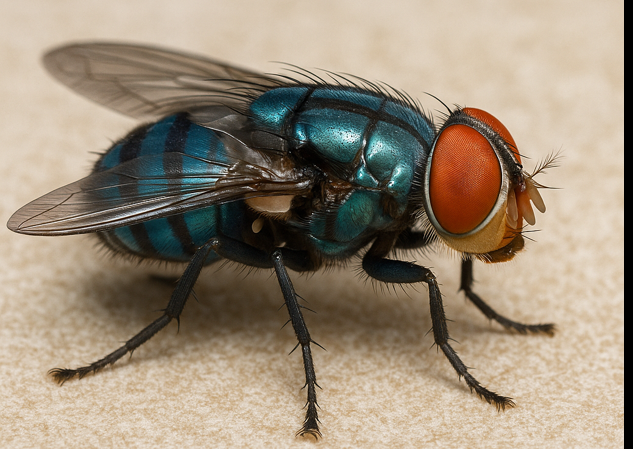
The United States has suspended the importation of live cattle, horses, and bison from Mexico through all southern border ports, effective immediately, due to the threat posed by the New World Screwworm (NWS), a dangerous flesh-eating parasite.
This decision, announced by U.S. Agriculture Secretary Brooke Rollins this weekend, is intended to protect the U.S. livestock industry from a pest that, in the past, took three decades to eradicate and caused severe economic damage.
“I am announcing the suspension of live cattle, horse, & bison imports through U.S. southern border ports of entry effective immediately,” Rollins said. “The last time this devastating pest invaded America, it took 30 years for our cattle industry to recover. This cannot happen again.”
Her Mexican counterpart, Julio Berdegue, swiftly rebuked the action, but said he hoped the two countries could soon come to an agreement over the pest, known as NWS.
“We don’t agree with this measure,” he said in a post on social media, adding that it would be in place for 15 days.
The U.S. agriculture agency in a statement on Sunday said the suspension would be in effect on a “month-by-month basis.”
The New World Screwworm (Cochliomyia hominivorax) is a flesh-eating parasitic fly whose larvae infest open wounds of warm-blooded animals, including livestock, wildlife, pets, and occasionally humans, causing severe tissue damage and often death if left untreated. The larvae burrow into living flesh using sharp mouth hooks, distinguishing them from other blowflies that feed only on dead tissue.
Screwworm infestations were a major threat to U.S. livestock in the early 1900s, spreading rapidly across the southern and southeastern states by the 1930s. The pest caused devastating economic losses to the cattle industry, as infestations could kill a full-grown cow in as little as one to two weeks.
In the 1930s, USDA scientists determined that the screwworm was a separate species from other blowflies and developed early public education campaigns to help farmers recognize and treat infestations. Research led to improved larvicides and wound treatments, but infestations remained a significant problem.
The breakthrough came in the 1950s and 1960s with the development of the sterile insect technique. Scientists mass-reared screwworm flies and sterilized males using radiation. Releasing these sterile males into the wild overwhelmed the natural population, as females that mated with them produced no offspring.
This strategy helped create a “barrier zone” that kept the pest from encroaching into the U.S. and Mexico, though cases would still pop up from time to time.
In 1976, an outbreak in Texas affected more than 1.4 million cattle and hundreds of thousands of sheep and goats. If such an outbreak were to occur now, it’s estimated that would cost the Texas economy $1.8 billion, according to a USDA analysis.
Rollins asserted the decision was based, in part, on concerns over the nation’s food security.
Rollins called the protection of U.S. animals and the safety of the nation’s food supply “a national security issue of the utmost importance.” When increased surveillance and eradication efforts begin showing positive results, the border will reopen for livestock trade, she said.
“This is not about politics or punishment of Mexico, rather it is about food and animal safety,” Rollins said.
It’s great seeing an administration actually caring about the nation’s food security.
I VOTED FOR THIS! It's good to finally have an administration in place that is interested in protecting the nation's food security! https://t.co/mrtpiyiEC5
— Leslie Eastman ☥ (@Mutnodjmet) May 12, 2025
(Image by perplexity.ai)
Donations tax deductible
to the full extent allowed by law.






Comments
Now watch Democrats come out in support of new world screwworm!
…and Photoshop the MS-13 tattoo into “Love”
3-2-1 Federal district judge issues national TRO disallowing Administration from preventing screwworms to enter US. Plaintiffs argue it’s the only fair and right thing to do.
Did they give each and every individual screwworm their due process?
Don’t like AI images; too fake.
Ooh, shiny! Like Mexican pottery!
Screw worms are a horrible and devastating parasite; in screw worm country, any little scratch can be transformed into a writhing mass of maggots. by these flies.
Imagine the suffering of an animal being consumed by these..
We did a fair job of eradicating the things in the past; now, if it’s required to ban the import of Mexican livestock to regain control, its more than worthwhile.
Eff Mexico; if they can’t rid themselves of this parasite, the USA is not obligated to infest our own herds and flocks to make Mexico feel better.
Obviously we have to stop anyone from Mexico from coming in as well. Who know how infested they might be.
The Peoples’ Democratic Socialist Republic of Ithaca