Image 01 Image 03

Japan Tag

On August 15, 1945, Japanese Emperor Hirohito ordered Japan's unconditional surrender, bringing about a formal end to World War II. His speech announcing the ceasing of hostilities was recorded secretly, for fear that violent protests would break out once the army and the people realized that their leader was, indeed, surrendering. Yesterday, the Imperial Household Agency released a digital version of the original recording of Hirohito's address ahead of the 70th anniversary of the end of the war. More from the Daily Mail:
Speaking in unique intonation that drops at the end of sentences, Hirohito opens his 1945 address with Japan's decision to accept the condition of surrender. He also expresses 'the deepest sense of regret' to Asian countries that co-operated with Japan to gain 'emancipation' from Western colonisation. Hirohito also laments devastation caused by 'a new and most cruel bomb' dropped in Hiroshima and Nagasaki and asks everyone to stay calm while helping to reconstruct the country.
Through the course of my daily interneting, I read that President Obama thanked the Japanese for karate, karaoke, and emojis. Yes, the little happy faces you send in text messages. I chuckled to myself, figured it was parody, and went on my merry way. This afternoon I was horrified to learn it was not parody I encountered, oh no. President Obama in his infinite foreign policy wisdom (I'm assuming his narcissism believes as much), actually thanked Japan for emojis and karate (pronounced the same way he says Pakistan -- terribly). But then he also gave Queen Elizabeth II an iPod, so the bar is set pretty low here. "Today is a chance for Americans, especially our young people, to say thank you for all the things we love from Japan." said President Obama, who according to Politico, was speaking at an arrival ceremony with with Japanese Prime Minister Shinzo Abe. And then things took a turn for the excruciatingly embarrassing, "like karate, karaoke, manga, and anime, and of course emojis," Obama continued.

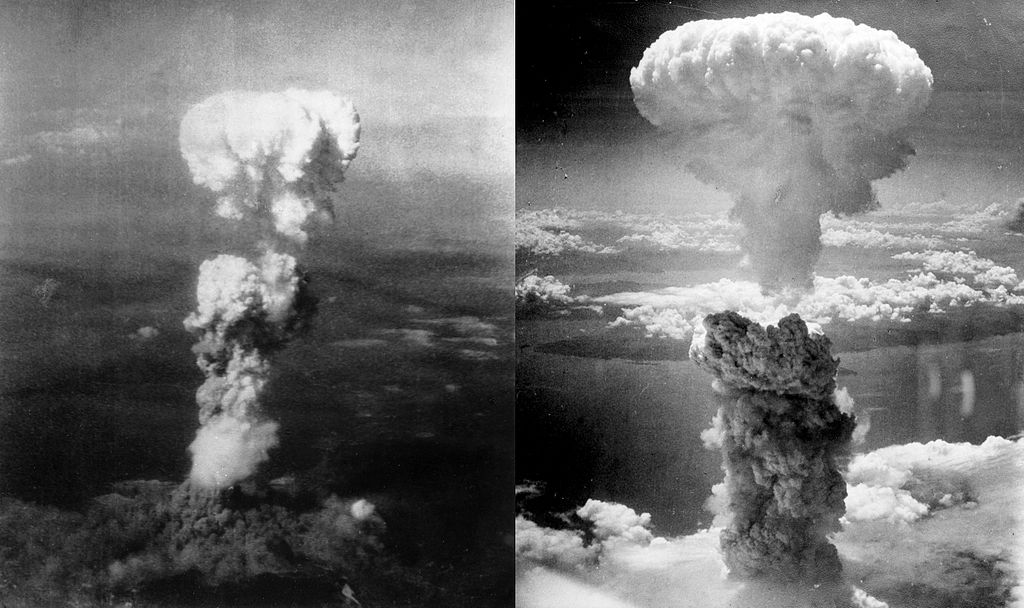
Today is the anniversary of the dropping of the atomic bomb on Hiroshima, with Nagasaki following three days later, and the surrender of Japan on August 15, 1945. To date these two bombs remain---astoundingly enough, considering the nature of our oft-troubled and troubling species---the only nuclear warheads ever detonated over populated areas. Oliver Kamm wrote a while back:
Our side did terrible things to avoid a more terrible outcome. The bomb was a deliverance for American troops, for prisoners and slave labourers, for those dying of hunger and maltreatment throughout the Japanese empire - and for Japan itself. One of Japan's highest wartime officials, Kido Koichi, later testified that in his view the August surrender prevented 20 million Japanese casualties.
This context always needs to be kept in mind when evaluating any "terrible thing"---and there is no question that the dropping of these bombs was a terrible thing. But critics who are bound and determined to portray the West as evil, marauding, bloodthirsty--- whatever the dreadful adjective du jour might be---are bound and determined to either avoid all context, or to change the true context and replace it with fanciful myth. As Kamm writes, those who want to portray Hiroshima and Nagasaki as American crimes cite evidence of an imminent Japanese surrender that would have happened anyway.

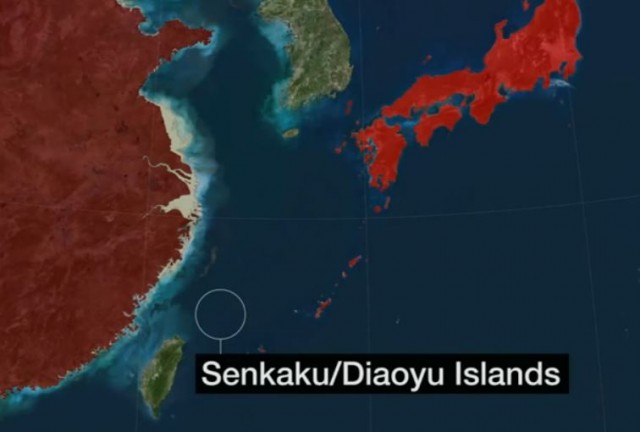
Japan and India don't necessarily have the warmest relationship with their neighbor, China. China hasn't exactly lessened tensions by enforcing a no-fly zone over Japanese islands. And its rapidly expanding military efforts haven't brought comfort to India's government, especially with a long history of border tensions. Since it has become apparent that the Obama Administration is unreliable in handling complex international policy dynamics, what can Japan and India do? Go the tradition route: Form a strategic regional alliance. China downplays Japanese PM Shinzo Abe's visit to India
China on Monday downplayed Japanese Prime Minister Shinzo Abe's visit to India as a bilateral issue, even as the state-media termed the trip as a failure for not succeeding in pinning down Beijing. "The visit you mentioned is an issue between India and Japan," Chinese Foreign Ministry spokesman Qin Gang told a media briefing while responding to a question on Abe's just-concluded visit to India. The visit evoked considerable media attention in view of the China-Japan diplomatic stand off over the disputed islands in East China Sea.