

New Jobs Numbers Out: “You Can’t Throw Lipstick on this Pig of a Report”
on October 02, 2015
20 Comments
The latest jobs report released today could spell trouble for the US economy---and workers.
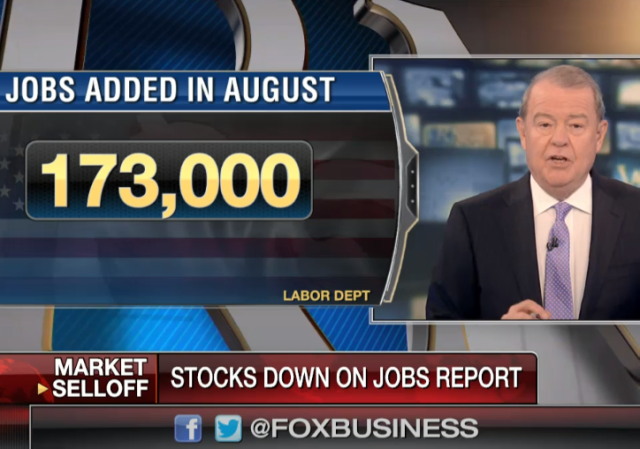
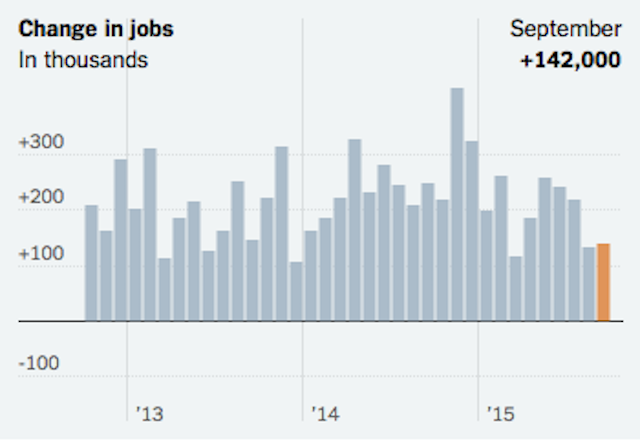
According to analysts, the economy underperformed in terms of jobs created. Experts surveyed by CNNMoney estimated that we would see a net gain of 204,000 jobs in this report; gains in excess of 200,000 are considered "healthy," so this was an optimistic prediction. In reality, however, the economy only added 142,000 jobs in September---an "unhealthy" diagnosis.
The unemployment held steady at 5.1%; however, labor force participation rate dropped to 62.4 percent (from 62.6 percent), and the three month average for job creation has stagnated well below 200,000.
More via the NY Times:
Friday’s report came just two weeks after the Federal Reserve decided that the recovery was still too frail to risk lifting interest rates from their near-zero level. The latest evidence of a weakening economy may push any rate increase into next year even though the Fed chairwoman, Janet L. Yellen, had previously suggested that the central bank was likely to go ahead with a rate increase before year’s end.