


New Bat Virus in South Asia Shows Nipah‑Like Symptoms but No Signs of Pandemic Potential
Pteropine orthoreovirus is a naturally occurring virus rather than the product of genetic manipulation in a Wuhan lab.
Recently, I reviewed the status of a small outbreak of the Nipah Virus in India.
Infections with this pathogen can result in a severe and often fatal illness that primarily affects the brain and respiratory system. The case fatality typically ranges between 40 and 75%, impacted by the quality of medical care available to the infected person.
Nipah virus can be transmitted to humans from animals (such as bats or pigs) or contaminated foods. It is also possible that the virus can be transmitted directly from person to person.
A few weeks ago, the country reported a small Nipah virus outbreak in West Bengal, triggering heightened health screening across parts of Asia.
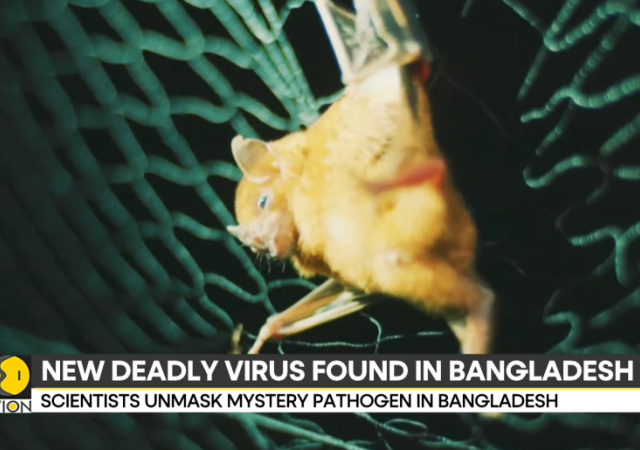
However, a new health concern has arisen. A bat-borne virus called Pteropine orthoreovirus (PRV) has recently been identified infecting people in Bangladesh, causing Nipah‑like brain swelling and severe respiratory disease, yet testing negative on standard tests for Nipah virus.
Researchers studying infectious diseases have found evidence of Pteropine orthoreovirus (PRV), a bat-associated orthoreovirus, in stored throat swabs and virus cultures from five people in Bangladesh. These patients were originally believed to have Nipah virus infection but later tested negative.
The finding expands the list of animal-to-human viruses known to infect people in Bangladesh and indicates that PRV may be an overlooked cause of illnesses that resemble Nipah. The results were published in the journal Emerging Infectious Diseases.
Each of the five patients had recently consumed raw date-palm sap—a sweet liquid that bats also drink, particularly during the winter season—and a well-established route of Nipah virus transmission in Bangladesh. Bats are known to harbor a wide range of viruses capable of infecting humans, including rabies, Nipah, Hendra, Marburg, and SARS-CoV-1.
“Our findings show that the risk of disease associated with raw date palm sap consumption extends beyond Nipah virus,” said Nischay Mishra, PhD, associate professor of epidemiology at the Center for Infection and Immunity (CII), Columbia University Mailman School of Public Health, and senior author of the study. “It also underscores the importance of broad-spectrum surveillance programs to identify and mitigate public health risks from emerging bat-borne viruses.”
The cases reviewed date back to 2022. However, the findings raise concerns because they indicate that the pathogen has already evolved into a form capable of infecting humans.
Investigators traced five patients who were hospitalized between December 2022 and March 2023 with severe disease that looked like Nipah, only to find that a different bat‑derived pathogen was responsible for their condition.
That timeline means the spillover event is not a theoretical risk but an ongoing reality, and it suggests that the virus has had at least several months, and likely longer, to circulate under the radar in communities that are already on edge about Nipah.
In one account, scientists describe how these Nipah‑like illnesses revealed a different cause once they dug into the genetic material of the virus, concluding that the spillover threat is already here and not confined to animal reservoirs between December.
Another report characterizes the pathogen as a bat virus hiding in plain sight that has been infecting humans without being recognized, precisely because its symptoms mimic those of Nipah and other encephalitic diseases, allowing it to slip through surveillance systems that are tuned to a narrow set of known threats rather than the broader family of viruses that can enter human food and contact networks Another bat virus.
And while public health authorities indicate the current Nipah outbreak is under control, a woman from Bangladesh did recently succumb to the virus.
The World Health Organization (WHO) has said that a patient in Bangladesh died after contracting the Nipah virus, adding that it believes the risk of the disease spreading internationally still remains low.
The WHO said on Friday that a patient died after being admitted to hospital on January 28, where a team collected throat swabs and blood samples. Infection with the virus was laboratory-confirmed the following day.
…The WHO said that the patient in Bangladesh, described as a female between the ages of 40 and 50 residing in the Naogaon district, first began experiencing fever and neurological symptoms on January 21. The patient reported no travel history but had recently consumed raw date palm sap.
An additional 35 contact persons have been tested for the virus, with no further cases yet detected.
The emergence of the Pteropine orthoreovirus is noteworthy, as it underscores how bat-borne pathogens continue to test the boundaries between animal and human disease quietly.
However, there is no evidence that this virus poses a pandemic-level threat, as the novel coronavirus did, leading to the 3-year pandemic.
Additionally, PRV is a naturally occurring virus rather than the product of genetic manipulation in a Wuhan lab.
In short, this is a reminder of nature’s own capacity to surprise us with fun, new diseases…and not a sequel to the lab‑engineered crisis of 2020.
Donations tax deductible
to the full extent allowed by law.







Comments
Bats. Why is it always bats!
It wasnt the bats in 2019
It was Fuchi and the Chinese
‘Faster than a bat out of Bangladesh’ will take on new meaning.
No signs of pandemic potential? Well we’ll just have to ask the Wuhan Institute of Virology about that.
Is there a wet market in the vicinity?
If you read THE HOT ZONE you knew engineered viruses were coming and that they were going to break free of the Labs. And, you knew how completely unprepared we were. COVID was enevetable. And, nothing seems to have changed.
Hell, THE ANDROMEDA STRAIN predicted this 50 years ago.
WWOD?
What would Ozzy do?