


Jim Lovell, Hero Astronaut Who Got His Team Home after Apollo 13 Explosion, Dead at 97
Lovell is an important part of the American space legacy, having taken part in two Gemini missions and Apollo 8 before being tapped to command Apollo 13.
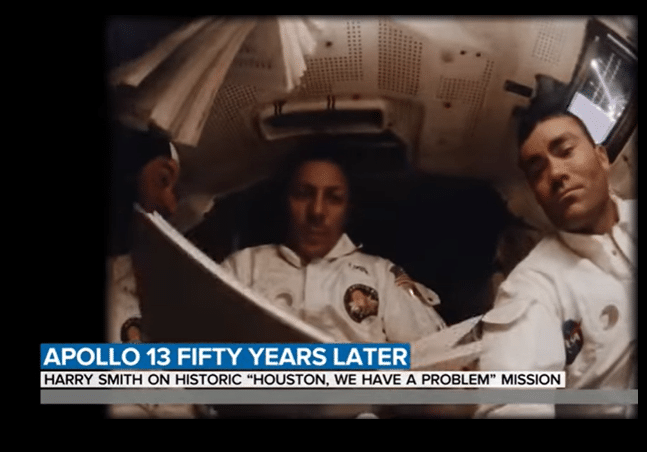
America has lost another of its legends, as Apollo 13 mission commander, astronaut Jim Lovell, has died at the age of 97.
This news hits personally, as few movies captured the imagination of my son like Apollo 13. The depiction of the events of the 1970 lunar mission, which morphed into a dramatic struggle for survival after an oxygen tank exploded en route, helped inspire my boy’s passion for space technology.
In the movie, Tom Hanks portrays Jim Lovell, the commander of Apollo 13. Lovell was already a veteran astronaut by 1970 and is portrayed as both a skilled leader and steadying influence on his team during the crisis. The engaging film shows Lovell grappling with personal disappointment (missing a chance to walk on the moon) and the high-stakes drama of teaming with the NASA ground crew to improvise solutions to save his crew.
The space community is mourning his loss.
“NASA sends its condolences to the family of Capt. Jim Lovell, whose life and work inspired millions of people across the decades,” acting NASA Director Sean Duffy said in a statement Friday. “Jim’s character and steadfast courage helped our nation reach the Moon and turned a potential tragedy into a success from which we learned an enormous amount. We mourn his passing even as we celebrate his achievements.”
Duffy added that Lovell “helped our nation forge a historic path in space that carries us forward to upcoming Artemis missions to the Moon and beyond.”
“As the Command Module Pilot for Apollo 8, Jim and his crewmates became the first to lift off on a Saturn V rocket and orbit the Moon, proving that the lunar landing was within our reach. As commander of the Apollo 13 mission, his calm strength under pressure helped return the crew safely to Earth and demonstrated the quick thinking and innovation that informed future NASA missions.”
He said, the “Navy has lost a proud academy graduate and test pilot. Jim Lovell embodied the bold resolve and optimism of both past and future explorers, and we will remember him always.”
We are saddened by the passing of Jim Lovell, commander of Apollo 13 and a four-time spaceflight veteran.
Lovell’s life and work inspired millions. His courage under pressure helped forge our path to the Moon and beyond—a journey that continues today. https://t.co/AjT8qmxsZI pic.twitter.com/jBlxzgrmSk
— NASA (@NASA) August 8, 2025
Lovell is an important part of the American space legacy, having taken part in two Gemini missions that orbited Earth and was one of the three astronauts aboard Apollo 8, the first spaceflight to orbit the Moon, before being tapped to command Apollo 13. After the explosion, he remained calm under pressure, worked effectively with his crew and ground controllers to utilize the available resources, and led the implementation of creative engineering solution (e.g., constructing a makeshift adapter to fit the square command module CO₂ filters into the round lunar module system to prevent carbon dioxide poisoning).
For the three-and-a-half-day journey back to Earth, the three-person crew only had food and water intended to last two people a day and half. Each of them could only drink six ounces of water a day, and temperatures dropped to under 40 degrees Fahrenheit as the crew turned off the instruments to preserve power. In these taxing conditions, the crew stayed on high alert to deal with novel challenges.
For example, the lunar module didn’t have enough canisters for filtering out carbon dioxide. The command module had additional canisters, but they were cube-shaped and didn’t fit in the lunar module’s round openings. Following instructions from mission control, the crew jury-rigged plastic bags, cardboard and tape to attach the canisters to the holes.
As the spacecraft approached Earth, mission control realized it was on track to miss our planet. With their guidance system shut down, the crew executed a manual course correction by looking at Earth and using the line separating night from day, a procedure Lovell had practiced on Apollo 8.
We are saddened by the passing of Gemini and Apollo astronaut Jim Lovell. With the crew of Apollo 8, Lovell became one of the first to leave Earth and journey to another world and on Apollo 13 his cool head helped turn a near-disaster into NASA’s finest hour. Lovell was a great… pic.twitter.com/fEOoPfTMIf
— National Air and Space Museum (@airandspace) August 8, 2025
The Apollo 13 crew was interviewed by Johnny Carson shortly after their return. This is a wonderful clip from a time when late night shows were actually appealing.
In a 2020 interview with the “TODAY” show, Lovell reflected on the milestones of his life as an aviator and astronaut.
“I think I’m very fortunate,” he said. “I think that I’ve lived a life that — if I had a chance to live all over again, even though if I knew what the consequences would be and the chance of coming back, you know, were not unknown at the time … I would do it.”
The “Apollo 13” screenplay adapts the 1994 book “Lost Moon: The Perilous Voyage of Apollo 13,” co-written by Lovell and journalist Jeffrey Kluger. Lovell also consulted with the cast and crew during production. He appears in a cameo near the end of the film (he shakes hands with the movie version of himself, played by Hanks, after the crew’s rescue).
Therefore, it seems fitting to conclude this “In Memoriam” one of the iconic clips from the movie.
Hopefully, American lunar and Mars missions will soon be launched that will further honor the work of Lovell and his team.
Donations tax deductible
to the full extent allowed by law.







Comments
A giant has left us. Fair winds, and following seas, sir!
Thank you, Leslie, for a well-written and timely article. Very factual and enjoyable reading. Two thumbs up.
a heros hero
rest in peace
Lovell was from Milwaukee. Consequently Milwaukee built a space museum that I spent much time at in the early 70s. That was when Milwaukee was relatively safe.
I’m from Milwaukee… do t remember the Space Museum but I left 1976…
IMO Apollo 8 was the gutsiest space mission ever flown – maybe more important than Apollo 11 that actually landed on the moon. Everything was being done for the first time. It was the first human test of the Saturn V (there were two previous unmanned tests, and the second one had significant problems). It was the first time humans left Earth and traveled to orbit another celestial body. It was the first major test of the DSKY which the astronauts used to control their spacecraft. It was the first human test of the Service Module (if it had failed the astronauts would have been stuck in lunar orbit with zero chance of rescue). And it was the first time humans had re-entered the Earth’s atmosphere after a quarter-million mile return journey that required incredible precision to pull off successfully.
Godspeed Jim Lovell!
Long ago, in a galaxy far, far away…
It really was a different world back then.
RIP.
I remember listening to the radio traffic during Apollo 13. I was always impressed at how calm everyone sounded.
Lovell was the definition of a hero. RIP.
It is a shame that our society has taken so long resume serious space exploration, all because of politics. I clearly remember dredges of our society arguing the money should be spent on welfare.
Our space program was neglected far to long.
An exemplar of a generation of competent public figures, the like of which I hope my grandchildren might someday experience.