


Critical Minerals and Rare Earths Mines Begin Popping Up Outside China After Trump’s EOs
California firm reopens processing capacity and makes important deal with Saudi Arabia for more development, American investors are expanding Brazil’s capacity, and intriguing Pacific Ocean deposits are detected.
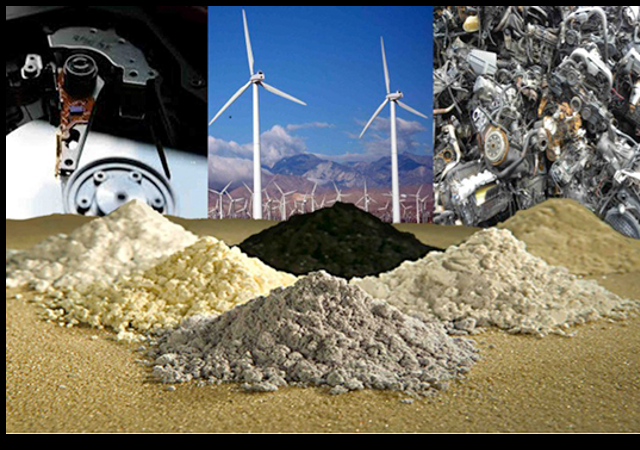
In late March, I reported that President Donald Trump signed an executive order invoking the Defense Production Act (DPA) to accelerate domestic production of critical minerals and rare earths.
The initiative, aimed to reduce American reliance on foreign imports, particularly from China, which now dominates the global supply chain for many essential minerals such as rare earths, uranium, copper, potash, and gold.
In April, it was paired with another executive order, entitled “Unleashing America’s Offshore Critical Minerals and Resources.” This directive instructed federal agencies to expedite the exploration and extraction of critical minerals from U.S. offshore seabed areas and to establish international partnerships for deep-sea mining in foreign waters.
Parts of the Pacific Ocean and elsewhere are estimated to contain large amounts of potato-shaped rocks known as polymetallic nodules filled with the building blocks for electric vehicles and electronics.
More than 1 billion metric tons of those nodules are estimated to be in U.S. waters and filled with manganese, nickel, copper and other critical minerals, according to an administration official.
Extracting them could boost U.S. GDP by $300 billion over 10 years and create 100,000 jobs, the official added.
“The United States has a core national security and economic interest in maintaining leadership in deep-sea science and technology and seabed mineral resources,” Trump said in the order.
How are things going so far?
There are some promising signs. To begin with, Brazil has emerged as a promising new supplier, with projects like the Serra Verde mine that American investors back. The South American nation is poised to become the only significant producer of some rare earth elements outside Asia.
Brazil’s rich clay deposits make it particularly attractive for heavy rare earths, which are essential for high-performance magnets and are much harder to process. Furthermore, the U.S. is now reviving once closed processing plants in tandem with mine development.
Brazil is mapping potential rare-earths deposits and searching for traces of them in waste from other mines, said Alexandre Silveira, the country’s minister of mines and energy.
“This potential presents a significant opportunity,” he said.
Brazil’s first big rare-earths mine opened last year some 90 miles west of the town of Nova Roma, where Aclara plans to produce. Backed by Denham Capital, a Boston-based private-equity firm, the project is one of the few outside Asia to produce dysprosium, terbium, neodymium and praseodymium—elements used to create high-power magnets. But the mine is contracted to ship most of its production to China.
The U.S. has dedicated hundreds of millions of dollars over the past five years to reviving rare-earth processing plants and magnet factories closed during decades of Chinese dominance.
In terms of coastal waters, there is significant global interest in deep-sea mining capacity associated with the Clarion-Clipperton Zone (CCZ) of the Pacific Ocean between Hawaii and Mexico. The region contains deep-sea nodules that are rich in rare earths and other critical minerals.
As its name suggests, the zone is bound by the Clarion and Clipperton Fracture Zones, hence its name, and is home to be the most abundant polymetallic nodule deposits yet to be discovered, as well as cobalt-rich seamounts.
Studies suggest that nodule volumes, typically found at depths of 4000-6000m, range between 0 and ~30kg m-3, with an average of 15kg m-2 (Gollner et al., 2017); this equates to trillions of potato-size rocklike deposits rich in nickel, manganese, copper, zinc, cobalt, and other minerals lying atop a muddy bottom.
The retrieval of these nodules involves harvesting them from the ocean floor using purpose-built remotely operated vehicles (ROVs), which feed a deep-water riser pipe to transport the nodules to a surface vessel for cleaning and processing. The nodules are then destined for a land-based facility, whilst the rinsed sediment is returned to the ocean.
Finally, back in 2019, I reported on the Mountain Pass Mine and its owner, MP Materials (a company based in California), is at the forefront of efforts to revitalize the U.S. rare earth industry and reduce dependence on foreign—especially Chinese—sources for these critical minerals. The company owns and operates the Mountain Pass mine in southeastern California, which is the only large-scale rare earth element mine in the Western Hemisphere.
In 2022, the Pentagon funded the restart of its rare earths processing units, which have now resumed operations.
As recently as the 1980s, the United States was a leader in rare earth production, through the Mountain Pass mine in California. But by 2002, Mountain Pass had shut down, with China dominating the market. Mountain Pass is now owned by MP Materials and is operating again, but it does not come close to Chinese production, industry experts said.
I find I miss many things about the 1980s. This is one of those things.
Now, MP Materials is opening up a joint venture with Saudi Arabia for the development of Middle Eastern rare earths capacity.
U.S. rare earths miner MP Materials (MP.N) said on Wednesday it has signed a memorandum of understanding with Saudi Arabia’s flagship mining company Maaden to jointly develop a rare earth supply chain in the Middle Eastern country.
The agreement was signed on the sidelines of the U.S.-Saudi Investment Forum, where President Donald Trump secured a $600 billion investment from the kingdom which covered the energy, defense and mining sectors.
Saudi Arabia has been pushing to become a global critical minerals hub at a time when minerals processing is fast becoming a necessity for tech-focused economies looking to produce their own building blocks for AI, electric vehicles and other sectors.
It’s important to note MP Materials beat out companies from China…as well as Australia and Canada. The agreement also includes mining, separation, refining, and magnet production of rare earth minerals.
In conclusion:
We're back, baby! https://t.co/GbQMAXjfNQ
— Leslie Eastman ☥ (@Mutnodjmet) May 23, 2025
Hopefully, the good news will continue.
Donations tax deductible
to the full extent allowed by law.







Comments
“Get ready ’cause here we come”. All it takes is leadership.
“Turns out we didn’t need new laws, just a new president.”
3 judges got in a fight at a San Francisco bar last night over who gets to issue the order forbidding exploration for these minerals/
And an allegedly Republican controlled Congress passes legislation which is signed by Pres. Trump that clearly and specifically authorizes exploration and exploitation of these mineral deposits for the benefit of the United States (ie we don’t sell off the minerals to foreign countries).
That won’t stop the eco freaks from suing over potential harm to the benthic environment and to protect the sea life therein.
And here I thought “benthic” was a monster dimension of Lovecraft’s.
Too bad we didn’t have people in a country that had the beginnings of a government, brand new airport and tons of rare earth minerals like, idk, Afghanistan. No mention of the rare earth minerals in Ukraine? Alaska? Nevada?
How it started: Drill, baby, drill!
How it’s going: Mine, baby, mine!
To paraphrase the vile, venal witch: Ah ain’t no ways tarred of winning.
Good. Dependency on China is not a good thing.
Next eliminate china bought politicians if we can.
rinse and repeat
once the maga gets america in the right direction
lefty will take back over utilizing the beauty of capitalism for their continued leeching aka socialism
maga>>>FOREVER!!!!
Still waiting for the initiative to develop liquid fluoride thorium reactors (molten salt reactors aka MSR LFTRs) for commercial use. Thorium is a waste product of many mining processes and is found in dirt.
https://www.youtube.com/@gordonmcdowell
https://www.youtube.com/watch?v=P9M__yYbsZ4
I see DOE has a program concerning MSR LFTRs:
https://gain.inl.gov/
But I’m hoping to see something along the lines of the Apollo program’s dedication and sense of urgency.
I’m seeing that my comment at 2:01 pm has been labeled “unapproved,” but when I refresh the page, it appears. First, there’s nothing offensive in the comment, but there are URLs. URLs are, to my knowledge, allowed in comments here. Second, is LI shadow banning comments? (If that’s the proper term.) This appears to be the case, as my comment appears when I’m signed in (making me think the comment is live) but does not appear when I’m not signed in.
If this is what’s happening, shame on LI for such an underhanded tactic. You could at least do your readers the courtesy of letting us know when a comment hasn’t been approved and why. And if this is done automatically, I think your algorithm needs to be adjusted. See my banned post. There was no reason for banning it. My follow up comment on the same subject and with a URL is posted.
You used to be able to tell if you had an unapproved comment by tags in the URL that let you and only you see it (“moderation_hash”).. That still occurs, but there is a second, invisible mechanism in play these days.
For alternatives to Communist China, there’s also Lynas Rare Earths (https://en.wikipedia.org/wiki/Lynas) which apparently mines in WA, and refines in Malaysia where it has the largest rare earth production facility outside China. Beijing has already tried to buy majority share in the company back in 2009 but prevented by the Australian government.
The Malaysian operation appears to rely on a temporary licence for their operations as it produces a lot of radioactive waste – indeed part of the plant was stopped in 2023 because of ‘excessive’ production! If Beijing can bring sufficient pressure to bear, and/or fund local environmental groups, the operation could be forced to shut down.
These minerals are going to become commodities like copper and oil. They are just now scratching the surface of the earth. No one nation like china controls this.