


New ‘NASA Force’ Aims to Rebuild Core Competencies for Artemis Moon Push
If NASA once again attracts the best people by challenging them to do the best work in service of something larger than themselves, then Artemis could really become a true twin to Apollo.
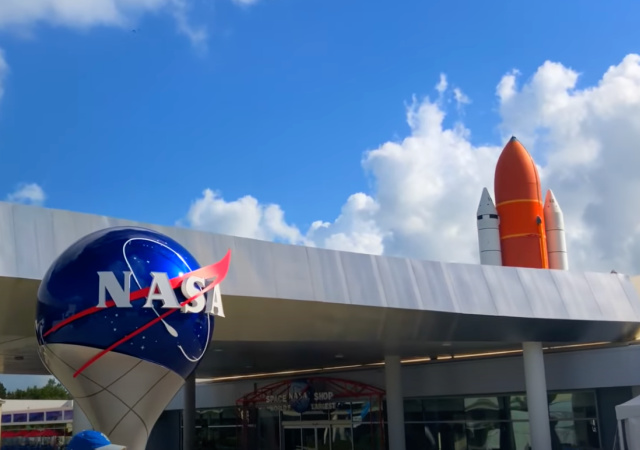
The last time I reported on NASA, the Artemis program was completely overhauled to enable more frequent launches, allowing problems to be identified and solved more efficiently. The reboot is based on the successful Apollo lunar landing missions.
To help this process along, NASA Administrator Jared Isaacman announced the creation of “NASA Force.” This program is a new NASA and Office of Personnel Management (OPM) hiring initiative aimed at creating a dedicated talent track within the US Tech Force to bring top engineers and technologists into term-limited, mission‑critical roles supporting the U.S. space program.
Isaacman revealed the plans at the A16Z American Dynamism Summit and posted about it later on X before publicly sharing the outlines of the concept during an interview with CNBC’s Morgan Brennan.
In the CNBC interview, Isaacman said he and OPM Director Scott Kupor made the announcement jointly at the summit today. Isaacman’s contention is that NASA’s core competencies “have been eroded or lost over the years” and the way to build them back is to bring “thousands of people back into the organization, some from contractors, some term-based appointments from industry” in order to achieve the goal of getting astronauts back on the Moon in 2028.
Asked by Brennan how he expects to “lure the top talent” from industry, Isaacman said it will attract professionals who want to serve their country for a fixed period of time.
Today, we’re launching NASA Force with @USOPM.
Returning to the Moon requires restoring core competencies in our civil servant workforce.
This program will recruit top aerospace, software, systems, and other critical technical talent for approximately 2-year terms at NASA. This… pic.twitter.com/D54MBgVGIb
— NASA Administrator Jared Isaacman (@NASAAdmin) March 3, 2026
The US Tech Force is a new cross-government hiring initiative launched by the Trump administration in late 2025 to recruit roughly 1,000 early‑career technologists for one‑ to two‑year rotational roles focused on modernizing federal IT systems and accelerating adoption of artificial intelligence across agencies.
Introducing @NASA Force! A new branch of Tech Force to recruit top engineers and technologists for mission-critical roles powering America’s space program. Ready to solve the toughest challenges in exploration and aerospace? Applications open soon. Stay tuned. pic.twitter.com/X6nVKDUu0s
— US Tech Force (@USTechForce) March 4, 2026
The group is administered by OPM in coordination with other agencies and multiple cabinet departments and targets skills in software engineering, artificial intelligence AI), cybersecurity, data analytics, and technical project management, pairing fellows with “mission‑critical” projects in areas like financial infrastructure at Treasury, digital service delivery in civilian agencies, and AI‑enabled defense and intelligence systems.
Participants will commit to a two-year employment program working with teams that report directly to agency leaders in “collaboration with leading technology companies,” according to an official government website.
Those “private sector partners” include Amazon Web Services, Apple, Google Public Sector, Dell Technologies, Microsoft, Nvidia, OpenAI, Oracle, Palantir, Salesforce and numerous others, the website says.
The Tech Force shows the Trump administration increasing its focus on developing America’s AI infrastructure as it competes with China for dominance in the rapidly growing industry.
Yesterday, I had the privilege of speaking at the @a16z American Dynamism Summit with the builders, operators, and investors helping shape the next era of exploration.
NASA has a clear mandate under President Trump’s national space policy: Return American astronauts to the Moon… pic.twitter.com/WMu6MDOqxI
— NASA Administrator Jared Isaacman (@NASAAdmin) March 4, 2026
Intriguingly, the emphasis is….on what you can do for your country.
“NASA represents the pinnacle of American innovation,” said OPM Director Scott Kupor. “Through NASA Force, we are ensuring the world’s premier space agency has access to the very best engineers and technologists in the country. If you want to work on the most consequential technical challenges anywhere in the world, this is your call to serve.”
The launch of NASA Force builds on the growing momentum of the US Tech Force initiative, which has attracted strong interest from early- and mid-career technologists eager to apply their skills to public service.
Applications will be live soon and those interested are encouraged to follow @USTechForce on X for updates.
This shift in emphasis marks a stark departure from the recent era of government recruiting, which centered on diversity labels and lifestyle perks rather than the hard demands of national excellence and service. Instead of asking “What can this government job do for you?”, Tech Force and NASA Force explicitly revive a more demanding, aspirational standard: What can your talent do for the country, and can you meet the bar set by Apollo’s engineers?
In tying NASA Force to a rebooted, more frequent-launch Artemis architecture modeled on Apollo’s success, Isaacman and Kupor are signaling that NASA’s future workforce will be selected first and foremost for technical mastery, toughness, and mission focus, not as a showcase for bureaucratic priorities.
If NASA once again attracts the best people by challenging them to do the best work in the service of something larger than themselves, then Artemis could really become a true twin to Apollo.
Donations tax deductible
to the full extent allowed by law.







Comments
Perhaps they should just partner with SpaceX…
Not a bad idea, seeing that Musk has already sucked up a substantial percentage of those types NASA is now seeking.
True, but a job is a job, and NASA hasn’t been doing much and I doubt Musk underpays.
You’ll have to forgive me for being a party pooper but what exactly is the goal here?
We did the moon thing half a century ago. No one has done it since and I doubt anyone will.
What’s the ROI then?
I’m afraid that our government is no longer that of JFK. After all, the government didn’t much like how he governed and left the bubble off the limo for him. (Oopsie!)
I can’t see past the incentive for waste, fraud and abuse here.
Unless and until we get our political and financial house in order, I’m of no mind to go to NYC, never mind the moon.
If progress (in any field) stopped because problems (in someone’s preferred cause) haven’t been solved, there’d be no progress at all.
Its time NASA stopped picking winners and get out of the way.
Exactly. There are 2 commercials companies who can do man space flight. There are a host of others that can launch satellites now, Time for government to get out of the launch business.
“Isaacman’s contention is that NASA’s core competencies ‘have been eroded or lost over the years’”
Duh?
Time to break out the old slide rulers,
https://media.wired.com/photos/5935c500f061de0423ccfbf9/3:2/w_2560%2Cc_limit/alleman-sliderule_f.jpg
Fun fact. The 1950s-1970s space program never took calculations beyond five decimal place. Many with only three.
The entire US Federal government is deeply infected by D.I.E. – and that includes NASA. Trump has had some success in fighting the cancer, but it will return with a vengeance once the Communists re-take Congress and the White House (the Federal judiciary is pretty much lost outside of a quirky, unreliable Supreme Court that only occasionally remembers the Constitution and the law).
The SLS is not quite as bad as the Soviet N1 rocket, but IMO there are uncomfortable parallels. One of the undeniable results of Communism becoming the dominant position of the majority of our elites is really bad engineering. Thermodynamics, mathematics, and structural mechanics do not bow to the genocidal commandments of Communism.
AA and DEI fever had taken hold in NASA, put into high orbit by you-know-who (The One). Example,
Nora AlMatrooshi became the first Muslim woman (hijab and all) to graduate from NASA’s training program,
https://cf-img-a-in.tosshub.com/sites/visualstory/wp/2024/03/Astronaut_Nora_AlMatrooshi-scaled.jpeg
What? NASA is going to abandon DEI and spending on green nonsense to focus on their actual mission with people hired because they are competent not because they check the most intersectional boxes? This is my stunned face.
Nope.
The permanent bureaucrats will hire extremely competent temps to do the hard things, then RIF them before collecting all their recognition and pensions.
“Aim” is a word.
Wake me when they accomplish something.
As far as I understand it, isn’t the Artemis program essentially reusing many components from the Space Shuttle program, with companies like Boeing, Northrop Grumman, Aerojet Rocketdyne, and Lockheed Martin building and integrating those systems?
I think it would be more accurate to say it is using technologies developed by the Shuttle program, and not just “reusing components” (which suggests Artemis uses “off the shelf” parts). Obviously, if, for example, reliable booster engines were developed by the Shuttle program (which is true), NASA wouldn’t develop new engines from scratch on the principle that “if it ain’t broke, don’t fix it.” NASA builds on past engineering, a sound program. Let the private programs develop the new technologies and concepts. (Because this is what the private efforts are doing, they and NASA aren’t really “competing.” Their spaceflight goals may be the same, but their engineering goals are different.)
For fairly deep dives into spaceflight engineering, take a look at the YouTube channel “The Everyday Astronaut” (aka Tim Dodd).
These are typical of Tim’s engineering videos:
https://www.youtube.com/watch?v=bAUVCn_jw5I
https://www.youtube.com/watch?v=D4SaofKCYwo
https://www.youtube.com/watch?v=he_BL6Q5u1Y
The problem with Artemis is that it re uses a lot of old space shuttle technology.
The only part that comes back to earth is the capsule at the very top of the rocket stack.
Space X has shown the reusable rockets and boosters are huge cost savers.
As well as increasing launch tempo.
Artemis costs one billion (with a “”B” per launch.
If a launch is scrubbed, they have to take the stack apart to recharge the onboard batteries.
They will never do more than 2 launches per year.
Space x launches for less than one quarter of that price and can do one launch per Month or more