


White House Prioritizes Domestic Phosphorus, Glyphosate Production for Food Security
Glyphosate, Food Security, and the Unsettled Science Behind America’s Dinner Table.
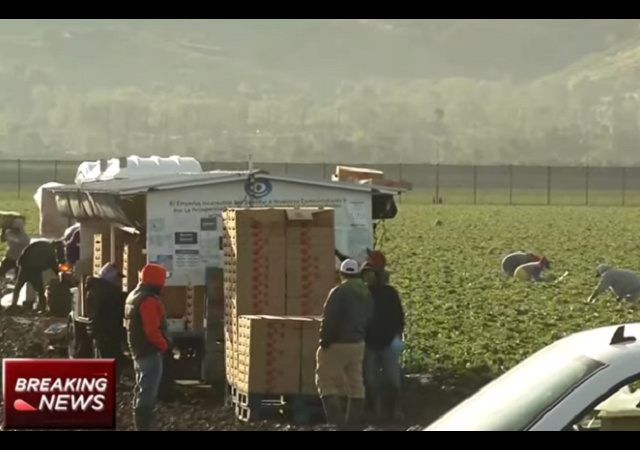
The last time I covered the topic of the week-killing compound called glyphosate, it was in the context of concern over chemical supply shortages in 2022.
In that report, I shared concerns about the lack of phosphorus, used in compounds that support agriculture. I also noted that farmers were struggling because weeds had developed resistance to the exposure levels of this chemical, usually linked to the product Roundup.
This week, President Donald Trump signed an executive order using the Defense Production Act (DPA) to prioritize and expand U.S. production of elemental phosphorus and ensure adequate production of glyphosate‑based herbicides, designating them as “critical” to national defense and food security and extending liability protections to producers that comply with the order.
“I find that ensuring robust domestic elemental phosphorus mining and United States-based production of glyphosate-based herbicides is central to American economic and national security,” Trump said in the order. “Without immediate Federal action, the United States remains inadequately equipped and vulnerable.”
…Phosphorus, which is also covered in the order, is a precursor to the production of glyphosate and is also used in the manufacturing of certain military equipment.
The order will require Agriculture Secretary Brooke Rollins to issue orders and regulations to implement the increased supply of phosphorus and glyphosate.
A White House Fact sheet on the executive order said Trump signed it to “ensure domestic production of elemental phosphorus and glyphosate-based herbicides, the loss of which would cripple critical supply chains.”
FOOD SECURITY IS NATIONAL SECURITY: Thank you, President Trump, for acknowledging the importance of glyphosate-based herbicides in American agriculture. This is a vital step forward in ensuring a domestic supply of this critical crop input remains available for our producers. pic.twitter.com/SE9ebKUgoW
— House Committee on Agriculture (@HouseAgGOP) February 19, 2026
Glyphosate kills plants by inhibiting a key enzyme in an important biochemical pathway used by plants and many microbes to synthesize essential aromatic amino acids (tryptophan, tyrosine, phenylalanine). This compound is considered critical for enhanced crop yields because it enables efficient weed control, thereby reducing competition for light, water, and nutrients.
As a result, farms can produce more and be more profitable. Furthermore, product prices will be lower for consumers.
However, it is important to note that many have raised concerns about the potential health effects of glyphosate, and members of the Make America Healthy Again movement are unhappy with this order.
“Women feel like they were lied to, that MAHA movement is a sham,” said Alex Clark, a health and wellness podcaster for the conservative group Turning Point U.S.A., which is closely allied with the president. “How am I supposed to rally these women to vote red in the midterms? How can we win their trust back? I am unsure if we can.”
MAHA champion and Health and Human Services Secretary Robert F. Kennedy Jr. defended President Trump’s executive order, specifically citing food security.
Kennedy backed the president in a statement to CNBC Thursday morning.
“Donald Trump’s Executive Order puts America first where it matters most — our defense readiness and our food supply,” he said. “We must safeguard America’s national security first, because all of our priorities depend on it. When hostile actors control critical inputs, they weaken our security. By expanding domestic production, we close that gap and protect American families.”
Interestingly, in an X-post, Kennedy makes an important point about how glyphosate may actually be causing a problem.
The herbicide Glyphosate is one of the likely culprits in America’s chronic disease epidemic. Much more widely used here than in Europe. Shockingly, much of our exposure comes from its use as a desiccant on wheat, not as an herbicide. From there it goes straight into our bodies.…
— Robert F. Kennedy Jr (@RobertKennedyJr) June 14, 2024
Apparently, this substance can enhance dry‑down and ease the harvest process, though it acts more slowly than traditional contact desiccants. Studies note an uptick in chronic health problems that appear to correspond to increasing glyphosate use, and it may not be the compound itself but the herbicide mixture that is the issue.
Spraying before harvest to desiccate the crops is mainly responsible for the residues. From 1993 (before any GM crop was marketed) to 2016, there was an increase by as much as 1208% in the levels of glyphosate in the urine of people in Southern California who were tracked during this time. As would be expected, organic foods had the lowest levels of glyphosate.
Furthermore, it is important to note that in one of my other articles on glyphosate, I reported that the United Nations’ cancer agency removed contradictory data from a high-profile study on glyphosate.
Reuters obtained a draft copy of IARC’s 2015 study, which shows edits made to bolster evidence that glyphosate could cause cancer in humans.
IARC scientists removed “multiple scientists’ conclusions that their studies had found no link between glyphosate and cancer in laboratory animals,” Reuters reported of the changes, noting that animal testing was largely how IARC justified its conclusion.
“In each case, a negative conclusion about glyphosate leading to tumors was either deleted or replaced with a neutral or positive one,” Reuters reported of the 10 major changes made to IARC’s draft document.
Perhaps there is a third way? Maybe, in addition to the executive order, Kennedy can partner with manufacturers to conduct research to develop glyphosate alternatives and to develop a plan to phase out their use. Additionally, perhaps the Environmental Protection Agency can develop more robust restrictions on glyphosate use.
When it comes to food science “facts” used to make determinations like the ones in Trump’s executive order, few areas of research reveal more vividly how politics, profit, and public health collide.
Glyphosate’s classification as an essential herbicide or food contaminant underscores a deeper truth: food science isn’t just about molecules or metabolism. It’s about money, markets, and message control. Once an issue becomes intertwined with national defense, trade, or ideology, the science itself becomes even more unsettled.
Unlike physics or chemistry, food science operates in a landscape where conclusions carry immediate consequences for billion‑dollar industries and electoral outcomes. Federal funding tends to reward “useful” results; advocacy groups amplify uncertainty to mobilize support. At the same time, agencies and researchers find themselves navigating shifting priorities that mix legitimate scientific inquiry with political expediency.
That’s the trouble when the nation’s dinner table becomes a battleground for competing narratives. The glyphosate debate illustrates how difficult it is to determine whom to trust when every study, press release, or regulation serves a different stakeholder’s agenda.
Until the incentives driving research align with transparent discovery grounded in real scientific principles rather than narrative reinforcement, the truth about our food and how we grow it will not be clearly determined.
However, this executive order is consistent with a president who campaigned on supply chain security.
Donations tax deductible
to the full extent allowed by law.




Comments
As it so happens, this is my point of expertise and my hat is off to you, Lesley for your excellent explanation of a very difficult topic.
You may recall that in the past I referred to RFK, Jr. as a charlatan. This is the topic by which I arrived at my opinion. And as to the TPUSA person that lamented about how he was going to get the MAHA moms to vote red? Dude… If you’re that naive you need to get into another line of work. Those influencers will *never* vote R. Ever.
As to the risks/benefits of glyphosate, just remember that the reason you don’t live on a farm today is directly due to agricultural technology. In the mid 1800s, a farmer fed 5 people. Today it’s greater than 160. Herbicides are key to improved yields and keeping you out of the hot sun picking Palmer amaranth.
Is glyphosate a carcinogen? Let me put it to you this way: people who received terminal degrees in subjects that are only accessible to the most intelligent amongst us generally agree that it does not. In fact, no pesticide regulatory agency in the world – including the EU – considers it so.
The IARC determination is a complete fraud, but it requires substantial investigation to illuminate it. I might suggest reading about it at a website called Risk Monger.
Is glyphosate a carcinogen?
To this I would say, “Yes.” But only because literally everything in some quantity is a carcinogen – if the mere quantity or quality of it doesn’t kill you first. Or you don’t die of something else before it can ever get to that level. Because basically everything at some point triggers bad things to happen in cells that result in runaway growth. Hence all of those memes for decades that have pointed out that the quantity they gave the rat is equivalent to some absurd amount when pointed at a human in real life.
Saliva can carcinogenic, even in small quantities. But only if you swallow it. 😉
I ate cereal from Quaker every morning that sprays their grains with Glyphosate for 20 years, and I developed a very serious case of Cancer. This pesticide is banned in many European Countries with good reason. The reason that it is allowed and used in America is because of Lobbyists. I am 100% against using it here !
“OMG!!! They want to put phosphorous in our food! OMG!!!”
They probably put dihydrogen monoxide on it as well.
A known deadly substance.
Dihydrogen monoxide? NOooo!
Phosphorus is also used in fertilizers. It’s a mined here in the state of Florida. Huge mines. It’s also found in a liquid state below the sea bed of the Gulf of America. My step father brought in the largest such field for Freeport-McMoran in December 1988. Production and use is multi-faceted and it is a National Security issue.
Yes, it is part of the big three that are listed on the label of most fertilizers even if it isn’t in that mix.
Nitrogen (N), Phosphorus (P), and Potassium (K)
Liquid state is an interesting tidbit,
I grow wheat in a far Northern area 60 miles below Canada and I have never needed to use Glyphosate, or anything else, to dy it down for harvest. Mother nature does that just fine!
It is more of a scheduleing issue to get enough dry early enough to spread harvest equipment over a longer period. This could be easliy solved and should be if wheat drying is the biggest use of the chemical. Banning it’s use for this would go a long way towards helping reassure those concerned.
it should be noted that the extremely small portion of the glyphosate that is absorbed breaks down; only 1% of aminomethylphosphonic acid is found in excretory products and that over 90% of glyphosate is excreted unchanged via urine and feces within 48-72 hours.
it sounds like another “global-warming” type scam to me
It started out as a restraint of trade matter but the environmentalists quickly embraced it.
Whatever I think of glyphosate, this CANNOT be tolerated. From anyone.
“I reported that the United Nations’ cancer agency removed contradictory data from a high-profile study on glyphosate.”
Facts are all we have. Get the facts.
A while back, I reviewed the actual feeding data Monsanto sent to the FDA to demonstrate safety. As I recall in one study they fed beagles the human equivalent of 16 ounces of Round-Up (as diluted for use) each day for 2 months. The readout: not just “no adverse effects” but no observable effect at all.
This all started in Europe as an exercise in restraint of trade directed against an American manufacturer. The result: Europe declared glyphosate a “probable carcinogen,” there being no findings to warrant a harsher categorization. And there still are none.