


Forging the Mineral Alliance: U.S. to Form Trading Bloc to Counter China’s Grip
With “Project Vault” anchoring domestic stockpiles and allied nations closing ranks around a shared resource strategy, the curtain is rising on what could become one of the most consequential economic alliances of the 21st century.
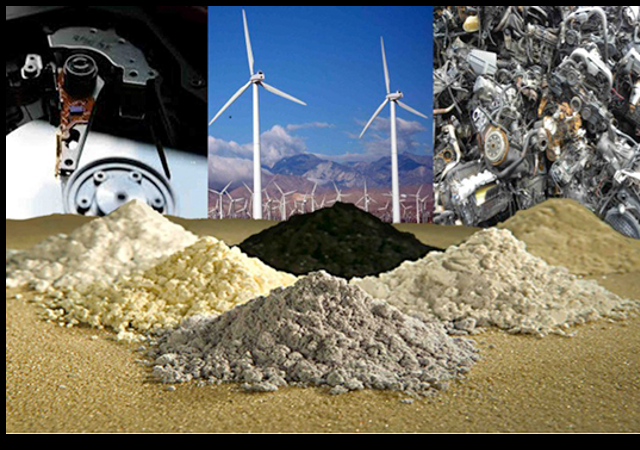
In my last report on critical minerals and rare earth elements, I noted that the Trump administration initiated a new minerals stockpile initiative named “Project Vault”.
The United States Geological Survey (USGS) has officially listed more than 50 minerals as critical. These include rare earths, lithium, uranium, and copper, and are deemed “essential for national security, economic stability, and supply chain resilience.” These substances are needed for communications technologies, various industries, and defense equipment.
Now the White House is attempting to organize a critical minerals trading bloc with allied countries to coordinate supply and enhance security…aimed directly at countering Chinese dominance in processing and pricing leverage.
US Vice President JD Vance announced plans to establish a critical minerals trade bloc with allies and partners, proposing coordinated price floors as Washington escalates efforts to loosen China’s grip on materials crucial to advanced manufacturing.
The Trump administration intends to employ tariffs to maintain minimum prices and shore up supplies of critical minerals used to make semiconductors, electric vehicles and advanced weapons.
Vance said the US-China trade war of the past year has exposed how dependent most countries are on critical minerals, the sale of which Beijing largely dominates. Therefore, collective action is needed to make the West self-reliant, he stressed.
“We want members to form a trading bloc among allies and partners, one that guarantees American access to American industrial might while also expanding production across the entire zone,” Vance said at the opening of a meeting that Secretary of State Marco Rubio hosted with officials from 55 European, Asian and African nations.
Critical Minerals Trade Bloc
The US push to build a critical minerals trade zone reflects a shift from efficiency to security in supply chains.
Strategic sourcing is replacing free trade logic in key commodities. pic.twitter.com/U8AiQet7TL
— Harmeet Singh Walia (@HSinghWalia) February 5, 2026
Japan, poised to become a key player in this bloc, recently confirmed the successful recovery of “rare earth mud” from a deep-sea area in the region that is estimated to hold tens of millions of tons of rare earths, including dysprosium and yttrium needed for high‑performance magnets.
The sediment sample was recovered by Chikyu, Japan’s advanced deep-sea scientific drilling vessel operated by the Japan Agency for Marine-Earth Science and Technology (JAMSTEC). The ship set sail last month for waters near Minami Torishima, a remote Pacific island located within Japan’s exclusive economic zone.
According to the government, the mission successfully retrieved what officials have described as “rare earth mud” from the ocean floor at a depth never previously reached for such extraction efforts. Government spokesperson Kei Sato said the recovered sample is now being analysed to determine the concentration and commercial viability of the rare earth elements contained within it.
She called the achievement “meaningful both in terms of economic security and comprehensive maritime development.”
The waters surrounding Minami Torishima are believed to hold one of the world’s largest untapped reserves of rare earth elements. Estimates suggest the area contains more than 16 million tonnes of rare earths, making it the third-largest reserve globally, according to Japan’s Nikkei business daily.
CRAZY: 🇯🇵 Japan becomes the first country in the world to begin mining rare earth metals from the ocean floor. pic.twitter.com/iXtV28t5Qj
— Crypto Rover (@cryptorover) January 15, 2026
Finally, United States Antimony recently announced a new hydrometallurgical processing advancement for critical minerals as part of an American shift into new critical mineral extraction and processing technologies. The new process is touted as a cleaner, more efficient way to recover antimony and associated critical elements.
The firm intends to open a facility in the U.S. while deepening partnerships with Bolivia and Australia.
“On January 15, 2026, USAC filed with the DOE a request for funding for a program total of $44 million associated with our hydromet process developed in Bolivia for a new facility to be located in the USA,” said Gary C. Evans, Chairman and CEO of United States Antimony. “Additionally, the Company is working on a similar application for an award from the DoW for this process in a new location near the State of Montana. These new location(s) will be state of the art antimony processing facilities in North America.”
United States Antimony has also obtained an exclusive license to duplicate the hydromet process in North America and Australia, with the technology capable of processing sub-par antimony of less than 10% stibnite into finished material meeting military specifications. The company remains the only fully integrated antimony company in the world outside of China and Russia.
From deep‑sea discoveries off Minami Torishima to next‑generation processing in Montana, it’s clear that the gears of a new global market are beginning to turn.
With “Project Vault” anchoring domestic stockpiles and allied nations closing ranks around a shared resource strategy, the curtain is rising on what could become one of the most consequential economic alliances of the 21st century.
In short, it’s the start of a beautiful, profitable, and secure trading bloc.
Donations tax deductible
to the full extent allowed by law.







Comments
wishful thinking
the EU scum is also working with china
same way comey was sure hillary was going to win so he did her bidding
they know china is going to win b/c djt is being stopped by courts and the dems will allow china to beat the f out of us
What’s interesting with the EU is that they are happy for China to destroy their environment by producing the rare earth ministers that are too toxic and dirty to extract in Europe.
This then allows Europe to signal their virtue to the rest of the world by promoting their green energy production while at the same time quietly buying oil and gas from Russia because they shut down their nuclear reactors.
yup
and our next admin ,,unless hardercore than djt,,will continue to subsidize the eurotrash
ok lets say japans move is soooo great thqat it threatens chinas power
china will be at a large enough military capacity and the mere threat form them will have us allowing china to push japan around >>maybe thats a nice way of saying
take them over
maybe (maybe not) a full blown war but enough of a nautical push against them that the usa would have to commit to a war with china
You must be a lot of fun at parties.
depends on the party 🙂
If you read about Gavin Newsom pitching Lithium Valley as an excellent investment opportunity? Run away as fast as possible.
Another potential source if coal power plant fly ash.
“The U.S. alone produces tens of millions of tons of fly ash annually, with billions of tons in legacy storage. This represents a massive, already-mined resource (no new extraction needed), sufficient to support multi-ton-per-day REE production facilities for decades when averaged across basins.”
*******
The big issue is refining/environment. The “environmentalists” are big on all electric but want all of the dirty stuff done in other countries.
Sounds interesting, but you never mention what mineral we’re supposed to refine out of fly ash.
from Grok:
“In summary, while technically all REEs are present and extractable, the most economically promising for recovery from fly ash are the critical heavy and magnet-related ones like Nd, Pr, Dy, Tb, and Y — driven by their high value and strategic importance in green tech and defense. “
So 60 years after OPEC, we’re finally forming our own OMEC?
About damn time.