


Unstoppable: Penn Law Professor Amy Wax Appeals Discrimination Case to Third Circuit
Attorneys for Wax: The district judge mistakenly applied Title VII’s language to dismiss Wax’s Title VI and Section 1983 discrimination claims. “Courts may not graft limiting language from one civil rights statute onto another where Congress chose materially different text.”
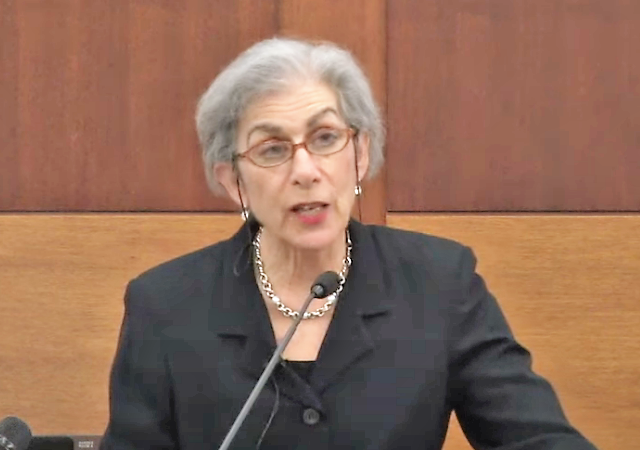
If you’ve been following the travails of conservative Penn Law Professor Amy Wax, you won’t be surprised to learn she’s back in court again. This time, it’s the Third Circuit, where her lawyers are appealing the federal trial court’s dismissal of her discrimination complaint against the university.
They argue convincingly that the court committed a fundamental, reversible error when it rejected her claims.
We’ve covered Wax’s story from the very beginning in numerous posts—a testament to her tenacity—here, here, and most recently, here, to name just a few.
Last year, Wax sued Penn in the Eastern District Court of Pennsylvania after it refused to lift the sanctions imposed on her in September 2024, following more than two years of disciplinary proceedings against the award-winning, tenured law professor.
Her punishment included suspension for one year at half pay, loss of her named chair, and public reprimand—though she was not fired and did not lose tenure.
On appeal, Wax’s lawyers argue the district court judge applied the wrong standard when he dismissed her discrimination claims under Title VI and Section 1981, concluding that Wax had not “plausibly allege[d] that she was subjected to intentional discrimination because of her race” (emphasis added).
However, that “because of” language is the standard for a Title VII claim (whose dismissal Wax doesn’t contest)—not for claims under Title VI and Section 1981, according to the filing. “Courts may not graft limiting language from one civil rights statute onto another where Congress chose materially different text.”
The text contained in Title VI and Section 1981 is broader than that contained in Title VII, the court filing continues, and under that broader text, Professor Wax stated viable claims under both Title VI and Section 1981.
The district court also failed to accept Professor Wax’s well-pleaded allegations as true, as it was obligated to do on a motion to dismiss, instead relying on Penn’s characterization of the facts, according to the filing.
Wax’s long-running battle with the University began in 2017, after she triggered the woke campus mob by unapologetically expressing traditional American values in an op-ed. As soon as the attacks against her started, she doubled down, persistently and publicly commenting on hot-button topics such as the negative consequences of affirmative action—observing that Black students “rarely” finish “in the top half” of their law school classes—and immigration restrictions. Her remarks escalated student protests and a petition for her removal.
Her comments that America would be better off “with fewer Asians and less Asian immigration”—because Asian immigrants support the Democrat party responsible for ruining the country—prompted swift condemnation from the dean, and finally gave him the pretext to begin proceedings to terminate her.
Those proceedings began in 2022 and dragged on relentlessly—in what her lawyers call a “stacked process”—culminating in the school’s decision last September to sanction her “for a major infraction of the university’s behavioral standards.”
The school said Wax’s “discriminatory and disrespectful statements to specific targeted racial, national, ethnic, sexual orientation, and gender groups with which our students and colleagues identify” created “an unequal learning environment.”
However, in her lawsuit, Wax alleged it was Penn that discriminated based on race and violated core principles of the First Amendment. By tolerating antisemitic speech while punishing Wax’s protected speech, the University violated federal law against racial discrimination, the filing stated, invoking the protections of Title VI, Title VII, and Section 1981 of the Civil Rights Act.
White, Jewish faculty are far more likely to be disciplined for offending speech than racial minorities at Penn, Wax’s lawyers alleged.
Last March, the University asked the court to dismiss the case, arguing that while federal civil rights laws prohibit treating individuals differently based on their race, they do not prohibit treating individuals differently based on what they say about race.
As we reported here, Judge Timothy Savage agreed, dismissing her discrimination claims with prejudice, meaning she can’t refile them.
Now, however, Wax’s lawyers are challenging the district court’s ruling for ignoring critical distinctions in the law, creating grounds for reversing its ruling against the once-esteemed law professor who Penn punished—all for making students feel bad.
Donations tax deductible
to the full extent allowed by law.







Comments
“…that Black students “rarely” finish “in the top half” of their law school classes…”
This was not a quote. Why did you capitalize “black?”
When you capitalize Black and not White and when you can wear “Black Lives Matter”, but not “White Lives Matter” then you are doing to Whites the very thing Blacks accuse Whites of doing to them—being RACIST!
I am amazed at the will to fight against incredible odds.
…and the stamina to keep fighting.
Go Amy Go!!!
its scary to think that your attorney your doctor your pilot your construction worker ….cant really do the job but by damn the lefty agenda will be met
How racist of Amy. Does she not realize that over half of the students in the top half of the class would be black if blacks composed 76 percent of the total students?
Clearly the only thing holding blacks back is underrepresentation.
Perhaps I’ve missed it, but where are the women’s and academic groups supporting prof Wax?
They’re all multiplied by the square root of -1. Imginary.
I never tire of pointing out that the lefties are such nasty little shits.
– Krumhorn