


Asia on Alert as Nipah Virus Cases in India Trigger Airport Screenings
India says it has contained Nipah virus outbreak and both the CDC and WHO are “monitoring the situation.”
Legal Insurrection readers may recall that I have previously reported on the Nipah virus.
Infections with this pathogen can result in a severe and often fatal illness that primarily affects the brain and respiratory system. The case fatality typically ranges between 40 and 75%, impacted by the quality of medical care available to the infected person.
Nipah virus can be transmitted to humans from animals (such as bats or pigs) or contaminated foods. It is also possible that the virus can be transmitted directly from person to person.
Nipah virus was first discovered in Malaysia and Singapore in 1999. At this time, there was an outbreak of nearly 300 human cases, with more than 100 deaths. More than 1 million pigs were killed to help control the outbreak, causing a “substantial economic impact.”
My first mention of the virus concerned a 2021 outbreak in India. Now the country is currently reporting a small Nipah virus outbreak in West Bengal, which has triggered heightened health screening across parts of Asia.
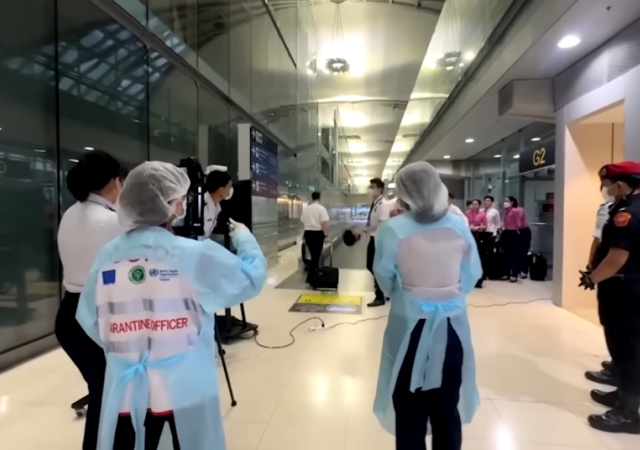
Two cases of the deadly Nipah virus in India have prompted authorities in Thailand, Singapore, Hong Kong and Malaysia to step up airport screening in an effort to prevent the infection from spreading.
The virus, which is carried by fruit bats and animals such as pigs, can cause fever and brain inflammation and has a fatality rate of between 40% and 75%.
Although it can spread from person to person, transmission is not easy and typically requires prolonged contact with an infected individual.
It more commonly spreads to humans from infected bats, or fruit contaminated by them.
Airport screenings for Nipah virus, which have been stepped up across Asia this week after two cases were identified in India, are more about reassurance than science, several leading experts said on Friday. https://t.co/B3heukQh8E https://t.co/B3heukQh8E
— Reuters Health (@Reuters_Health) January 30, 2026
The cases that led to the enhanced screening efforts involved two nurses. Subsequently, contact tracing was conducted, and more than 100 individuals were screened for possible infection. Testing showed no infections among the potential contacts.
The first case is a female nurse and the second case is a male nurse. Both cases were between 20 – 30 years old, from Barasat, North 24 Parganas district. Both cases developed symptoms typical of severe NiV infection in late December 2025 and were admitted to hospital in early January 2026. As of 21 January 2026, the second case showed clinical improvement, while the first case remained under critical care.
Following the two confirmed cases, Indian health authorities identified and tested over 190 contact persons, including health and care workers and community contacts. All samples from contact persons tested negative for NiV.
The Indian National Centre for Disease Control, announced on 27 January that no further confirmed cases have been detected in West Bengal from December 2025 to date.
Our Centers for Disease Control and Prevention (CDC) is “monitoring the situation“.
A spokesperson for the Department of Health and Human Services told ABC News earlier this week that Indian health authorities have deployed an outbreak response team and the Centers for Disease Control and Prevention is in contact with local officials. The CDC said it is “monitoring” the situation.
Despite the virus’s high fatality rate, experts have said it’s very unlikely it will lead to a global emergency.
India indicates it has contained the current outbreak. However, several Asian countries have enhanced their health screening processes.
Indonesia and Thailand increased screening at major airports, with health declarations, temperature checks and visual monitoring for arriving passengers. Thailand´s Department of Disease Control said thermal scanners had been installed at arrival gates for direct flights from West Bengal at Bangkok´s Suvarnabhumi Airport.
Myanmar´s Health Ministry advised against nonessential travel to West Bengal and urged travelers to seek immediate medical care if symptoms develop within 14 days of travel. It said fever surveillance introduced during the COVID-19 pandemic at airports has been intensified for passengers arriving from India, with laboratory testing capacity and medical supplies readied.
Vietnam´s Health Ministry on Tuesday urged strict food safety practices and directed local authorities to increase monitoring at border crossings, health facilities and communities, according to state media.
China said it was strengthening disease prevention measures in border areas. State media reported that health authorities had begun risk assessments and enhanced training for medical staff, while increasing monitoring and testing capabilities.
While the detection of Nipah virus cases in India has prompted sensible precautionary measures across Asia, the situation remains contained and stable. Presently, there is no indication of widespread transmission or pandemic potential. With vigilant surveillance, rapid response, and effective containment protocols now in place, the recent Nipah cases represent a localized outbreak rather than the emergence of a new global health crisis, as much as “public health experts” may long for one.
Donations tax deductible
to the full extent allowed by law.







Comments
The wutan clan at wuhan, responsible for covid and funded by US have offered to help India. Considering alliances, it would be a perfect opportunity for China to decimate a rival and a foe of their Paki ally.
Well, this sounds familiar
Luckily, it’s not easily spread right now. But I imagine there are scientists in biolabs busy trying to figure out how to make it aerosolized.
Must be an election year?
Sorry, I died during the cranberry scare of 1959.
My observation is that Mother Nature wants you dead. And she has a perfect record.
Something is going to kill you eventually, be it the Nipah virus or the crosstown bus or a million things in between.
My advice to is to wash your hands, look both ways before crossing the street and stop worrying about hazards that pose an infinitesimally small risk to you.
Can it be spread by men who just happen to have sex with other men? I am just QUESTIONING.
The US got out of WHO just in time…
typically requires prolonged contact with an infected individual.
What sort of “prolonged contact”? Does it involve bodily fluid exchange? Or is it just not that infectious and requires lots of viral bits to infect you? Is sitting next to them on a 10 hour airplane ride “prolonged contact”? Or does it require the old humpety-hump or similar? Or weeks of similar?