


U.S. Strategically Securing Rare Earth Element Supply Chain Away from China
Brazil mine is being developed with U.S. partnership, and US firm now merges mining with REE processing capabilities.
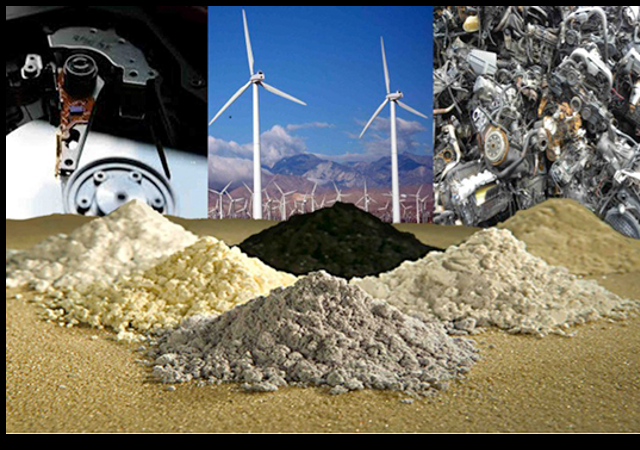
Ever since taking office in January, President Donald Trump and his team have been moving rapidly to secure the nation’s supply of rare earth elements.
As a reminder, rare earth elements (REEs) are indispensable materials in defense systems, communications technologies, and high‑tech manufacturing. The current supply chain is concentrated in China, creating economic and national security vulnerabilities. REEs comprise 17 different substances, lanthanides (cerium, praseodymium, neodymium, promethium, samarium, europium, gadolinium, terbium, dysprosium, holmium, erbium, thulium, ytterbium, lutetium, and the eponymous lanthanum) as well as the two elements scandium and yttrium.
Legal Insurrection readers may recall that earlier this year, Trump’s team began exploring partnership opportunities with other countries to both mine and process REEs, gutting China’s essential monopoly. This move followed months of threats of export controls by China.
One of those countries was Brazil. In early November, Brazilian rare earths producer Serra Verde secured up to $465 million in funding from the US International Development Finance Corporation to develop a specific mine.
The Pela Ema deposit contains light and heavy rare earths – mainly neodymium, praseodymium, terbium and dysprosium – that are key to production of magnets used in a wide range of applications. Serra Verde, backed by Denham Capital, Vision Blue Resources and Energy and Minerals Group, is Brazil’s first large-scale rare earths producer.
The DFC said the funding is to finance improvements of the Pela Ema mine as well as operational expenses and refinancing existing shareholder debt. The financing was earlier reported by the Financial Times.
Serra Verde began commercial production at its mine and processing plant in 2024. The firm aims to ramp up output to between 4,800 and 6,500 metric tons of total rare earth oxides by early 2027.
The location, geology, and composition of the Brazilian deposits are ideal for both manufacturing purposes, as well as removing China’s chokehold on these supplies.
Brazil controls approximately 21-23% of global rare earth reserves, representing the world’s second-largest known deposits outside China. These geological assets provide America with a strategic alternative to Asian supply sources, particularly given the unique composition and extraction characteristics of Brazilian deposits.
The Serra Verde project features ionic-clay formations that enable low-impact extraction methods, distinguishing it from conventional hard-rock rare earth mining. This geological advantage allows extraction without explosives or harsh acidic processing, representing a methodological departure from traditional rare earth extraction practices that often generate significant environmental impacts.
These magnet-grade elements address specific Western supply chain vulnerabilities in defence and clean energy transitions. Unlike light rare earths that China possesses in abundance, Brazil’s heavy rare earth concentration aligns directly with American military and automotive manufacturing requirements.
Now, a bit farther north, REalloys (a U.S. Company), after merging with Blackboxstocks, has struck a significant partnership with the Saskatchewan Research Council (SRC) to create North America’s first commercial‑scale heavy rare earth refinery in Saskatoon, Canada. This is part of Blackboxstocks’ planned “mine‑to‑magnet” business development plans.
The goal of this move is to give the U.S. and allies their own reliable source of key magnet materials—independent of China by 2027. The importance of the developing of robust processing facilities cannot be overstated….especially with a big 2027 deadline looming for the sourcing of REEs for use in U.S. defense.
Equipped with monazite processing, AI-controlled rare earth element (“REEs”) separation, and advanced metal-smelting systems, the facility anchors a supply chain previously available only in China and is dedicated to the extraction and refining of heavy rare earth elements (“REEs”) including Dysprosium (Dy), Terbium (Tb), and Neodymium-Praseodymium (NdPr). The facility will be fully operational for heavy rare earth production in early 2027.
Under the agreements, REalloys will invest approximately US$21 million to expand SRC’s facility, increasing its heavy rare earth (Dy and Tb) processing capacity by an estimated 300% and boosting its light rare earth (NdPr) capacity by 50%.
Once fully operational in early 2027, the expanded facility is designed to produce up to 30 tonnes of Dy oxide, 15 tonnes of Tb oxide, and 400 tonnes per year of high-purity NdPr metal, with NdPr output increasing to 600 tonnes per year after the expansion is complete.
…This facility expansion positions REalloys to deliver a secure, North American supply of these mission-critical materials just as new U.S. defense procurement rules take effect on January 1, 2027. Under 10 U.S.C. §4872 and DFARS 252.225-7052, the U.S. Department of Defense will be prohibited from sourcing rare earth metals, magnets, or components from China, Russia, Iran, or North Korea — ensuring American national security relies on trusted, domestic and allied partners.
Hot Air’s Beege Welborn notes this news underscores the new direction U.S. policy has taken since January.
The United States National Security Strategy (NSS) was published last week, and a core tenet of the doctrine puts supply chain security squarely at the center of U.S. power going forward. And this industry newsletter is warning investors and industry types to adjust for that critical shift in American focus, and to be prepared for difficulties ahead if they are not aligned with American goals.
…In other words, the smart bettors will watch where the U.S. is going and lead, follow, or get out of the way.
All of this is good news, and it looks like I have something to put in my Christmas wish list this year.
I put Rare Earth Element stocks on my Christmas wish list: https://t.co/aDTcTwRDwU pic.twitter.com/CcRwiglSTb
— Leslie Eastman ☥ (@Mutnodjmet) December 9, 2025
Donations tax deductible
to the full extent allowed by law.






Comments
Good news! Get all this established now as a hedge against the risk of Democrat administration in the near future.
Yes, Democrats are a threat to national security.
I do think there will be some smart chemist or biophysicist to create manmade REE’s much like we now have lab grown diamonds.
The obstacles of abundant supplies has been going on for generation and sooner, rather than later, someone discovers substitutes.
They’re elements. You can’t make them out of anything else, short of transmutation. Though transmutation is theoretically possible, it’s not (yet) economical.
It would be far more preferable to look for and mine rare earth in the US.
The Mountain Pass Mine in CA is the largest in the US, but much of the material is shipped overseas (mostly to China) for processing. Since it’s in CA, the Mountain Pass Mine is swamped with red tape, and enlarging it or adding processing facilities is very difficult.
In California, “mine” is a 4-letter cuss word.
So smelters will magically appear?
Thia is good but the one caveat is canada and brazil are involved. While they aren’t hostile they both have the potential to be because of their leftist slides.
Why aren’t they mentioning coal ash?