


Trump Green‑Lights Marijuana Drug Schedule Change, But Stops Short of Federally Legalizing Weed
In time for Christmas, Trump pushes marijuana down from the “naughty list” of Schedule I to the less‑restricted “nice list” of Schedule III.
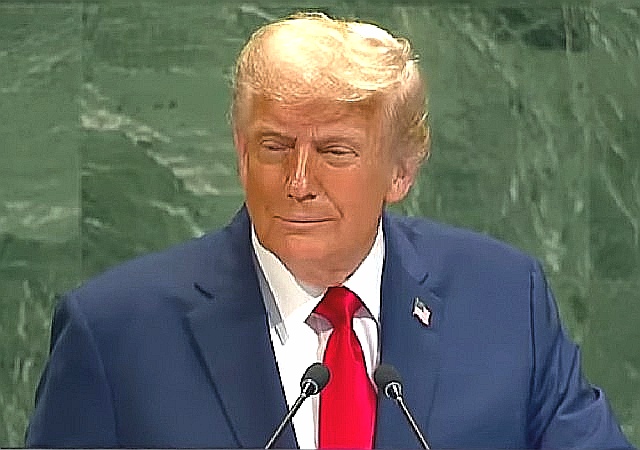
President Donald Trump has certainly been busy with his pen and phone recently, as it relates to drugs.
He recently signed an executive order declaring fentanyl a “weapon of mass destruction“. Trump negotiated an agreement with the pharmaceutical industry to substantially decrease the cost of medicines.
Now, Trump has green-lit a drug schedule change for marijuana, but stopped short of completely legalizing weed.
President Trump signed an executive order on Thursday to reschedule marijuana to a lower drug classification, one of the most significant changes to drug policy in decades.
“Today I’m pleased to announce that I will be signing an executive order to reschedule marijuana from a Schedule I to a Schedule III controlled substance, with legitimate medical uses,” Mr. Trump said in a ceremony in the Oval Office on Thursday, flanked by medical professionals. “We have people begging for me to do this. People who are in great pain.”
He added: “I think I probably have received more phone calls on this, on doing what we’re doing — I don’t think I received any calls on the other side of it.”
The order directs the attorney general to “take all necessary steps to complete the rulemaking process” to reclassify marijuana from a Schedule I drug to a Schedule III drug “in the most expeditious manner.” According to the Drug Enforcement Administration, Schedule I applies to substances with “no currently accepted medical use and a high potential for abuse” — the agency’s most stringent classification, which is also for heroin, LSD and ecstasy in addition to marijuana.
Trump just legalized marijuana nationwide — here’s why potheads are rejoicing https://t.co/EIsmnPlBfd pic.twitter.com/yhIPn9XZVu
— New York Post (@nypost) December 19, 2025
By reclassifying weed to a “Schedule III” drug, pot would be placed into the same category as codeine-laced Tylenol, testosterone, and anabolic steroids. The move has significant fiscal implications.
…[T]he implications are big now that the feds are classifying a so-called “Schedule III” drug, a substance “with a moderate to low potential for physical and psychological dependence,” as opposed to a “Schedule I” drug, which has “a high potential for abuse and serves no legitimate medical purpose.”
Namely, a Schedule III classification means the $60 billion-a-year business of weed in the US can be “banked” and it can grow exponentially as the US banking system will no longer consider it off limits.
It also means Wall Street will no longer shy away from underwriting the stock of any company that in Pot Inc. parlance “touches the plant.” Marijuana companies will gain access to cheaper, more seamless financing as opposed to the cumbersome alternatives they have relied upon to date, including IPOs and stock listings in places like Canada.
Of course, other industries may also benefit from the order as well.
Taco Bell owners upon hearing President Trump has now reclassified marijuana as a Schedule III substance like Tylenol. 😂 pic.twitter.com/Vzof77Site
— PUBLORD (@publord) December 18, 2025
The new arrangements would not “legalize” pot. Manufacture, distribution, and possession of marijuana without legal authorization would continue to be unlawful, but penalties would be less severe than those tied to its current Schedule I status. And prescriptions for cannabis-derived pharmaceuticals would still have to come from registered providers.
Only three cannabinoid drugs have shown evidence from clinical trials necessary for FDA approval. Epidiolex from Jazz Pharmaceuticals, containing purified CBD derived from hemp, is approved for certain seizure disorders. Dronabinol, a synthetic form of THC sold as Marinol by Alkem Laboratories and Syndros by Benuvia, is approved for loss of appetite in people with HIV/AIDS and for nausea and vomiting due to chemotherapy.
All are considered generally safe, and like most drugs carry some potential side effects.
Even after reclassification, any drugs that are eventually approved by the FDA would be legally available in commercial pharmacies by prescription.
Healthcare providers who wish to prescribe Schedule III medications – including any marijuana-derived drugs – must have a valid Drug Enforcement Administration registration.
Not liking the smell of marijuana is not a legit reason to classify it as the highest level of narcotic.
Trump lowering the classification was a step in the right direction.
Now if some people would stop claiming it’s a cure-all and if others would acknowledge it does have… pic.twitter.com/D8f9tOJegn
— Being Libertarian (@beinlibertarian) December 19, 2025
In conclusion, Trump is essentially playing Santa for the cannabis industry this December. His move has pushed marijuana down from the “naughty list” of Schedule I to the less‑restricted “nice list” of Schedule III, easing research and tax burdens while keeping federal prohibition technically intact.
Donations tax deductible
to the full extent allowed by law.






Comments
Like, totally rad.
Talk about cutting the legs out from under the Democrats.
Waiting for “BAN MARIJUANA” signs to show up at No Kings marches.
Massive unemployment for drug sniffing dogs.
I am NOT a lawyer but this doesn’t change banking for any dispensary that doesn’t require prescriptions or maybe a government card.
As the example of Codeine laced Tylenol can’t be dispensed without a prescription.
I have a problem with politicians, prosecutors and law enforcement that take an Oath to obey the laws and then ignore a few.
If you don’t like the Immigration law, change it or don’t take the Oath.
If you don’t like the marijuana or other laws change it or don’t take the Oath, but enforce it until then
Sorry, I don’t agree with such a blanket statement.
For instance, I give these boys a hell of a lot of credit.
It should be Schedule II, not Schedule III because it has potential for abuse and potential for diversion.
There is some concerning research indicating a link to youth mental illness that really needs to be evaluated….
—
Schedule II
Schedule II drugs, substances, or chemicals are defined as drugs with a high potential for abuse, with use potentially leading to severe psychological or physical dependence. These drugs are also considered dangerous. Some examples of Schedule II drugs are: combination products with less than 15 milligrams of hydrocodone per dosage unit (Vicodin), cocaine, methamphetamine, methadone, hydromorphone (Dilaudid), meperidine (Demerol), oxycodone (OxyContin), fentanyl, Dexedrine, Adderall, and Ritalin
Schedule III
Schedule III drugs, substances, or chemicals are defined as drugs with a moderate to low potential for physical and psychological dependence. Schedule III drugs abuse potential is less than Schedule I and Schedule II drugs but more than Schedule IV. Some examples of Schedule III drugs are: products containing less than 90 milligrams of codeine per dosage unit (Tylenol with codeine), ketamine, anabolic steroids, testosterone