


Supreme Court Hears Arguments in Important Donor Disclosure Case
Overall, a majority of the Court appears sympathetic to First Choice Women’s Resource Centers, Inc.
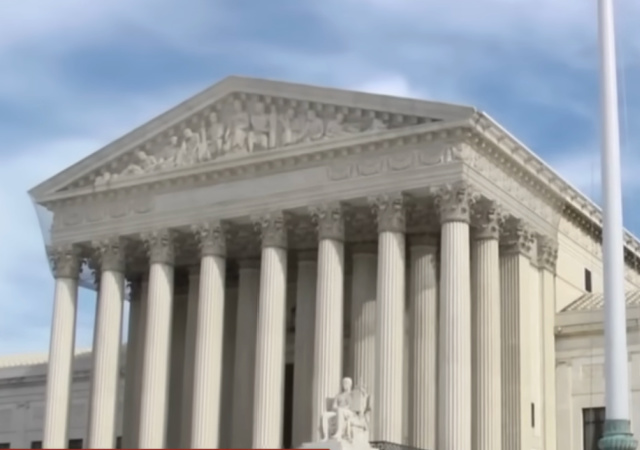
On Tuesday, the United States Supreme Court heard oral arguments in First Choice v. Platkin, a case in which the Legal Insurrection Foundation’s Equal Protection Project (EPP) filed an amicus curiae, or “friend-of-the-court,” brief.
Overall, a majority of the Court appears sympathetic to First Choice Women’s Resource Centers, Inc., a collection of five licensed medical centers offering free services and material support to women facing unplanned pregnancies, who are resisting New Jersey’s demand for information about the group’s anonymous donors.
Without identifying a single public complaint, New Jersey Attorney General Matthew Platkin issued a subpoena demanding that First Choice turn over years of sensitive internal information, including donor information, regarding nearly 5,000 contributions to its mission.
At stake in the case before the Supreme Court is not only the free association rights of Americans expressing themselves anonymously through donations to charitable organizations, but the ability of those organizations to continue serving the public interest.
EPP’s amicus brief offered the Court three additional reasons it should protect the First Amendment rights of anonymous donors, several of which were raised on Tuesday during the oral argument.
Attorney Erin Hawley, representing First Choice, argued that the subpoena in question violated First Choice’s First Amendment right to free association the moment it received the subpoena, even if the subpoena was only enforceable if the attorney general sought such enforcement in state court.
In short, First Choice is not required to wait for a state level judicial enforcement to bring a First Amendment claim in federal court.
Chief Justice Roberts appeared to agree, at one point asking whether such a subpoena “might have an effect on future potential donors … to know that their name, phone number, address, et cetera, could be disclosed?”
Justice Kavanaugh also noted that an amicus in the case cautioned against “suppression by subpoena,” saying, “this is just kind of obvious that there’s some kind of objective chill.”
Justice Kagan, perhaps surprisingly receptive to these points, also observed that an ordinary person won’t be “particularly reassured by the fact that” you still need a court order before the subpoena will be enforced. The mere issuance of the subpoena, in other words, might be enough to deter a potential donor.
Attorney Vivek Suri, an assistant to the U.S. solicitor general, agreed with First Choice and argued that non-profit groups like First Choice have the ability to seek relief in federal court as long as there is a “credible threat” that the subpoena would be enforced.
On the other hand, Attorney Sundeep Iyer, representing the New Jersey attorney general, argued that the issuance of a subpoena requiring donor disclosure does not automatically negatively affect the right of free association unless there is some kind of subsequent enforcement action in state court.
In effect, no state court enforcement, no federal claim.
But several justices questioned this framing of the issue, with Justice Gorsuch telling Iyer several times that the subpoena seems “pretty self-executing to me.”
Justice Alito similarly suggested that the attorney general had characterized the subpoena as non-self-executing as a litigation tactic, only having recently raised it.
Eventually, Iyer conceded that if the Court rejects the state’s characterization of the subpoena, there was “no dispute” that First Choice would have a right to sue “from the moment of the issuance of the subpoena,” a startling concession.
As EPP argued in our brief, as a tax-exempt non-profit group serving the public interest, groups like EPP and First Choice depend on donor contributions in order to operate and exist. Those same donors depend on their identities remaining anonymous in order to associate with groups that may be the target of government hostility.
But even more to the point: The First Amendment to the United States Constitution demands the right of Americans to associate with whoever they want, in public or anonymously.
The Supreme Court should rule in favor of First Choice, uphold the free association rights the First Amendment guarantees, and protect non-profits and anonymous donors.
Reminder: we are a small organization going up against powerful and wealthy government and private institutions devoted to DEI discrimination. Donations are greatly needed and appreciated.
———–
Timothy R. Snowball is a Senior Attorney at the Equal Protection Project.
Donations tax deductible
to the full extent allowed by law.



Comments
Why would they want donor information except to Dox and intimidate them. Is there any other reason? I doubt it.
I am completely sympathetic to the concept of allowing donors anonymity, but what about when a large donor knowingly funds an organization engaged in criminal behavior?
From the article, that “for instance” might not even apply here – no criminal activity was cited in it as the reason for any subpoena. Although I suspect that any reason cited would be a result of the most avid members of The Church Of Margaret Sanger’s propensity to try to criminalize any pregnancy-related health care that doesn’t include performing abortions.
The normal route they employ is to charge some sort of “false advertising” – as if (say) a “Pregnancy Center” (or hospital) that doesn’t perform or refer at-will abortions is medical malpractice – alternately they go after the individual medical care providers – trying to remove their license to practice as a nurse or doctor, etc..
As Ztak mentioned, the most obvious reason why a govt entity would subpoena (but cross-their heart promise not to charge as a result) donor lists is if the goal is to make potential donors fearful of doxing. And other potential punishment for daring to legally support a cause the folks running that entity don’t like. The case law covering this dates back to KKK-run states issuing subpoenas to expose (and potentially murder) anyone supporting negroes (the term at the time) having a right to vote. Which THEY (the states) regarded as “illegal trouble-making”.
What about it? If, and that is a mighty big IF, there is actual cause for concern then let the Government present its case on a case by case basis.
To clarify: in the case before the Supreme Court there appears to be no legitimate reason to reveal the donors. My point was regarding a hypothetical case of someone like Soros providing major funding for outfits such as Antifa.
I read a much longer article about this case and Justice Thomas filleted the NJ State lawyer like a fresh caught tuna. Iyer was left admitting there was no potential crime behind the subpoena. NJ wielding the power of the State to go after a legal business they don’t like.
There are a ton of instances where democrat administrations go after or outright ban businesses they don;t like. Two examples come to mind. The first is Chickfillet which has been banned from airports and from college campuses. They second is Walmart. Several cities including Boston banned them even though they would have provided cheaper goods to their poorer residents.
This type of behavior by politicians should be criminalized. The only things that it makes sense for the government to have a say in is sin business like strip clubs, liquor, pot etc….
One person’s “Sin” is another person’s “I don’t care” or even “I want that”.
Depending upon what hobby-horse floats your boat, (L)s have also treated perfectly legal transactions – like gun sales – or owning a regular car – as a “Sin” and legislated and sin-taxed accordingly.
Legislating morality is always enticing to big govt control-freaks – but best practice (imho) is to refrain from letting that particular camel get his nose under your tent wall AMAP.
You’ll always get some morality legislation – we can’t help ourselves it seems – but if it doesn’t kill people or frighten the horses snd children we should refrain from as much sharia law as possible – even if it’s non-muslim sharia.
Well said.
“Legislating morality is always enticing to big govt control-freaks”
Kindly name some legislation which is not about morality.
Depends on your definition of “morality”.
If you wish to revive (say) Aztec or Moloch worship (or just wish NO limits on at-will or post-partum “abortion”) then laws limiting abortion or child murder are about imposing “morality”.
Same argument can be made about laws re: murder (or theft) in general.
However I hope you would agree with the principle that your “right” to swing your fist freely is curtailed by the space occupied by another’s face.
IOW the Golden Rule (the classic one, not the joke one from the Wizard of Id comic) is more common sense and less morality policing.
The boundary line is defuse and sometimes hard to discern –
but it definetely exists.
Roundabouts v 4 way stop. The precise time a noise ordinance goes into effect. The time limit on street parking. The rate/amount of any tax actually imposed v theorized. Plenty more.
“Roundabouts v 4 way stop. The precise time a noise ordinance goes into effect. The time limit on street parking. The rate/amount of any tax actually imposed v theorized. Plenty more.”
The moral issue with these is “what results in the best benefit”. As opposed to “what can screw things up the most” or “make me the most money”.
All moral issues. You may be taking morality for granted. It’s not.
“… your “right” to swing your fist freely is curtailed by the space occupied by another’s face.”
A moral principle. Doesn’t apply in some cultures.
I called them sin businesses because that is what they are traditionally called. Personally I have no problems with any of them for adults but I can accept herding them into a few locales.
Having a say doesn’t mean banned. It can be as simple as restricting it to certain areas or forbidden it within a certain number of feet from schools. This is to protect the children of course but also these businesses tend to attract crime and lower property values so it;s better to have them in one area.
anyone else remember the time when Atlanta’s airport had a massive power lasting most o a day, on a SUnday no less. The owner o Chik ang up the managers o all the Atlanta area stores and told them. Your option, but i you wwant to round up your crews, make up a pile o gub, and bing it to the airport and GIVE it away to anyone who will take it, I will reimburse you all expenses to do so. Please note, Chik are always closed on the Lord’s Day.
Several crews mustered out and brought grub to those stranded hours on end. Thousands o meals were given away, no strings. Many who had admantly rephused to ever eat that company’s product ate it and enjoyed it. Many locals who were in that category had their minds changed.
One o the best advertising gigs ever.
Why and how?
The only things that it makes sense for the government to have a say in is sin business like strip clubs, liquor, pot etc…. That makes no sense for two reasons. First of all, why should government have a say in those kinds of businesses? Second, why on earth would government not have a say in what businesses it allows on its own property???
When you say Chic Fill A has been “banned” from certain places, you surely don’t mean there is a law against them being there! You can’t possibly think that’s true! You obviously mean that certain property owners have declined to lease their property to Chic Fill A. Well, why should they? If I don’t like a company I don’t have to lease my property to it. Why should governments be any different in this regard?
As for Walmart not being able to get permits in certain places, so long as there is a permitting system how can you prevent that, let alone “criminalize” it? If a city requires permits for a business to operate, and it makes rules on how big a business it will give a permit to, how can that be a crime?
The basic principles would seem to have been decided before I was born with NAACP v Alabama; membership lists/donor lists are protected.
I’d propose a compromise for NJ, but they would refuse it. Require NJ to post a bond when issuing a subpoena of $1Million per member Name. Then double the amount if any other PPI is requested; name + email is $2 million, add phone # and it’s $4 million + address? Now it is $8 million per member that must be posted…forever. Any disclosure of any part of the list whether deliberate or by error triggers full immediate payment without recourse or review. All the organization or a member need do is show that a disclose was made and that’s it payment goes out the door. I suspect NJ wouldn’t be so sanguine about data security or risk of disclosure if their incentives were aligned this way and substantial risk plus tied up capital was on the table.
There is an unaddressed flaw in the First Amendment argument for tax-deductible donations to 501(c)(3) organizations as opposed to donations to organizations that do not have this status.
Making these donations tax-deductible means that these organization indirectly are supported by non-donating taxpayers, including those who disagree.
This goes beyond “free association” rights.
The entire concept of tax-deductible donations is flawed, not to mention being abused by the wealthy for all manner of nonsense, and should be done away with.
While you’re at it, let’s eliminate all taxes for goods and services which some tax payers don’t use.
Start with school taxes.
In other words, I don’t buy your argument.
Your implied analogy is off. It’s an equal protection argument. And the well-recognized validity of this is found in the periodic tweaking that limits charitable deductions.
But I get the visceral reaction, because it affects donations to religious organizations, and that’s why these deductions have persisted.
Word salad.
That argument depends on the premise that all our money belongs to the government, and it generously allows us to keep a large part of it. If you start with the premise that all our money belongs to us, and the government takes some of it away, then it makes no sense to say that by not taking away one person’s money the government is forcing someone else to subsidize that person and his activities. The money it takes from each person is separate, and nothing forces it to take anything from anyone.
No. It’s about entitling people who make the deductions to divert payments that otherwise would go toward taxes under rules that apply to everyone, to private interests. So, e.g., X dollars that otherwise would go to schools or roads or federal expenditures go instead to the local mosque, or to some philanthropist’s crackpot “foundation” that injects vaccines into kids in the Congo. Etc.
First of all, tax deductions are from income, not from taxes due. They reduce your taxable income.
And again you’re starting with the premise that the government is entitled to all of our money. Yes, if the person hadn’t donated to a good cause then that money would have been taxed, which means some part of it would have been confiscated from him. By giving the whole amount away, he avoids having the government confiscate a part of it. Since the government isn’t entitled to any of it, this doesn’t harm the government, and it certainly doesn’t harm the other people the government takes from.
You’re like someone who argues that if a mugger has pity on one of his victims and gives him back $20 out of his wallet so he can get home, that somehow harms the mugger’s other victims, whom he will “have” to rob for more money!
Is there a legitimate interest in knowing if donors are foreigners – not in this case but in general but particularly so for any such organization attempting to influence public opinion? If so, how would the state go about finding this except by subpoena powers.
Your statment does not hold water.
I, who do NOT ride busses or light rail, an still compelld to support them through taxes levied on me.
A tax exempt organsation provides services to others at no cost to them. Since they are non-prophit organisations, they are not making money.
When I give to such an organisation Ireceive no gain, so why should I pay tax on that as i I did?
Planned Baby Death get large quantities o pubic money thus compelling me to support what I abhor.
That 1s Article o Ammendment does protect certain rights. Amongst them is the right to say whatever one wants…. and/or to NOT say whatever one wishes to keep private. Thus goverment may NOT compel speech.
hose who are overly abtuse, this means govenment may NOT compel a non-prophi to disclose details about their donors.
That said, in instances where credible evidence indicates illegal activity, such as non-residents supporting non-prophit entities, upon credible evidence stating relevant and credible particulars, THEN a subpoena may be issued upon those particulars and the instant case may be examined.
But this nonsense New Jersey are persuing is outside that scenario and thus illegal.
Huh?!