


Seismic Power Shift Looms as Bolivia May Rewrite Lithium Deals Involving China to Favor U.S.
Another golden opportunity for the Trump administration team to make a deal that secures the U.S. critical mineral supply chain.
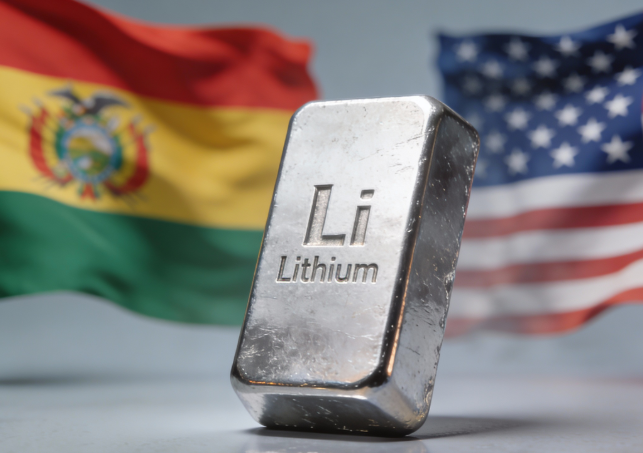
Another South American country has gone “far-right” and the timing couldn’t be better for the U.S. as it seeks to secure its critical mineral supply chain.
Several weeks ago, Bolivia elected Rodrigo Paz as its new president. He promptly planned to scrap a ream of taxes as one of his first moves since becoming the nation’s first conservative leader in nearly two decades.
The government has also repaired relations with Washington after years of anti-American hostility dating back to when ex-President Evo Morales, a charismatic coca-growing union leader, kicked out the U.S. Drug Enforcement Administration in 2008 and cozied up to Russia, Iran and Venezuela.
The U.S. State Department has already announced agreements on nuclear cooperation and security assistance, and Paz has said his administration will allow Elon Musk’s Starlink to operate in Bolivia for the first time, after his predecessor refused to give it an operating license last year.
As Bolivia starts to regain credibility in the eyes of investors, sovereign bonds have risen in recent weeks and the chronically depreciating currency pared back some of its losses against the dollar in unofficial trading.
Paz is now reworking strategic alliances, pivoting his country away from Venezuela and toward the U.S and other Western allies [emphasis mine].
Foreign Minister Fernando Aramayo spoke with Fox News Digital as he visited Washington this week to sign an agreement reestablishing diplomatic ties with Israel, which had been cut off during the war in Gaza by the previous government.
“We are looking for a long-term relationship with U.S., relations based on the same values and interests that we share, for democracy and to create a new alliance in South America,” Aramayo said.
Paz’s victory followed the unraveling of nearly two decades of leftist rule under Evo Morales and Luis Arce, whose MAS party fractured amid economic crises, corruption scandals and mounting public anger over alleged narcotrafficking networks embedded in the state. The collapse of that political machine opened the door for a conservative, pro-business candidate — a dramatic turn for a country that had been one of China and Venezuela’s closest ideological allies in the region.
…The “U.S. has a lot of technology and has a lot of experience and sustainable extraction of resources,” Aramayo said. “We want to take advantage of that. Of course, we want to receive some technology transfers and to be part of the whole chain of production.”
There are reports that Bolivia is planning to change its lithium mining development plans, which originally involved China and Russia.
Lithium deals under outgoing President Luis Arce with companies from allies China and Russia were blocked in Congress, and Paz has said he would scrutinize the contracts to ensure transparency, a move that could create fresh opportunities but also spark investor jitters.
To be sure, Paz’s campaign focused less on lithium than on other priorities such as maintaining cash transfers to the poor, decentralizing government and private sector-led growth, part of an effort to not alienate former supporters of leftist Evo Morales who founded the ruling MAS party.
In that vein, Paz has also vowed not to “sell out” the vast Uyuni salt flat famed for its dazzling fields of white salt, a nationally beloved symbol of Bolivia’s national sovereignty and Indigenous heritage.
The reason for the deals centered around the technologies the Russians and Chinese were bringing to the table, which would make the Bolivian deposits a cost-effective source of lithium.
Bolivia has double the resources of neighboring Chile, but they aren’t yet deemed commercially viable by the US Geological Survey. Deposits suspended in brine have high levels of magnesium, making the lithium more expensive to produce, and the nearest port in Chile is more than 300 miles away.
The Arce government bet on new direct-extraction techniques to circumvent purity issues and shorten the path to production. Last year, state lithium company YLB signed up a unit of China’s Contemporary Amperex Technology Co. Ltd. and Russia’s Uranium One to develop projects using this method. Neither is close to commercial production and both face congressional scrutiny.
A senior economic adviser to Paz is promising a review. “If there’s something positive to resume it will be resumed, but we believe that those lithium contracts were forged behind the backs of the regions and the country,” José Luis Lupo told Bloomberg News.
BREAKING: The new President of Bolivia is now working to terminate lithium mining contracts with China & Russia, in favor of a deal with the United States.
President Rodrigo Paz’s Foreign Minister said, “We are looking for a long-term relationship with U.S., relations based on… pic.twitter.com/5yOI36eFLD
— George (@BehizyTweets) December 13, 2025
The Trump administration recently directed funds for the development of mines in Brazil. Bolivia’s Foreign Minister Fernando Aramayo’s comment about U.S. technologies suggests that a similar deal could be in the works.
I anticipate that it will be very interesting to see if it can make a deal with the new Bolivian government that helps stabilize a new friend while protecting the U.S. critical mineral supply from Chinese threats.
Image by perplexity.ai
Donations tax deductible
to the full extent allowed by law.







Comments
I said this once before and I will say it again: It is far more preferable for the US to open lithium mines in the US than to be dependent on other nations whose political inclinations can turn on a dime.
And they are working on Us mines. But in the interim getting international sources that aren’t china is good.
Exactly this. It takes time to refine all of these minerals for use. We need these kind of good China-free deals in the meantime.
Reestablishing relations with Israel is the smart move for Bolivia. Israeli technological know-how is world-class and will significantly speed Bolivian economic development.
Unfortunately it will only last till the next socialist is elected.
Just so long as it’s fireproof
I think I read that China is offering to upgrade Bolivia’s rail system to ship the ore to Rio in Brazil. This is conjunction with build a Rio to La Paz rail system. The main holdup is the method of lithium extraction as the China is pushing will be very damaging to the environment. The last administration in Bolivia didn’t care and just wanted the money.