


New Bird Flu Strains Appear to Target Dairy Cattle More Effectively
Meanwhile, hundreds of snow geese have been found dead in Pennsylvania from suspected bird flu.
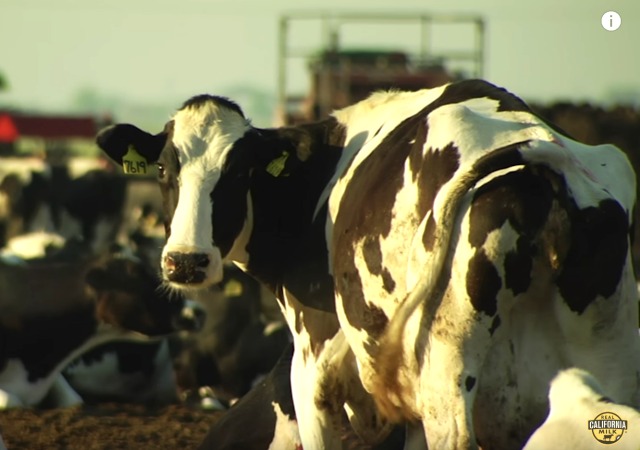
There are some interesting developments related to the bird flu, also known as H5N1 or Highly Pathogenic Avian Influenza (HPAI).
Legal Insurrection readers will recall my reports, which indicate that it began spreading among U.S. dairy herds in 2024. I have noted that both poultry farmers and ranchers who have been infected contract mild flu symptoms and “pink eye.”
Now, a new report that has been published indicates the virus appears to be evolving. Scientists say newer versions of the virus can infect cow cells more easily than earlier strains, suggesting it’s becoming better adapted to cattle.
The study, published in Nature Communications and led by scientists at the MRC–University of Glasgow Center for Virus Research, examined a large panel of viruses representing more than 60 years of H5N1 evolution. The researchers say their findings highlight the urgent need for continued testing and monitoring, especially as the virus continues to spread in dairy cattle and remains a potential pandemic threat.
The discovery of H5N1 in cows in spring 2024 came as a major surprise, as flu viruses were not previously thought to cause outbreaks in cattle. However, H5N1 is known for its ability to spillover in mammals, raising concerns that it could spread further into other animal species. As the virus continues to circulate and adapt in mammals, there is a risk that new strains could emerge that are better able to infect humans. This underlines the importance of ongoing surveillance in domestic animals, including livestock.
The study showed that the ability of H5N1 viruses to infect cow cells and mammary tissue is not controlled by multiple viral genes and depends on changes that viruses have acquired gradually over time. The researchers also found that bird flu viruses vary widely in how well they can replicate in cow cells. This means some bird viruses may already be closer than others to being able to infect cattle and potentially other mammals.
Another recent study also suggests concerns that, should the avian flu jump more effectively into humans, the typical fever temperatures associated with an immune system defense won’t be as effective.
Bird flu viruses present a significant risk to humans because they can continue replicating at temperatures higher than a typical fever. Fever is one of the body’s main tools for slowing or stopping viral infections, yet research led by the universities of Cambridge and Glasgow shows that avian flu strains can keep multiplying even when the body reaches temperatures that normally hinder viruses.
In a study published in Science, the researchers identified a gene that strongly influences how sensitive a flu virus is to heat. During the major pandemics of 1957 and 1968, this gene moved into human flu viruses, and the resulting strains were able to spread efficiently.
Meanwhile, the regular bird flu continues to spread. There are reports of hundreds of snow geese dying in Pennsylvania.
The agency said in a news release Tuesday that it’s coordinating an effort to safely remove, test and dispose of snow geese that were found dead at a quarry in Northampton County.
According to the Pennsylvania Game Commission, late 2024 and early 2025 saw a sharp resurgence of highly pathogenic avian influenza, or HPAI, in the state’s wild birds. The U.S. outbreak began in 2022 and has impacted wild and domestic birds in every state.
The Game Commission says wild waterfowl and shorebirds are considered natural carriers of bird flu and might shed the virus despite appearing healthy. It can also make raptors, scavengers and wild poultry sick.
Waterfowl hunters are encouraged to participate in the remaining season, but the Game Commission says they should take precautions while handling and dressing birds. While HPAI can sicken humans, the U.S. Centers for Disease Control and Prevention says the current outbreak poses a low risk to the health of the general public.
Bird flu is hitting the Snow geese hard this year pic.twitter.com/eaJn9zUDSC
— Jay Stover (@JayStover) December 11, 2025
Donations tax deductible
to the full extent allowed by law.







Comments
This story is being milked for all it’s worth.
Even thinking whey back I can’t remember such a cheesy remark.
You haven’t cowed me.
Oh, bull. I’d never steer you wrong, Mr. Hunt.
/to the moderators: yes, I’ll stop now.
Glad you decided to moooove on.
That comment was udderly terrible.
Not alarming yet but not great news.
Work harder, you gooks.
so someone is developing flu viruses
that affect our food supply….
hmmm I wonder who
The solution is easy, teach the cows that they’re not Birds
But, what if some of them, identify as birds?
Cow masks.
It’s the only way.
A Fauci would be proud.
Moof!
…which, by the way, is safely no longer trademarked.
Darn those swans, now we’ll have cull all the chickens and cows.
And China is working on viri….
China gets its vira from Fort Detrick
China gets its viruses from the Universities where the CCP has placed its agents. The Chinese “researchers” smuggle them out of the university bio-labs and then freely travel back to China and hand them over to the CCP bio-weapons labs.
“…I’m just glad that cows can’t fly.”
That’s hilarious!
“As God is my witness…!”
End of article: “poses a low risk to humans…” OK. What’s the big deal?
Who’s growing bird flu strains in the lab would be news.
The “big deal” is that as cows and chickens die from the disease, the costs of food goes even higher as the supply is diminished.
I swear. Sometimes the world seems determined to make it where I can’t afford a decent hamburger.
It’s not all bad, at least they throw in the gristle for free.
I have a bunch of venison burger. Enough for the entire year. I can still take more deer should I decide to do so, but one decent sized deer pretty much covers a years worth of burger for me.
its about time that the
cows start wearing masks
There is low risk of a human pandemic for one simple reason – bird flues cause severe eye irritation in humans, and if you can’t see you can’t mingle with other people. Pandemics require pre-symptomatic or asymptomatic transmission.
Well, 2026 *is* an election year…