


Geothermal Engineering Breakthrough Announced Involving Cascade’s Largest Volcano
Newberry Volcano, a volcanic arc that covers an area the size of Rhode Island, is deemed a “high threat volcano” by the USGS.
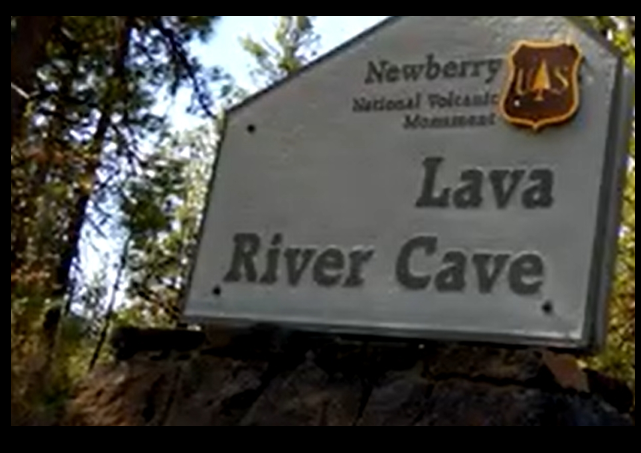
This year, I have written several stories about the volcanoes of the Cascade Range in the Pacific Northwest, including Mt. Adams, Mt. St. Helens, and Mt. Rainier.
Yet few people are aware of the largest volcano in the Cascades: Newberry Volcano, which is a volcanic arc that covers an area the size of Rhode Island. The United States Geological Survey considers it a “high threat volcano,” since it is still active and capable of producing explosive eruptions.
Throughout its lifetime, Newberry has been the most explosive volcano in the Cascades, with at least 5 caldera-forming eruptions in less than 300,000 years. The most recent caldera developed about 65,000 years ago, when explosive eruption of basaltic andesite to rhyolite created the current 6 x 8 km (3.7 x 5 miles) caldera.
Several eruptions have occurred in the caldera since the last glacier melted nearly 12,000 years ago, the youngest of which, about 1,300 years old, produced the Big Obsidian Flow and a tephra that has been found in Idaho.
So apparently Newberry Volcano near Bend is one of the largest & most hazardous volcanoes in the US. It was designated a “very high threat” recently by the U.S. Geological Survey. It has been active for more than 530,000 years, most recently 1,300 years ago when it did this 😱 pic.twitter.com/J2KJ2bFnMd
— Sena (@SenaMcCarthy) August 9, 2023
As I have mentioned before, new technologies built upon processes similar to fracking are being used to enhance the U.S. geothermal energy production capabilities. Recently, a start-up company announced it had made a breakthrough involving using magma under the Newberry volcano complex.
The plant will tap into the infernal energy of Newberry Volcano, “one of the largest and most hazardous active volcanoes in the United States,” according to the U.S. Geological Survey. It has already reached temperatures of 629 degrees Fahrenheit, making it one of the hottest geothermal sites in the world, and next year it will start selling electricity to nearby homes and businesses.
But the start-up behind the project, Mazama Energy, wants to crank the temperature even higher — north of 750 degrees — and become the first to make electricity from what industry insiders call “superhot rock.”
Enthusiasts say that could usher in a new era of geothermal power, transforming the always-on clean energy source from a minor player to a major force in the world’s electricity systems.
…Today, geothermal produces less than 1 percent of the world’s electricity. But tapping into superhot rock, along with other technological advances, could boost that share to 8 percent by 2050, according to the International Energy Agency (IEA). Geothermal using superhot temperatures could theoretically generate 150 times more electricity than the world uses, according to the IEA.
The Newberry volcano in Central Oregon remains a geothermal research hotbed (no pun intended).
Mazama Energy is drilling two miles into the volcano to build a closed-loop “Superhot Rock” enhanced geothermal facility.
The pilot project is succeeding!https://t.co/jXcV8X78ng https://t.co/ICEmtR5mj5 pic.twitter.com/vBddyCMHUv
— Andrew Damitio 🏗️ (🏬🚝☢️🔆🔋♨️) (@AndrewDamitio) October 6, 2025
Geothermal energy focuses on the production of steam that powers turbines that generate electricity. In the case of “superhot rock”, instead of relying on the local water, energy companies inject water into areas with dry superheated rock that are at temperatures over 700 degrees Fahrenheit.
At this temperature, and also under a lot of pressure, water becomes supercritical and begins acting like a mix of a liquid and gas. According to The Washington Post, this supercritical water can hold more heat like a liquid but flow like a gas, providing five to ten times more energy than typical geothermal operations.
…Similar to Mazama Energy’s plans in Oregon, a 2024 report from the Bureau of Economic Geology (BEG) at the University of Texas at Austin similarly found that injecting water into superhot rock near the town of Presidio in southwestern Texas could provide a significant amount of electricity. In fact, according to a model produced by the Clean Air Task Force, 20 percent of the U.S.’s landmass, or around 750 thousand square miles, has superhot rock energy potential.
But this energy doesn’t come without risks, the biggest of which being man-made earthquakes. Fracking for natural gas is known to cause tremors by changing pressure conditions along faults, and in 2018, South Korea experienced its second most-powerful earthquake in modern history due to a geothermal plant.
These risks can be managed with robust monitoring and engineering, and additionally, pollution isn’t an issue since water recirculates in sealed wells and at distances below most groundwater reservoirs.
Tuesday 25 November 2025: The World Clock — Worldwide https://t.co/JkGHBGMFZQ
Source: popularmechanics*com
Scientists Want to Use One of the Most Dangerous Volcanoes in the U.S. to Power Our Future
The Newberry Volcano south of Bend, Oregon, is the source of superhot rocks… pic.twitter.com/r4NOcHJ0gj— Pierre F. Lherisson (@P_F_Lherisson_) November 25, 2025
It will be interesting to see how this project progresses. Hopefully, the stories involving the Cascade volcanoes will be positive like this one, rather than something… more dramatic.
Sulphur dioxide cloud from eruption in Ethiopia reaches the USA.
🌋Hayli Gubbi Volcano, Ethiopia.
Eruption on 23 November 2025.Sulphur dioxide cloud travelled 24,600 km (13,500 miles) east and reached California, Nevada, Utah and Colorado USA on 28 November 2025.… pic.twitter.com/t206i6h5dW
— Dr John Seach (@johnseach) November 28, 2025
[Featured image via YouTube]
Donations tax deductible
to the full extent allowed by law.







Comments
I believe Iceland gets most of its energy from geothermal. Technology can always be improved, but this isn’t new.
It is, indirectly, nuclear energy, and it’s more reliable than sunlight.
I wonder if they use superheated rock, or just hot water.
Water in superheated rock.
Iceland is literally part of a seafloor spreading zone that happens to have so much magma upwelling under it that it has been pushed above the surface of the water. Geothermal energy production there is a low-cost, technological no-brainer because the heat is very close to the surface and therefore very easy to exploit.
I believe the largest US geothermal power producer is a CalPine operation located in Lake and Sonoma Counties in California. AKA “The Geysers”.
Welcome back LI.
Mondays can be troublesome.
I remember, decades ago, about a convent in Penn. that was heating its buildings with geothermal energy. It was a simple pipe drilled deep into the ground and it had an artesion well effect using no pumps.
I don’t know if it still exists or not but I was always intrigued by the idea.
Would that be a partnership with the DEVIL?
But, if you suck all the electricity out of the magma, what will power the gyroscopes that keep the earth spinning?
Shhhh. Don’t tell the “progressives.” LOL
I can see the Sierra Club suing on just that grounds, backed by the EPA, and a Federal District Judge shutting it down.
Subotai Bahadur
You must have heard a speech from Hank Johnson of Georgia.
Magmets!
You should be banned for that comment.😉
Frakking brilliant!
Interesting story! We have vacationed up there. Two lakes, Paulina and East, each in a volcanic crater. Cabins for rent next to each of them. Ours was at Paulina, and don’t tell anyone but we filched some lava from from the lava flow.
The superheated rock-to-geothermal turbines is very interesting. Has it been implemented anywhere? There are geothermal plants in California. How do they do it?
Now that we’re talking about geothermal …
Standard geothermal, a/k/a “ground source,” heat pumps are different. Dig a trench 6 feet deep; lay PVC pipes in trenches; run antifreeze through the pipes; connect to a heat exchanger. Always in the mid-50s 6 feet down, so geothermal is good for cooling in summer and warming in winter, the latter through the heat pump “reversal.”
Problem: In winter, the withdrawal of heat by the heat pump and return of cold antifreeze can cause the ground around the PVC pipes to freeze. In summer, the ground can be heated by return of hot antifreeze. Also, small gaps in the dirt used to refill the trenches can reduce the heat pump’s efficiency.
Capital cost for a geothermal heat pump is 2x-3x higher than for a standard heat pump, plus the pumping of antifreeze needs electricity so it’s not free. Finally, air-source heat pumps have improved, so the advantages of ground source have steadily narrowed.
For commercial exploitation, the source of heat must be very close to the surface (e.g., Iceland) or you must drill down to it. If you’re drilling any substantial depth, you’ll want to reach rock that’s very high-temperature in order to create efficiencies in your electricity production (to offset the cost of maintaining deep bores). Pressurized water reactors (PWRs) hold water in its liquid state by high pressure for the same reason; the pressurized water can carry more energy into the system’s heat exchanger providing the business with more efficient electricity production. This is why PWRs can blow up so spectacularly (as at Chernobyl). (Molten salt reactors are even more efficient and safer at the same time, as their molten salt is capable of holding and transferring more heat – and therefore energy to its turbines – at low, nearly atmospheric pressures.)
This past spring, I was in Death Valley, and visited Ubehebe Crater, a volcanic crater, but caused by a steam explosion rather than an eruption of magma. It’s size makes it evident how powerful a steam explosion can be.
https://en.wikipedia.org/wiki/Ubehebe_Craters
What I don’t know about that fills books, but unlike your average “progressive,” I have no problem admitting ignorance. We shall see on the geothermal hot rocks idea. Sounds good, but so does fusion until you try to figure out how they’ll contain it.
There are a couple of maars (steam explosion craters) practically on the southeast flank of Newberry. Big Hole and Hole in the Ground are about a mile across and somewhat deeper than Ubehebe.
A few miles southeast of these features is Fort Rock, a spectacular tuff ring, also formed by a steam explosion.
I recommend visitors to Central Oregon check out these features in addition to the Newberry Caldera. One can drive up to Paulina Peak, the highest point on the caldera. Spectacular views, including all the way to Fort Rock.
Don’t worry. Pele’s jurisdiction doesn’t extend to Oregon.
“Just when I think I’m out, they pull me back in.”
I worked in high-end residential n light commercial HVAC product development back in the day. Right next to the commercial system guys. Engineering education before that. Context brain dump:
“Geothermal” had at least three meanings lately, depending on who’s talking. They call both “ground source” — pipes in the dirt, and “water source” — exchange heat with water-table water “geothermal.” Neither of those has to do with liquid hot mag-ma.
Other difference is single-unit, multi-unit, and “generation.” (Nobody talks about using volcano temps to generate H2 from cracking water n pipe that around. Cowards.)
Who has what rights to do what is … “evolving” is I think the term. Let’s recall that you couldn’t “harvest” water from yr own roof in CO until enough eco-folk yelled they couldn’t rain water their gardens. In NYS there’s some “evolving” encumberences on “ground water heat pumps” n I assume every other scheme, wrapped into the permitting — standard approach here.
AIR, roughly 5-ish feet below ground surface tracks seasonal mean temperature, 10′ the annual mean. The other big thing with ground, water, or hot rocks is yr not heat exchanging with air.
Any big heat sinks w/ temp differentials can extract for “generation.” Micro-Bill’s patent troll operation — the old one — filed for generation using differential temps at different ocean depths. AIR example in patent uzed a heat engine n named ammonia as working fluid. BUT IP claim not restricted to that. (So, it seems that patent evaluators not getting “obvious” and “novel” extends way beyond software.)
Magma or hot rocks would work nicely for that if you can find a cold-sink. And stay clear of Micro-Bill’s patent. Hey, magma is fluid. It’s down at a depth. Looks kinda infringe-y if you tilt yr head n squint. (Maybe solid-state generation is a work-around?)
Also, look, I wrapped in some legal aspects to the nerditry.
It’s my understanding that corrosion is a major problem – perhaps even a barrier- for most geothermal power production… That is, it’s great at first but pretty soon the pipes start to “rust” away like a 1970’s Ford.
https://www.powermag.com/fighting-scale-and-corrosion-on-balance-of-geothermal-plant-equipment/
Good point. Indirectly, you are asking what is the present value of net benefits from geothermal vs. alternative sources of energy. Geothermal may be “free” but the cost of converting it to usable electricity may (or may not) be very high.
Sounds like a manmade climate catastrophe waiting to happen. Get gremlin greta to come give a speech and while she’s pontificating push her in to sacrifice her to the volcano god.
The article confuses the tremors with risk. The underlying strata are under shear stresses. faults want to slip. Pressure continues to build until some day they slip causing a large quake. Fracking or geothermal IS connected to the production of tremors but in a positive fashion. Those tremors are ‘stress relief’ not ‘stress creating’. The injected water is lubricating the fault line and reducing risk of a big one.
Why the heck is this story in Legal Insurrection? Has LI suddenly turned into a geotechnical journal???
Well, understanding How The Thing Works really (<– I crack me up.) impacts preferences, policy, and prescriptions. That is if you want it to work. Performative something-ing, or aggressive non-solutions pay off other ways. (Cough, immigration for the last 40+ years. Cough.)
This week''s topic for the "Thinking Through Stuff Salon" appears to be geothermal. Might be worth understanding given energy, climate, pollution, enviro diversity, QoL, and resource economics matter. Or, we're told they matter.
IDK where this sits on JournoList 2.0's election-tipping issue sequence. I'm not on that distribution.
We can talk about it anyway, if we want.