


Dr. James Watson, Who Helped Reveal DNA’s Double-Helix Structure, Dead at 97
1953 discovery of the structure of DNA, the molecule of heredity, ushered in the golden age of biotech.
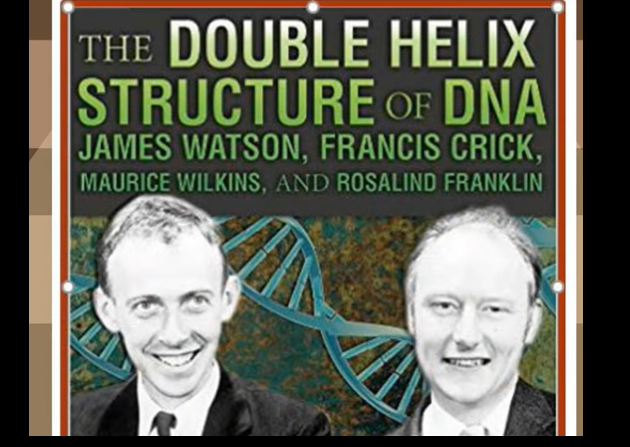
Dr. James Watson, the American Nobel Prize-winning scientist celebrated for co-discovering the double-helix structure of DNA, has died at age 97. His 1953 breakthrough with Francis Crick revolutionized molecular biology and genetics, paving the way for modern biotechnology and medicine.
James D. Watson, who entered the pantheon of science at age 25 when he joined in the discovery of the structure of DNA, one of the most momentous breakthroughs in the history of science, died on Thursday in East Northport, N.Y., on Long Island. He was 97.
His death, in a hospice, was confirmed on Friday by his son Duncan, who said Dr. Watson was transferred to the hospice from a hospital this week after being treated there for an infection.
Dr. Watson’s role in decoding DNA, the genetic blueprint for life, would have been enough to establish him as one of the most important scientists of the 20th century. But he cemented that fame by leading the ambitious Human Genome Project and writing perhaps the most celebrated memoir in science.
For decades a famous and famously cantankerous American man of science, Dr. Watson lived on the grounds of the Cold Spring Harbor Laboratory, which, in another considerable accomplishment, he took over as director in 1968 and transformed from a relatively small establishment on Long Island with a troubled past into one of the world’s major centers of microbiology.
First photo of James Watson's and Francis Crick's double-helix DNA model. Taken May 1953. pic.twitter.com/zCcwHLAayg
— Historic Footage (@historicfootage) November 7, 2025
Watson and his partner on this project, Dr. Francis Crick, discovered the double helix nature of DNA (deoxyribonucleic acid) by building models to interpret data and research from other scientists, especially X-ray crystallography images produced by Rosalind Franklin and Maurice Wilkins, and chemical analyses by Erwin Chargaff. Their insight was to recognize, through model-building and the rules of base-pairing, that DNA consisted of two antiparallel strands, with four nucleotide bases that come in pairs
The bases [adenine (A) matched with thymine (T), cytosine (C) matched with guanine (G)] ultimately form a twisted “ladder” or double helix.
Using cardboard cutouts representing the individual chemical components of the four bases and other nucleotide subunits, Watson and Crick shifted molecules around on their desktops, as though putting together a puzzle. They were misled for a while by an erroneous understanding of how the different elements in thymine and guanine (specifically, the carbon, nitrogen, hydrogen, and oxygen rings) were configured.
Only upon the suggestion of American scientist Jerry Donohue did Watson decide to make new cardboard cutouts of the two bases, to see if perhaps a different atomic configuration would make a difference. It did. Not only did the complementary bases now fit together perfectly (i.e., A with T and C with G), with each pair held together by hydrogen bonds, but the structure also reflected Chargaff’s rule [i.e., A pairs with T and G pairs with C].
The discovery of the double helix structure of DNA by Watson and Crick is considered one of the most significant scientific achievements of the 20th century. This breakthrough helped explain how genetic information is stored, copied, and transmitted through generations. The double helix model provided crucial insight into the molecular basis of heredity, showing that the sequence of nucleotide bases forms a code carrying genetic instructions for the development and functioning of living organisms, as the order of those bases dictates the nature of the proteins that are created by the organism.
This discovery catalyzed a revolution in molecular biology and led to numerous groundbreaking advancements. These include understanding the genetic code and how genes control protein synthesis, leading to the development of recombinant DNA technology, genetic engineering, rapid gene sequencing, and monoclonal antibody production.
These advances underpin the modern biotechnology industry and have had profound impacts on medicine, forensic science (such as DNA fingerprinting), genealogy, and genetic research. The double helix structure has also become a widely recognized symbol in science and culture.
I would be remiss in this report if I failed to note that Watson was shortly afterwards forced to retire from his post as chancellor of New York’s Cold Spring Harbor Laboratory when he shared his theories related to race and intelligence. Today’s mainstream media is highly focused on the incident because tearing down legends and heroes when they are white males is one of its specialties.
However, the importance of the revelations regarding DNA made in 1953 cannot be overstated.
Watson’s Nobel co-winners, Crick and Wilkins, died in 2004. These giants of research did their research during a period when real science was practiced.
I hope that our institutions of higher learning return to the serious pursuit of science, free of ideology and narratives, sooner rather than later. There is so much more to be discovered.
RIP James Watson
My father worked in his lab as a graduate student, and during the same time my mother worked as his secretary. He was a great genius and a great man. https://t.co/mx68omD7OW— Trevor Sutcliffe (@TrevorSutcliffe) November 7, 2025
Donations tax deductible
to the full extent allowed by law.







Comments
The end of an era.
To be replaced by AfroChemistry taught in colleges?
“Accused of promoting long-discredited racist theories”
Oh noes. Watson was deboonked? Then cancelled?
Follow the science, except when you don’t like it.
Watson of transistor fame was “racist” as well. Time for the ghetto militants and white apologists to get mobiles an flat-screens with vacuum tubes.
Or, was deForest a “racist” as well?
CORECTION: MEANT WILLIAM SHOCKLEY.
Where have you been? Dr. Watson was forced out as Director of Cold Springs Harbor Laboratory in 2007 for being a dirty, degenerate racist, destined for hell.
He had the temerity to opine on the genetic basis of black people’s obviously
lower intelligence.
May he suffer the pains of hell for all eternity.
@down-voter: Perhaps you ignore the possibility that sarcasm was present.
Sometimes, it is wise to include a sarcasm disclaimer.
One of the really smart people who thought that the data was in, and wasn’t afraid of being cancelled over it., on black intelligence.
Cancellation is also forever. Sort of a standoff. Which still exists.
The competing theory of lower black performance is magic dirt. Whites learn in schools surrounded by magic dirt and so do better than blacks.
Ask Kash, Tulsi, James Woods, RFKj, or Trump if cancellation is forever.
Watson and crew were in competition with Linus Pauling. Ironically they used Pauling’s book, “The Nature of the Chemical Bond” in their pursuit of DNA. Pauling made a major blunder when he proposed a triple-helix structure. It had many problems, and was not an acid. After all DNA is a nucleic acid. Whoops. Nevertheless Pauling’s manuscript helped the Watson team to discover the correct structure.
Watson’s treatment over his harmless and true comments about race and intelligence shows how degenerate American science has become. We are worse than the Soviets with their crackpot Lysenko. At least they didn’t attack mathematics. Again we see telling the truth gets one into more trouble than telling lies.
Pauling was probably the best chemist of the 20th Century, but he attacked an Israeli chemist who later got the Nobel Prize for his quasi crystals. Pauling just didn’t know enough math to understand quasi-periodic functions. He too became a crackpot with vitamin C and the cold. I attended a small lecture by Pauling which turned into a love fest. No critical questions. I should have spoken up.
The US is doomed.
lol
He also used Rosalind Franklin’s photograph.
Maurice Wilkins also shared the 1962 Nobel in Physiology and Medicine.
There’s a pretty decent ‘historical drama’ (ie: the producers took liberties with the facts) about Watson and Crick called ‘The Race for the Double Helix (1987).
Writers: William Nicholson & James Watson. Director: Mick Jackson. Starring Jeff Goldblum, Tim Pigott-Smith, Alan Howard, Juliet Stevenson as Rosalind Franklin.
7.4/10
https://www.imdb.com/title/tt0093815
I never had a high opinion of Watson as a scientist. This was reinforced by reading his book. I thought he benefited from the people around him and by being in the right place at the right time. Both are skills of a sort. It does appear as if he was an able administrator which too is a valuable skill.
He was an egotistical douche who very few people could stand. I say this as a scientist who worked with people who worked with him. And till his dying day couldn’t give Rosalind Franklin credit due her, even though they STOLE from her lab her x-ray photos of the helix. Even Crick said it would have taken them 10 years longer without the x-rays. Good riddance to him.