


CDC Reports that Cases of Drug-Resistant ‘Nightmare Bacteria’ Up by 70%
Bacteria have become resistant to carbapenems, a class of antibiotics considered a last resort treatment of serious infections.
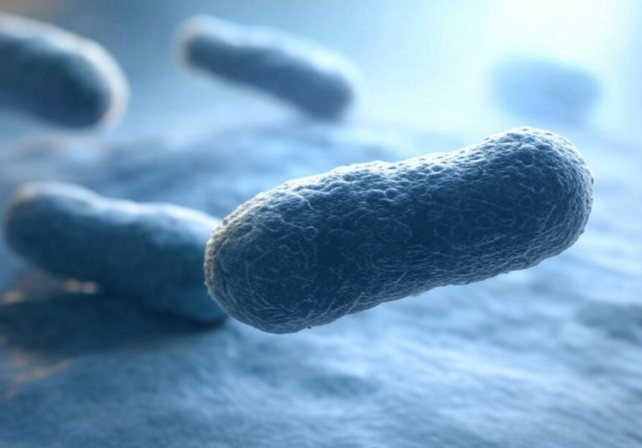
From time to time, we have featured reports about infectious disease pathogens becoming more resistant to antibiotics. For example, in 2024, I reported that China may be facing a healthcare crisis with a steep rise in the number of cases involving drug-resistant, sexually-transmitted “super-gonorrhea.”
Now there is a new study published by the Centers for Disease Control and Prevention (CDC) indicating that infection rates for another dangerous drug-resistant bacteria surged nearly 70% in the U.S. between 2019 and 2023, posing a very concerning health threat.
A new study from the CDC found that infection rates for a drug-resistant “nightmare bacteria” are on the rise, increasing nearly 70% between 2019 and 2023.
The increase was primarily driven by the NDM gene, which makes bacteria particularly difficult to treat.
Only two antibiotics are known to effectively combat these infections, and both are cost-prohibitive and must be administered by IV.
Bacterial resistance occurs when bacteria become strong enough to overcome the medicines designed to destroy them.
ICYMI: Incidence of an antibiotic-resistant ‘nightmare bacteria’ is rising in the US, according to a new report from @CDC_AR @CDCgov. The findings of the report indicate that the changing epidemiology of these bacteria pose significant challenges for managing its infection.… pic.twitter.com/AN9vh5STV2
— Annals of Int Med (@AnnalsofIM) September 29, 2025
The bacteria driving this surge are known as carbapenem-resistant Enterobacterales (CRE), specifically those carrying the NDM gene, known as New Delhi metallo-beta-lactamase (NDM-CRE). These bacteria are extremely difficult to treat because they neutralize some of the strongest “last line” antibiotics available, leaving two costly intravenous drugs as the only effective treatment options.
Bacteria with the gene were once considered exotic, linked to a small number of patients who received medical care overseas. Though the numbers are still small, the rate of U.S. cases jumped more than fivefold in recent years, the researchers reported.
“The rise of NDMs in the U.S. is a grave danger and very worrisome,” said David Weiss, an Emory University infectious diseases researcher, in an email.
It’s likely many people are unrecognized carriers of the drug-resistant bacteria, which could lead to community spread, the CDC scientists said.
That may play out in doctors’ offices across the country, as infections long considered routine and easy to treat — like urinary tract infections — could become chronic problems, said Dr. Maroya Walters, one of the report’s authors.
In recent years, the CDC has focused more attention on “nightmare bacteria,” a term used to describe microbes that are resistant to a wide range of antibiotics.
Infection with the Enterobacterales bacteria can cause a range of serious health problems, particularly in hospitalized individuals or people with weakened immune systems, and these can be life-threatening if the bacteria are drug-resistant. Symptoms vary widely but can include high fevers, impacts on the respiratory and digestive system, and other significant and potentially fatal health effects.
One reason for the concern is that the resistance gene can be readily spread to other bacteria.
In hospitals and other healthcare settings, bacteria can become resistant to certain antibiotics, like carbapenems, that are used often to treat serious infections. Bacteria can pass their resistant genes to other, existing bacteria (horizontal gene transfer). They can also survive the antibiotics by other means and go on to reproduce, passing on their genes (including resistance) to more copies of the bacteria.
Another reason for the worry among health professionals is that carbapenems are a class of antibiotics considered a last resort treatment for serious infections.
Researchers drew data from 29 states that do the necessary testing and reporting of carbapenem-resistant bacteria.
They counted 4,341 cases of carbapenem-resistant bacterial infections from those states in 2023, with 1,831 of them the NDM variety. The researchers did not say how many of the infected people died.
“Nightmare bacteria” infections are up nearly 70% since 2019. With only a few antibiotics left to fight them, using antibiotics wisely, and finishing prescriptions, has never been more important. I explained why on @9NEWS.
YT: https://t.co/gnm3NXTE2h pic.twitter.com/nOYpUU0nzP
— Dr. Payal Kohli, MD (@payalkohlimd) September 26, 2025
I must admit, I enjoyed living during the Golden Age of Modern Medicine…when both vaccines and antibiotics worked as promised.
Donations tax deductible
to the full extent allowed by law.







Comments
So. The article from the CDC discussing the bacteria, which two antibiotics are still effective, and actual information in this was published behind a paywall. There is a link to an article on npr.org which describes the problem, and they’re is an ad in the article that says:
“A free press is the cornerstone of a healthy democracy ”
The irony..
https://en.wikipedia.org/wiki/Carbapenem
has a discussion.
I understand the microbiology.
I was pointing out that the article published CDC research that WE paid for, in a journal that you have to PAY to read the article, is referenced in an article on npr.org, that you paid at least part of the cost of, that has an ad that says “a free press”.. npr? Really? “.. a HEALTHY democracy..”, healthy being both the state of our personal health as well as the health of our society and form of government..
Never mind.
This might help. Carbapenem-Resistant Enterobacterales
https://www.ncbi.nlm.nih.gov/books/NBK551704/
This is an earlier publication on the issue,
Present and Future of Carbapenem-resistant Enterobacteriaceae (CRE) Infections
https://pmc.ncbi.nlm.nih.gov/articles/PMC6784177/
“Free as in free speech, not free as in free beer.”
–RICHARD STALLMAN
These types of bacteria always worried me more than a virus like covid. I’ve wondered whether the embedding of antibiotics in household objects has been a contribution factor. Whether the wholesale use of antibiotics in agriculture is unwise. Also, I wonder how many people don’t finish their antibiotic regimes.
I also wonder how much research goes into antibiotics these days. It tends to not be sexy research and drug companies are more interesting in the next viagra since the numbers sold are high with less lawsuits from side effects.
I also wonder about how much is really understood about antibiotics despite it being a relative “older” field of microbiology. I recently had a course of antibiotics for a possible abscess following an appendectomy. I was given 5 days worth of antibiotics. I asked why wasn’t it 7 or 10 days. I was told that different doctors proscribe different lengths of time. Some 5, and some 7, and so on. His opinion was that the literature didn’t support more than 5 days. I found this discussion to be a bit disconcerting if after all this time there still isn’t a consensus for how best to proceed.
“His opinion was that the literature didn’t support more than 5 days. I found this discussion to be a bit disconcerting if after all this time there still isn’t a consensus for how best to proceed.”
Your doctor was right. A shorter course of antibiotics has proven to be just as effective as the typical 10 day course (which did not have any clinical basis for applying to all treatment with antibiotics). The shorter course means not being over exposed to the antibiotic. Overexposure to antibiotic treatment is a main cause of the growth in resistant bacteria. And despite the saw that “YOU STILL HAVE AN INFECTION EVEN WHEN YOU FEEL BETTER OR YOUR SYMPTOMS ARE GONE!” Your body is just as good at telling you you really are better as it was in telling you to get to the doctor because something was wrong. At that point contact the doctor and ask what the guidelines are for the course of antibiotic treatment for the specific bacteria. It usually will be a range of a few days. The doctor may decide you don’t need to keep taking the antibiotic. True confession. I do this on my lonesome and I don’t bother the doctor. So far I ain’t been deaded.
“I must admit, I enjoyed living during the Golden Age of Modern Medicine…when both vaccines and antibiotics worked as promised.” Indeed Leslie.
The statement that the incidence of these formerly rare cases has jumped markedly in the last five years certainly doesn’t make me any happier with the previous administration or their idiot cheerleaders.
Hum….sudden rise as if … maybe…. more positive people came across the southern border?
Or from Africa. :Lot of bad stuff in Africa.
If we’re lucky, after a few iterations of papers, someone will accidentally release the data that lets us know the only people really at risk for these baczillas are people who… do stuff… that most people don’t do — just like all the other clickbait scares since COVID.
The risk factors are on par with the usual ones when it comes to likelyhood of exposure and resultant poor outcomes.
Obesity, Diabetes, Prior Exposure to the bacteria, Poor Cardiovascular Health, Unsafe Sex, Drug and Alcohol Abuse, Smoking, Autoimmune Disease, Elderly, and well you get the gist.
Notice the years mentioned correspond roughly with the illegal alien invasion in the Biden administration. So, are we surprised to read about increasingly treatment resistant bacteria strains now being seen in our country?
.
I would like to see the numbers prior to 2019 but I;m too lazy to go find them. Treatment resistant strains have been an issue for a long time. It’s the offensive-defensive game all over again with the bacteria on the offense and humans on the defense,
This may be what you are looking for.
Present and Future of Carbapenem-resistant Enterobacteriaceae (CRE) Infections
https://pmc.ncbi.nlm.nih.gov/articles/PMC6784177/
Which may make it less important to know in which States these cases occurred and more important to know in which population(s) these cases were found.
Ahh, can’t tell the truth, that’s RACIST!!!
And all the visas HB1 from India
Hmm, inquiring minds want to know
They have been warning about the overuse of antibiotics for years now but nobody listened. So big surprise right?
“ChatGPT, please draw me a photo of scary blue packing peanuts.”
We call those ghost turds.
Lol, probably something simple will work, but big pharma needs to scare us. Might be fake but….. A groundbreaking 2023 study in the Journal of Antimicrobial Chemotherapy found that methylene blue eliminated 99.9% of tested bacterial strains within 24 hours (Zhang et al., 2023). This research tested methylene blue against 15 different bacterial strains, including drug-resistant varieties, using both light-activated and dark conditions.
2025 marks the 50th anniversary of the Journal of Antimicrobial Chemotherapy, the flagship journal of the British Society for Antimicrobial Chemotherapy. To commemorate this occasion, articles will be commissioned on the theme ‘Antimicrobial chemotherapy: past, present and future’ to highlight past achievements, explore current developments, and anticipate the future of antimicrobial chemotherapy.
Venerable old stain therapy. We treated our firstborn with oral gentian violet swabs for thrush in the late ’70s. But I was always under the impression that stains tended to kill healthy tissue also.
since everything is now a disease ( for the pity me welfare state) except of course anything politically tied to the left ( gender dysmorphia etc)
america has been tranquilized into the coma that lefty needs to conquer us
your kids are their zombies
hyped up or down on what would be illegal but is somehow ethical from a political pov
Not the fault of big pharma …they follow the leaders and then are willing to take the blame b/c thats the deal…pfizer and covid vax etc
Forgive my confusion but are you suggesting that antibiotic resistance to Enterobacterales bacteria is a myth or the the bacteria itself does not exist?
I have a notion that the continued failings of the sanitation / potable water infrastructure plays a part in the rise of antibiotic resistant bacteria. Especially regarding community spread.
Considering how putting COVID patients on a ventilator was often a first line of attack I did a search “Ventilator use and Carbapenem-resistant Enterobacteriaceae”
A number of articles came up. The most recent from a day ago. From the Journal of Pure and Applied Microbiology.
https://microbiologyjournal.org/assessing-risk-factors-and-clinical-implications-of-carbapenem-resistant-enterobacterales-infections-in-a-tertiary-care-setting/
Now I am not qualified to understand in depth any of the above so read them at your own leisure. I will however offer an opinion on how best to avoid possible exposure to the antibiotic resistant bacteria under discussion.
.HOSPITALS ARE A NOMMY-NOMMY PLACE FOR BACTERIA. ESPECIALLY SO CALLED SUPER BUGS.
IF YOU MUST GO IN GET OUT AS SOON AS YOU CAN WITHOUT RISKING IMMEDIATE DEATH OR INJURY.
Your warning is right on. I’m not disease phobic but I am concerned every time I enter a hospital because that is where the bad bugs are brought to live and breed.
Infectious diseases doc here. To correct an assertion made in the referenced article: the two antibiotics are not, in and of themselves that expensive. It is the fact that the require monitoring and hospital administration, and the fact that any patient with an active *infection* (note: NOT colonization, but INFECTION) is likely already hospitalized or already severely immunocompromised upon admission. What I would use in these cases depends highly on the patient, the specific isolated bacterial species, and especially location of infection.