


Say “Goodbye” to the EV Tax Credit and “Hello” to Market Forces
The EV market as long been supported by hope, skilled marketing, and a $7500 tax credit that disappears on October 1.
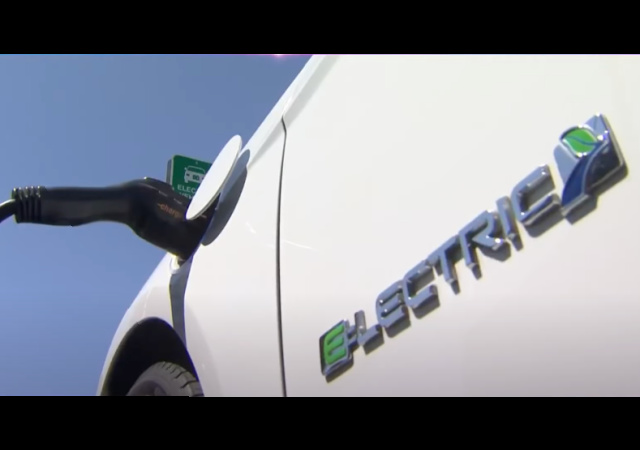
Green energy cultists are about ready to get hit with a dose of reality.
The Electric Vehicle (EV) market has long been supported by hope, skilled marketing, and a $7500 tax credit that disappears on October 1.
The tax credit, passed by the Biden administration in 2022 to support EVs, is going away Wednesday as part of President Donald Trump’s broad spending and tax bill. The loss will cut into demand for EVs, which means prices in real terms will immediately rise — a concept not lost on the many consumers who rushed to buy EVs in August and September.
That surge could result in plunging sales in the final three months of the year. As a result, automakers are weighing where to set sticker prices and incentive levels to maintain demand, which could lead to lower EV prices. But it’s not clear how much total savings the changes will provide, and likely won’t make up for the money lost from the end of the tax credit.
The New York Times, being the climate cult shill that it is, insists the plunge in the EV market will be only temporary.
Still, most industry executives believe electric vehicle sales will eventually grow again, especially if automakers can deliver models that sell for around $30,000.
Analysts from J.D. Power recently noted that electric vehicle sales fell sharply in Germany and Canada after those countries ended subsidies in December 2023 and January 2025 but eventually started growing again. A similar pattern could play out in the United States.
“These are cars that people like,” said Albert Gore III, the executive director of the Zero Emission Transportation Association, a trade group. “They’re ultramodern, and they’re fun to drive. Some manufacturers have decided to scale back their pace, but I think those who continue to bring compelling, affordable E.V.s in high volume will be richly rewarded.”
However, automakers are certainly making some intriguing adjustments. General Motors (GM) has slashed output at one of its main electric-vehicle factories.
GM will stop production of two electric Cadillac SUVs at its assembly plant in Spring Hill, Tennessee, during the month of December, according to a person familiar with the matter and communications to GM employees viewed by Reuters.
The plant produces the midsize Cadillac Lyriq – a relative hit and one of GM’s top-selling EVs – and the Vistiq, a larger electric SUV.
GM also plans to significantly curtail production of those vehicles during the first five months of next year by temporarily laying off one of its two shifts of workers, according to the sources. The company will additionally shutter the plants for one week in October and November.The automaker is also planning to indefinitely delay the start of a second shift at an assembly plant near Kansas City, which is still slated to begin production of the Chevy Bolt EV later this year, the person familiar with the matter said.
Meanwhile, both Ford and GM are offering lease deals that effectively provide potential customers with a $ 7,500 subsidy.
General Motors are racing to sign up car dealers for programs that would effectively extend the use of a $7,500 U.S. tax credit on leases of electric vehicles beyond the Tuesday expiration of the federal subsidy, according to dealers and documents.
Each company in recent days has rolled out programs to their retailers under which the automaker’s financing arm would initiate the purchase of EVs in dealers’ inventory by making down payments on them, according to dealers briefed on the previously unreported programs and documents from the companies.
Those down payments will qualify the lending arms for the federal $7,500 tax credit on those vehicles, according to the documents and dealers. From there, dealers would offer leases on those cars to retail customers as usual for several more months, with the $7,500 subsidy factored into the lease rate.
The EV tax credit has been around for 15 years. If Americans were ready to deal with “range anxiety“, “charger hogs“, cars that won’t start in the deep freezes of winter, battery fires, and infrastructure that isn’t built or stolen for copper, then they wouldn’t need the incentive package.
Hello Market Forces! https://t.co/WAWC1bZNMY
— Leslie Eastman ☥ (@Mutnodjmet) September 30, 2025
Donations tax deductible
to the full extent allowed by law.







Comments
Earlier this century, Arizonans who bought alternative fueled cars — not just electric, but propane or anything else — were eligible to buy a special, blue “clean air” plate to virtue signal… and this plate gave them access to the HOV lanes despite having only a single driver. Around 2016, when my son decided to dip his toe in the waters with a hybrid Chevy Volt, he discovered he had just missed the deadline for getting the special plate (it was no longer being issued)… and with that the commuting access to the HOV lanes he was anticipating. The walls were closing in even then.
Of course, the first guys into the con made out like bandits.
How many Toyota Priuseseseses w0uld have been sold had…
A) there been no tax credit
B) no HOV lane exemptions
and
C) had Toyota just hybridized one of their existing cars like Honda did with the hybrid Civic rather than making it a unique body style?
The Prius is a hybrid or at least available as one.
Toyota has hybridized a lot of their cars. They never fully bought into the whole EV garbage.
Hybrids would seem a much better choice for most EV consumers and for those consumers on the fence about EV due to range anxiety. Maybe with the market distorting incentives gone the manufacturers will produce more of what consumers seem to want.
I’ve owned several hybrids, and I have one right now; a Honda CRV. I just like the way they drive. The amount of driving I do fuel mileage is not a factor, but I just like the smoothness and the performance.
I don’t want any car with added features dedicated to the climate change scam. I’d rather save my money.
I I had Tow Prius. We bought them when the gas was really really high. They were great till the battery went out and at that time the battery replacements were $5000 and they went out just 103,000 miles.
Never again
There are kits to rebuild the battery at home that are significantly cheaper. I drove Priuses off and on for a few years and I’d buy another without hesitation if I needed another beater commuter. The engines last forever and they’re comfortable, surprisingly spacious, surprisingly good-handling cars.
I owned a Ford C-Max for 200,000 miles, and drove several Priuses over the years. Other than better gas mileage they were not very good cars. Very small, no much trunk space, note real comfortable for rear seat passengers, When I got back to ICE autos it was a great day.
Wait a minute . . . so the financial arm (think loan companies) of Ford and GM were putting money down on EVs, collecting the EV-tax credit, and then allegedly passing that tax credit on to those that signed leases with either of them. How in the world is that even legal. I thought those EV-tax credits were only to go to people that actually bought an EV not to some financial loan company.
Another example of why a very simple, straightforward, transparent flat tax on all income sources with a single standard deduction (assuming there is one) is the way to go. Set it at 18% (the historical average effective rate for tax collection) and eliminate all the other non use/ non sin taxes; Estate, cap gains and yes SSA/Medicare. Put the latter two programs ‘on budget’. Give an exemption for inheritance up to $2.5 million but excess is taxed as income. Apply the same tax rate to cap gains for non Roth plans. No refundable credits and no other deductions. With such limited deduction/exemption there’s no room for shenanigans in the dark of DC in creating additional special interest modifications to please this/that constituency. It would be very obvious. This also ends the tax deductions and tax advantage of lefty NGO as well as forcing high tax States to confront their tax and spending issues without federal subsidies in the form of SALT deductions.
Why give a government that everyone knows grossly overspends an 18% revenue replacement rate with a flat tax—meaning one day a week you earnings go to the feds. BTW Euro suckers bought the government lie that VAT—a (variable) tax on purchases—would replace income tax, but income tax never went away.
If people are signing leases, they don’t own the car.
The credits should go to the car’s owner.
I don’t see the problem here.
If auto companies are going through with that scheme then once they put a down payment on a vehicle isn’t it then a used vehicle?
OK, used vehicles can still be leased. If it’s got 10 miles on it when you pick it up, how is that different from a new one? With a lease, you’re not buying an asset, you’re renting the use of someone else’s asset. As long as both parties are happy…
You have to love a democratic driven tax credit that went primarily to well off white progressives, Are you paying attention poor and low middle class voters??
I bet the people who don’t file taxes are all bummed about losing out on a tax credit they couldn’t cash in anyway.
So 20 years ago Oregon had a tax credit on high efficiency washers. It was 20%, so your base $600 model became $480. That was compared to a top loader which went for about $300. But, the front loader used way less water and electricity, and the clothes spun out drier so less dryer time. I think we noticed a $10 monthly reduction in the electric bill, so in 4 years the front loader was free compared to the top loader which what poorer people could afford and use. Every tax credit is geared towards those who have more money to save them even more money.
This whole EV thing is a.perfect example of why government should not interfere like this. The EV concept is terrific but its time has not come yet. Battery development has a long way to go and transmission infrastructure is not anywhere near where it would need to be for mass adoption. And we need nuclear power. All the government has succeeded in doing is creating a bitter political divide where there are people who love EVs and people who hate EVs, all because of what political tribe they represent.
The government’s role in this should be through the national labs, where long-term basic research and engineering can slowly work out the science and technology necessary to make a battery that would be a drop-in replacement for a gas tank. And the governement can accelerate Gen IV nuclear reactor development and advanced fuel cycles. But leave the market to take care of consumer products. Pushing products on citizens that aren’t ready yet is as stupid as social engineering and destined to fail.
It’s like nuclear power to me. Until we can handle an emergency without such destruction, we aren’t ready
SV fires, core melt downs
Scary stuff.
I worry about my son and his Tesla, tons of them in the garage at work ( Apple) and his apartment (Austin)
If a fire broke out either r place, it would be such a disaster
I work in tech too. My office parking garage looks like a Tesla dealership. There are literally hundreds of Teslas and a smattering of other EVs. Besides the fire risk, I’m also concerned about the strength of the parking garage because EVs are heavier than gas cars. There was a parking garage in NYC that collapsed because it had a lot of SUVs in it.
“EVs catch on fire less often than gas cars.” EVs have only seriously been around for 15 years or so versus well over a hundred years for gas cars. Of course gas cars are going to catch on fire more often. There aren’t any beater EVs.
“EVs catch on fire less often than gas cars.”
Is that because when they do ignite, the neighboring cars they take with them are still more likely to be IC vehicles than EVs?
The difference is that you can put out a gas car fire
We can also put out a gas fire a lot easier than an EV fire
I think there’s still a boat full of EV cars out in some harbor burning
Or that airport parking garage in the UK. Just wait, it is only a matter of time before a 30 story building gets destroyed because an EV fire starts in a lower parking garage.
We have far more knowns and controls on nuclear power than EV or even coal. The comparison is laughable. A person with a sunburn can set off the detectors in a nuclear plant. They are that sensitive.
Well, we just had a recent partial meltdown in Japan I recall , I don’t remember exactly what happened , but the outcome was not minor
Nobody’s laughing in Japan
If you are referring to Fulushima then I do remember: no one got radiation poisoning. The flood amd the pollution adtermath killed people, but the nuclear plant did not.
New Gen III plants are not nearly as vulnerable as this plant was and Gen IV would be safer by an even wider margin.
EV’s are toys for wealthy, primarily coastal, narcissistic, (faux) virtue-signaling, Dhimmi-crat elites.
For everyone else, they are a sucker’s bargain and a manifestly lousy value proposition.
You are several months behind the curve. When democrats started burning Teslas, it opened up a whole new market.
Good – a $7500 tax credit that disappears …
Hello free market
Albert Gore III? How many more will we have to endure?
Watch Tesla. They have been planning for this day for 12 years.
They have several things that no one here seems to know or understand.
First, they are releasing models this month that will be $10,000 cheaper.
Second, they solved the battery life problem.
Third, they have working self driving. It’s already better and safer than human drivers, and it gets continuously better.
Car makers are smart. They understand the price of cars are through the roof because of the EPA mandates to increase mpg and lower emissions. This results in lighter vehicles with lighter engines and transmissions, with complicated electronics, which leads to not only higher first costs but higher repair costs and lower life span.
Since EV’s use less fossil fuels on average, there is no reason federal regulations would (should) require ridiculous mpg standards for hybrid vehicles, freeing the market to create heavier, faster hybrid vehicles which can meet current mpg standards. On the other hand, if EV subsidies are eliminated then current mpg standards should be eliminated as well in order to bring down the average price of a car from the eye-watering $50,000.
But of course, the point of EV’s (and mpg standards) is not saving fuel but government exerting control over the people’s ability to freely travel where they want where they want without bankrupting them.
“Albert Gore III”
Son of MAN-BEAR-PIG
The end of subsidies will result in lower prices for consumers. It always does.
10, 15, 20 years ago the WSJ had a pair of editorial page articles about the cost effectiveness of the Prius, because everyone was bragging about not spending money at the pump. The author compared the cost of a similarly spec’d Corolla vs a Prius, and at $5.00/gas for gas, concluded that the break even point was 130K miles. So you can imagine when gas fell to $4 and then $3/gal that the break-even point was closing in on 300K miles. And this was before the cost of battery pack replacement became a thing.
Toyota’s rebuttal was along the lines of “people like feeling good about themselves.” I can’t remember what subsidy was in place at the time, maybe a few thousand $$ tax credit. It was something aimed at people who had income tax liability to be dealt with.