


FAA Official on Fatal DC Crash: Air Traffic Controller Failed to Warn Plane About Oncoming Helicopter
“The hearing featured testimony about a high number of takeoffs and landings at the airport, combined with heavy helicopter traffic, that led to air traffic controllers ‘pushing the line’ on safety.”
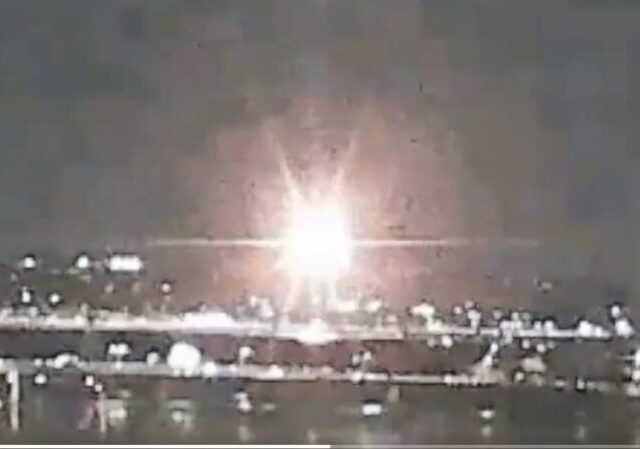
During a National Transportation Safety Board hearing on the January 29 midair collision over the Potomac River in Washington, D.C., a Federal Aviation Administration official confirmed that an air traffic controller failed to warn the airplane’s crew about the approaching Army helicopter. It marked the first time the FAA publicly acknowledged that an error may have occurred in the control tower at Ronald Reagan Washington National Airport on that fateful night.
[In the lead-up to Thursday’s hearing, investigators had largely focused on staffing shortages at the air traffic control tower and indications that the Black Hawk may have been flying at an unusually high altitude as the most likely causes of the crash.]
The crash resulted in 67 fatalities and is now under federal investigation.
Webcam at the Kennedy Center caught an explosion mid-air across the Potomac. https://t.co/v75sxitpH6 pic.twitter.com/HInYdhBYs5
— Alejandro Alvarez (@aletweetsnews) January 30, 2025
The Washington Post reported:
The hearing featured testimony about a high number of takeoffs and landings at the airport, combined with heavy helicopter traffic, that led to air traffic controllers “pushing the line” on safety, in the words of a tower manager.
…
The controller who was responsible for guiding the flights of the helicopter and the airliner had juggled contact with 21 different aircraft in the 10 minutes before the helicopter and jet collided over the Potomac River, NTSB Chairwoman Jennifer Homendy said.
The controller had told NTSB investigators that he felt “overwhelmed” about 15 minutes before the crash, but that traffic eased and he had felt the workload was more manageable, according to an interview transcript. The controller was working two tower positions at once — managing helicopters and local airliner traffic.
The American Airlines flight, operated by regional carrier PSA Airlines, was arriving from Wichita, Kansas.
Homendy questioned FAA officials on Thursday about the sequence of communications between the control tower and the jet. She asked Nick Fuller, the acting No. 2-ranking official in the FAA’s air traffic control branch, “Should the local controller have let the PSA crew know there was a helicopter there?”
According to the Post, he replied yes, adding that “the controller should have told the airliner’s crew that the helicopter was using visual separation and that ‘the targets were likely to merge.’”
Just as it had been reported in the days following the crash, discussion at the hearing centered on staffing woes at Reagan National.
At the time, I wrote:
In the days following the crash, an internal preliminary report from the FAA and reviewed by the New York Times suggested that staffing levels at the air traffic control tower at Ronald Reagan Washington National Airport on the night of the crash were “not normal for the time of day and volume of traffic.”
Specifically, the FAA determined that a single air traffic controller was performing the duties of two people at the time of the incident, communicating with both the helicopter and the plane.
According to the New York Times, during the busiest hours of the day, from 10 a.m. to 9:30 p.m., “those jobs are typically assigned to two people, not one.” However, after 9:30 p.m., “those duties may be combined.” The collision occurred at 8:48 p.m.
On that fateful night, one air traffic controller reportedly left work early, as per the report. That may have resulted in a single controller managing both aircraft.
The Post reported:
Controllers told investigators that they didn’t feel outside pressure to keep up with the pace, but FAA managers described how American Airlines — the biggest operator at the airport — designed a compressed schedule that effectively increased traffic. The approach was based on the carrier’s financial incentives, one of the managers said. An American manager testified Thursday that the airline had tried to make changes after visiting the tower.
In the minutes before the crash, the controller was seeking pilots willing to land on Runway 33 to relieve pressure on the main runway. One crew declined. The pilots of American Eagle Flight 5342 from Wichita hesitated for a few seconds before agreeing, according to a transcript released this week. That decision set them on a circling route that would bring them directly into the path of the oncoming Black Hawk, which was using a helicopter route that passed right under the landing path.
The Post interviewed a number several aviation experts and former NTSB investigators and while they all added to the discussion, the bottom line is that the airport is both too busy and its air traffic controllers are juggling too much at once.
The picture that emerged from documents and a second day of NTSB hearings was of an airport that was being pushed to its limit on a daily basis, with controllers stretched thin and trying to safely separate a demanding mix of airline and helicopter traffic.
The airport frequently saw 79 departures and arrivals an hour, according to an FAA email released by the NTSB this week. With more than one plane a minute landing or taking off, controllers had to search for ways to keep traffic moving.
Since the crash, the FAA has set the current maximum arrival rate at 30 an hour.
The article is behind a paywall, but it can be viewed here.
Elizabeth writes commentary for Legal Insurrection and The Washington Examiner. She is an academy fellow at The Heritage Foundation. Please follow Elizabeth on X or LinkedIn.
Donations tax deductible
to the full extent allowed by law.







Comments
OK. Fine. But, is there anything to the story about the female pilot of the helicopter ignoring orders from her superior to change altitude? There’s videos all over YouTube making that accusation.
I posted that the other day that she was told by the instructor and she acknowledged
the chatter is that she answered back sarcastically …dont know if thats true
nonetheless the helo affirmed the aircraft 2x
She sounded like Alvin and the Chipmunks:
Okay, Simon?
OK
Okay, Theodore?
OK
Okay, Alvin?
Alvin?
Alvin!
O-kaaaaaayyy!!!!
Don’t you love those action movies in which a cute little babe beats up a group of tall, ripped muscle men, all waiting their turn to be vanquished? So, what if she was an hysterical bitch who disobeyed a direct order, at least she looked good doing it.
I’m sure God is wondering what your opinion about this is.
Thank God, this lipstick lesbian, tyro pilot took time off from her publicity duties to catch this flight.
Heard that from several sources and they erased her social media immediately after the crash
This has become such a cliche by now, that it’s amazing that 90% of Americans (and globally as well) don’t have the brainpower to follow the breadcrumbs to the conclusion that should be obvious to a fifth-grader.
The social media gets deleted when you screw up to prevent anything you have said from coming back to haunt you legally.
Maybe you shouldn’t be posting your crap on social media in the first place.
Do you think?
The hello flight path omission seems rather large to me. Like most accidents, I expect there are multiple points of failure here.
With each of the actors here, seems the most logical course is to lay out both (i) what actions/inactions did they take leading up to the collision, and what actions were they supposed to have taken.
And what actions (even if not the procedurally correct ones) might they have taken that would have broken the chain of causation.
The board is going through all of it. This hearing was JUST about the controllers issue. And that’s a good thing. You really don’t want people diverting everything onto the pilot, or other broken links in the chain of causation won’t ever get fixed.
???
the helo pilot was flying above the min
the helo was told craft they responded craft in sight
lets say aircraft didnt know…
the help said..in sight 2x
we know the atc and the dei affrimaction debacle
but what???
This is all deflection…. Air traffic control told the helo of traffic and they acknowledged .with traffic in sight. ACT did not have all the info as the helo was not broadcasting it. This is all on the pilot in command….period. She must STILL have political connections…even in death.
cya
faa ntsb >>>all have an affirmaction.>>>dei foundation
djt is trying to weed them out
but they are neatly tucked in and we are paying the price
No, this is NOT ALL on the PIC. There was a chain of events, and the controller (and his lead) were a couple of links in it.
The NTSB is about as non-partisan as any body is going to be, whether politics or religion or anything else. They find all of the causes in a mishap – ALL the links in the chain.
The pilot was flying above the max altitude, not the min.
Constant bearing means collision. True on the sea and true in the air.
Constant bearing also means running lights not moving against background lights, which means you won’t pick them up in the air as an aircraft. What you pick up is motion. You can’t see stillness.
So the aircraft the helicopter saw was the following jet, not the one that they’re going to collide with.
The controller is a fall guy for an unworkable policy, namely at night “see and be seen.”
There’s no reason for the jet to be looking out for the helicopter. It would be nice if they didn’t disarm collision avoidance systems below 1000′. At least the jet that would get a “climb” command ought to get it.
the under 1000ft is there can be any/too many false positives
ground clutter etc
No false positives with TCAS, which is an active transmit system, not a radar system. Transponders interrogate each other and work out collisions and advise what to do. The problem is at low altitude a “dive” command given to one of the aircraft might not be a good idea. “Climb” given to the other would be okay though.
Resolution Advisories are inhibited below 1000 feet AGL to prevent unnecessary TCAS alerts in terminal areas.
https://aviation.stackexchange.com/questions/89985/how-does-a-tcas-system-avoid-unnecessary-ras-resolution-advisories-when-aircra
There’s no reason for the jet to be looking out for the helicopter.
Disagree. All pilots should be visually aware of other aircraft.
The controller (and the team leaders there) is NOT a fall guy in this. All of the procedures and rules are designed to break the chain of causation. If the airliner had initiated a go-around and accelerated, it’s entirely possible the helo pilot’s error would not have caused a mishap. If the transponder (with altitude reporting) had been on in the helo, it’s possible the mishap would not have happened. If the instructor had taken control of the aircraft, it’s likely the mishap would not have happened. Heck, if the instructor had seen a bad attitude in the flight brief and called the pilot on it then, the mishap would not have happened.
It’s a chain. And the controller had a link in it. As did his lead, who allowed the second controller to leave early. As did, yes, the policies allowing those sorts of flights to converge in that area.
Not all of those things need policy changes to prevent further mishaps. But some do.
I may just be naive, but I read that black hawk helicopters were designed to fly into unfamiliar enemy territory at night and engage other planes, helicopters, incoming missles and fly all over the place without an air traffic controller’s help.
“Black Hawk helicopters are designed with features that allow them to operate effectively at night and even penetrate deep into enemy territory. They are equipped with advanced radar systems and other technologies that enhance situational awareness and enable night operations.”
they didnt factor in dei hiring
On the other hand, flying aircraft during the past few years, the Army reported that the “an ineffective safety culture was one of the most cited causes of Army on-duty mishaps.”
Army data from 2023-24 shows that 39 “unsafe acts” led to class-A mishaps of aircraft during that time. The solution:
Recruit more female DEI lesbian pilots and make sure they spend lots of time working at the white house as aides.
a commercial jet descending on final and a helo flying at least 150′ above limits and they’re converging–which one is more maneuverable?–lord–regardless of what ntsb says, this accident was on the helo pilot(s)
Yup.
When an oil tanker and a speedboat collide it’s arguably never the tanker’s fault.
Same for a large ponderous jet and vs a nimble attack copter.
The large object is more maneuverable then a lighthouse in a lighthouse vs ship right of way conflict (which argument actually can occur at night with radar navigation) – but often not maneuverable enuf.
In situations like this the far less maneuverable craft should have – by the Laws of Physics – whatever Right of Way exists.
Aside from physics, the helo was also responsible for visually identifying the income airliner and avoiding it.
Of course a rational system would also have more than a 150 foot deconfliction zone.
A 150′ altitude separation wouldn’t be needed if the aircraft follow the rules. The hard ceiling on that corridor is supposed to keep the controller from having to intervene.
The lighthouse ALWAYS has the right of way. Some ship captains have not realized this.
Lots of Swiss cheese in this unfortunate accident.
The plane was diverted to the alternate runway at the last second too. If it has landed on the normal runway nothing would have happened.
Helicopters fly the route constantly. A dark night with night vision goggles and an unfamiliar pilot. Otherwise, nothing would have happened.
See where I’m going here? Sometimes tragic things happen and lots of people die.
Unfortunate? No.
Accident? No.
Fifty years ago the National Safety Council ran radio ads saying, “Safety is no accident!”
For years the people in charge had been warned about the possibility of this happening. They did nothing to prevent it. Anybody with half a brain could figure out that this was a bad situation.
The helo should not have been flying in this area using NVGs. The helo didn’t even need to be flying this route. Military aircraft in this area should not be allowed to fly with their transponders switched off. Military aircraft should not be flying with equipment that doesn’t work. Hell, a pilot who has been working as an aide in the White House should be sent to a less congested base for refresher training.
There are a lot of bureaucrats in Washington who killed these people. Worthless bureaucrats who couldn’t make in the private sector.
The helo should not have been flying in this area using NVGs. The helo didn’t even need to be flying this route.
This misses the point. The pilot didn’t need NVGs if it had been within the correct altitudes for the corridor. I flew much less maneuverable aircraft at night, all the time, without NVGs, and didn’t have trouble staying within my altitude block.
I concur that the pilot should not have been doing this ‘training’ ride in this area at this point in her requalification. And I hold the instructor as much at fault as the pilot, for not simply taking control of the aircraft and descending/maneuvering. (Then landing and forcing her to walk home.)
The helo punched a hole through the Swiss cheese. ….usually the Swiss cheese analogy is of a series of errors aligning.
Well, they did in this case. And I think the pilot’s link in the chain is the biggest hole there. But the controller not warning the airliner and not really being aware of the impending “merge” is also a big hole.
1. Assigning blame is difficult, but important.
2. Blame always seems to flow downhill.
Whose fault is this?
“the bottom line is that the airport is both too busy and its air traffic controllers are juggling too much at once.”
More than a factor of two less.
“Since the crash, the FAA has set the current maximum arrival rate at 30 an hour.”
Why would they let a controller go home early without a replacement on a busy night?
The helo pilot was at fault for breaking the limit on height. The co troller is also at fault. All he had to do was first tell the helo to descend and maintain 100 ft immediately. Switch over and tell the aircraft to execute go around immediately traffic approaching from below. The tower supervisor is fault for authorizing the 2nd controller to leave before the stipulated single controller time of 9pm. So in reality there are 3 people who are responsible for this tragedy.
17 seconds before the crash the controller told the helicopter to pass behind American Airlines Flight 5342. The helicopter did not apparently because that communication was obscured in the helicopter’s audio system. While it is conceivable that the controllers could have prevented the collision, the fact remains that the helicopter was in the wrong place at that time.
I wouldn’t say the controllers would have prevented the collision, but they might have broken one of the links in the chain of causation.
Also, telling the helo to pass behind the airliner is not dealing with the issue of the helo – that it was out of its corridor, in terms of altitude. This, to me, is the biggest break in the chain. All the pilot had to do was stay below 200′, which is a very basic pilot skill.
Fair to point out the controller’s being overloaded/stressed due to staffing inadequacies/shortages.
That said, the NTSB has also highlighted (and, FAA has since altered, due to NTSB’s criticisms/observations) the stupidity of having southern-oriented and northern-oriented helicopter routes flying along the Potomac in the immediate vicinity of a busy commercial aircraft corridor featuring copious jet aircraft final approaches.
If either the pilot or instructor had reached over and turned the ADSB-OUT switch to ON, the accident would have never happened. The airliner would have seen them on their ADSB-IN display and maneuvered out of the way.
It is ONLY the military that is allowed to disable their ADSB =OUT transmissions.
Even that wouldn’t have mattered if the helo had been within the altitude limits of his corridor.
19 seconds before the crash American Airlines Flight 5342 was altered by their onboard TCAS (Traffic Collision Avoidance System) that there was traffic. The airliner in this situation is in a tightly controlled glide path and has little ability to maneuver especially as their engines are not spooled up when landing and they would not know what might be a safe maneuver away from the planned glide path. So it seems to me that even if the controller had notified Flight 5342 it likely would not have made a difference. The real culprits were the pilots of the relatively slow moving but highly maneuverable helicopter. 15 seconds before the collision, the instructor pilot asked the pilot to change course. Doesn’t seem to have occurred. The environs of an active airport is really complex and dangerous. It is a tragedy that the helicopter pilot did not change course but that is where the fault lies.
Mostly true, except for the engines not being spooled up. This incident didn’t happen over or at the runway (they were still almost 300′ in the air), and the airliner’s engines should have been out of idle for the descent. Unless you’re doing a combat approach, you are power on during descent until you arrive over the runway and transition to the flare. One of the reasons is exactly this – to allow the aircraft to go around, id necessary.
(Weather conditions might necessitate going almost to idle. But that would mean the controller had them flying onto a runway with a tailwind – and that would be another error by the controller/tower team. And, even then, they would have to maintain a minimum airspeed for the airplane to continue flying.)
Oh, and I concur that the helo pilot was the most proximate cause of the crash.
This is a red herring. The fault lies entirely with the Blackhawk crew, and of that crew, it’s the female Captain (who was being evaluated) that bears the weight of the fatal mistakes. Ward Carrol, an author and retired Naval Aviator, breaks down the hearing on his channel today. If you’re interested in this subject, I highly recommend you watch the video. He pulls no punches, at all.
https://www.youtube.com/watch?v=i-UFac4EjHo
Fault lies almost entirely with the Blackhawk crew. The controller should have been telling the airliner they had traffic. It’s part of his job. And doing so would not have absolved the helo crew in any way. But it might have turned a deadly incident into just a “Holy Noley!” moment.
flying at an unusually high altitude
NO. This is not correct. It was that they were flying outside their approved altitude corridor.
The altitude wasn’t unusually high, it was the WRONG altitude. They were not where they were supposed to be, and that made their “visual separation” untenable.
The right answer (based on what I know so far) should have been the controller telling the helicopter to get back in his corridor and warning the airliner to go around at an altitude above the helicopter, at some point. And then informing the helo pilot to land immediately and contact TRACON to provide their information and be reported.
concur with most of your analysis though am frankly amazed that the ip’s sense of self-preservation didn’t kick in a helluva lot sooner and HE didn’t act to descend and change course away from the airliner–how long would you wait for another pilot to continue towards a potential collision?–lord–mean no disrespect/dishonor to the ip but at some point you’ve got to act to save not only yourself but your crew
a tragic loss of life