


D.C. Appeals Court Allows Trump Admin Doesn’t Have to Pay Back USAID Funds
President Donald Trump’s administration does not have to pay $2 billion in USAID funding.
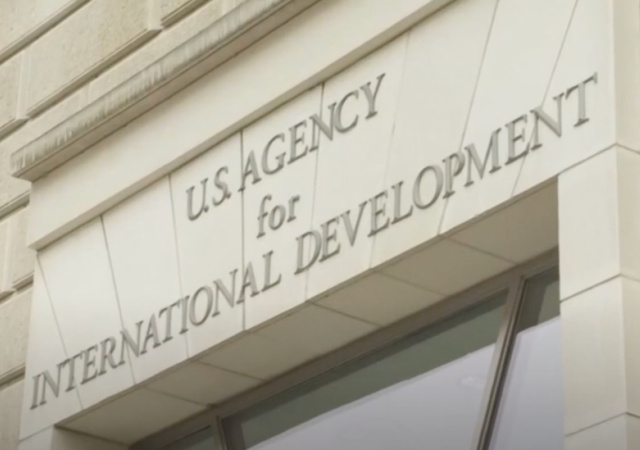
The U.S. Court of Appeals for the D.C. Circuit with a 2-1 vote reversed a lower court’s ruling that forced President Donald Trump’s administration to pay $2 billion in USAID funding.
The district court erred in granting that relief because the grantees lack a cause of action to press their claims. They may not bring a freestanding constitutional claim if the underlying alleged violation and claimed authority are statutory. Nor do the grantees have a cause of action under the APA because APA review is precluded by the Impoundment Control Act (ICA). And the grantees may not reframe this fundamentally statutory dispute as an ultra vires claim either. Instead, the Comptroller General may bring suit as authorized by the ICA. Accordingly, we vacate the part of the district court’s preliminary injunction involving impoundment.
Now, private parties cannot sue the government over impoundment, reducing the number of lawsuits.
The parties also decided the defendants did not satisfy the “ultra vires” test, which is a claim that an official or corporation exceeded their legal authority.
There are three prongs, and the defendants failed the third prong: “the challenged action is ‘plainly’ in ‘excess of [the agency’s] delegated powers and contrary to a specific prohibition in the statute that is clear and mandatory.’”
The Court wrote:
Here, the grantees fail to satisfy the third prong of the ultra vires reviewability test. The ICA provides that the Executive may carry out lawful impoundments subject to certain procedures and restrictions and the grantees can point to no specific prohibition the defendants have violated to an extreme and nearly jurisdictional degree. And the district court’s analysis applying the major questions doctrine is irrelevant to a Kyne inquiry. See AVAC II, 770 F. Supp. 3d at 148 n.18. Instead, and as in Nuclear Regulatory Commission, the grantees “basically dress up a typical statutory-authority argument as an ultra vires claim.” 145 S. Ct. at 1776.
“Because the grantees lack a cause of action, we need not address on the merits whether the government violated the Constitution by infringing on the Congress’s spending power through alleged violations of the 2024 Appropriations Act, the ICA and the Anti-Deficiency Act,” wrote Judge Karen L. Henderson, who penned the decision.
The plaintiffs could ask to have the case reviewed en banc, meaning the full panel of the Court would do it.
Donations tax deductible
to the full extent allowed by law.





Comments
Why thank you, lord and master judge, for saying that Trump is, in fact, allowed to be President.
I share your sense of relief, but allowing the POTUS to POTUS? Hardly.
I have a bone to pick with the cited statutes. To me, they’re unconstitutional violations of the separation of powers. POTUS has the authority through Article II to decide what appropriated funds should be spent, and which should not be spent.
A careful look at the Constitution reveals Congress appropriates, but the document is nearly silent when it comes to “spending.” The authors fixed the “appropriation” power with Congress, but the spending authority must lie elsewhere (so that Congress can’t appropriate money to itself without any check on its ability to do so). That check is found in the executive authority granted the POTUS in Art. II. A clue is found in the sole constitutional restriction on the POTUS’ spending authority (limiting the POTUS to withdrawing only such funds from the Treasury as authorized by Congress), indicating three things:
First, that the authority to spend is found in the POTUS.
Second, that a limit has been placed on that authority by the Constitution.
Third, that there are no other restraints on the POTUS regarding spending.
Conclusion: The POTUS can only spend money appropriated by Congress, but he’s not required to do so, otherwise there’d be another clause, either in Art I empowering Congress to require the POTUS’ spending of appropriated funds or in Art II directing the POTUS to spend all appropriated funds. Neither of these two clauses exist, therefore the POTUS, when exercising his executive authority to spend appropriated funds, can also decide to not spend appropriated funds.
The Congress determines how much can be spent.
The Executive determines how much should be spent.
The Congress limits the ability of the POTUS to spend.
The POTUS limits the ability of the Congress to waste.
Have a read of this, which is a statement by the same Judge Henderson. What do you think of it, and does it affect your thinking?
Milhouse – fwiw in my opinion there are two separate and distinct issues
A – to what extent can the executive branch chose not to spend money authorized by congress and signed into law. There are limitations to the executive discression under the APA , with the caveat that I am not well versed in that area of the law.
B – the second issue is USAID has become (effectively) a slush fund for liberals and liberal causes. With out doing an indepth audit of spending, a reasonable estimate less than half of the appropriated funds go to actual program services. I would suspect quite a bit of the funds go to multiple layers of administration and other agencies before funds get to the actual program services.
Joe, I agree with you, particularly on USAID, but my question was specifically to DaveGinOly, in response to the theory he expressed in his comment. Judge Henderson’s explanation in that other case reflects interestingly on this one, and I wonder what Dave thinks of it, and whether it affects his thinking on the topic.
Milhouse – concur – though worth noting you and I are probably the only ones commenting here that have a decent handle on the legal and constitutional issues raised. ty
IOW, don’t bring suit for something that’s nothing you’re involved with, so MYOB. Is that how to read this?
.
It says the complainants were “grantees,” so they certainly were involved. They had standing, they just didn’t have legal recourse.
Didn’t the rescissions package Congress pass moot this entire case?
FWIW, the headline of this article doesn’t seem to make grammatical sense,
That depends on how you parse “allows.” In the South it makes sense.