


The Battle for Higher Education and the Manhattan Statement
“The gravest internal threat to this country is … leftist professors who are waging a war against America and teaching our young people to hate this country.”
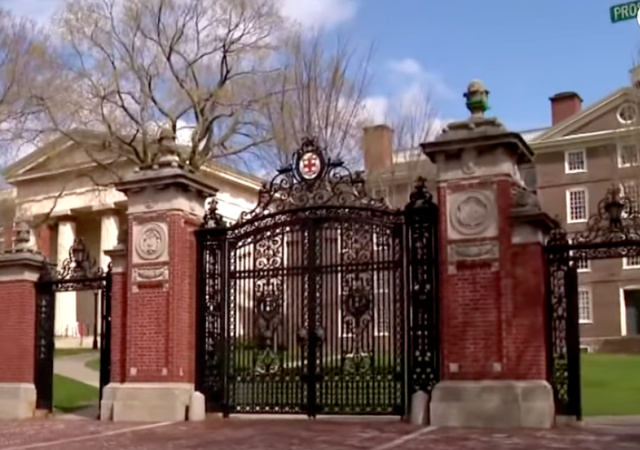
What used to be a vibrant, energetic, rousing habitat of ideas and people in hot debate is now an oppressive, predictable, fatiguing workplace. They’ve ruined the university.
Some two decades ago, I found myself at the University of California, Berkeley campus, enchanted by its verdant sunlit beauty. I appreciated my academic hosts, who interviewed me and entertained me as a promising professorial candidate. Yet I strongly resented visiting the “Freedom of Speech” Cafe, where I witnessed intense anti-American animus. I passionately defended America, explaining that if socialist intellectuals got their wish, there would be no freedom.
In her 1965 essay on the student rebellion at Berkeley and other universities, titled “The Cashing In: The Student Rebellion,’” Ayn Rand issued a chilling warning:
For its motley leftist leadership, the student rebellion is a trial balloon, a kind of cultural temperature-taking. It is a test of how much they can get away with and what sort of opposition they will encounter.
For the rest of us, it is a miniature preview—in the microcosm of the academic world—of what is to happen to the country at large, if the present cultural trend remains unchallenged. The country at large is a mirror of its universities.
Sixty years later, we are reaping the results. In 1965, Rand quoted several sources condemning the rebellion, published by outlets such as The New York Times or the Columbia University Forum, which would be nearly unthinkable today. She emphasized an article by Berkeley professor William Petersen, who wrote:
The first fact one must know about the Free Speech Movement [FSM] is that it has little or nothing to do with free speech…. [T]he real issue is the seizure of power….
That a tiny number, a few hundred out of a student body of more than 27,000, was able to disrupt the campus is the consequence of more than vigor and skill in agitation.
This miniscule group could not have succeeded in getting so many students into motion without three other, at times unwitting, sources of support: off-campus assistance of various kinds, the University administration, and the faculty.
Everyone who has seen the efficient, almost military organization of the agitators’ program has a reasonable basis for believing that skilled personnel and money are being dispatched into the Berkeley battle…. Around the Berkeley community a dozen “ad hoc committees to support” this or that element of the student revolt sprang up spontaneously, as though out of nowhere.
The course followed by the University administration … could hardly have better fostered a rebellious student body if it had been devised to do so. To establish dubious regulations … is bad enough; worse still, the University did not impose on the students any sanctions that did not finally evaporate…. Obedience to norms is developed when it is suitably rewarded, and when noncompliance is suitably punished….
But the most important reason that the extremists won so many supporters among the students was the attitude of the faculty. Perhaps their most notorious capitulation to the FSM was a resolution passed by the Academic Senate…, by which the faculty notified the campus not only that they supported all of the radicals’ demands but also that, in effect, they were willing to fight for them against the Board of Regents…. When that resolution passed by … 824 to 115 votes, it effectively silenced the anti-FSM student organizations….
The above lines sound ominous in the present campus reality. Today, university officials react with indignation and dismay when threatened with cancellation of their federal funds and other privileges. They demand continuation of federal sponsorship and cite “self-governance” and “academic freedom” as justifications for their disastrous policies.
Yet universities continue to break the law by inciting antisemitic violence, discriminating on the basis of race, sex, or religion, and engaging in massive political activism that hurts our national interests. Self-governance does not justify enabling violence and breaking the law. Freedom has nothing to do with financing detrimental activities and ideologies, which the American public has no obligation or reason to support. Jason Hill diagnoses the danger:
The core principles and foundations that keep the United States intact, that provide our citizens with their civic personalities and national identities, are being annihilated. The gravest internal threat to this country is … leftist professors who are waging a war against America and teaching our young people to hate this country. Our universities risk losing their status as learning sites and becoming national security threats.
Nevertheless, the tide is turning, and hope is looming on the horizon. The effective and energetic measures by red states’ governments and the second Trump administration have begun to bear fruit. Various DEI programs are being dismantled, and instances of violent anti-Semitism and anti-Americanism are being seriously addressed.
A noteworthy development is the recent “Manhattan Statement on Higher Education,” signed by numerous eminent scholars, writers, and public influencers, such as Ben Shapiro, Jordan Peterson, Victor Davis Hanson, and Gad Saad, to name just a few. It affirms:
America’s colleges and universities have long been the bright lights of our civilization. For nearly four centuries, they have pioneered new fields of knowledge, brought the arts and sciences to new heights, and educated the men who built our republic. But over the past half-century, these institutions gradually discarded their founding principles and burned down their accumulated prestige, all in pursuit of ideologies that corrupt knowledge and point the nation toward nihilism….
Let us enumerate the facts:
-
The universities have capitulated to the radical left’s “long march through the institutions,” which has converted them into laboratories of ideology, rather than institutions oriented toward truth.
-
The universities have violated their commitment to serve in a position above day-to-day politics and, instead, have adopted a narrow political agenda and engaged directly in partisan activism, with particularly disastrous results for the humanities and social sciences.
-
The universities have built enormous “diversity, equity, and inclusion” bureaucracies that discriminate on the basis of race and violate the fundamental principle of equality – that high prize which was inscribed in the Declaration of Independence and codified into law with the Fourteenth Amendment and the Civil Rights Act.
-
The universities have contributed to a new kind of tyranny, with publicly funded initiatives designed to advance the cause of digital censorship, public health lockdowns, child sex-trait modification, race-based redistribution, and other infringements on America’s long-standing rights and liberties.
-
The universities have corrupted faculty hiring practices with racial quotas, ideological filters, and diversity statements, which function as loyalty oaths to the left and have virtually eliminated conservative scholars from the prestige institutions.
-
The universities have degraded the liberal arts with reductive ideologies that no longer aim to preserve and discover what is highest in man, but to unleash resentments against Western civilization, from the Greeks and Romans to the English and the Americans.
-
The universities have ceased to represent the nation as a whole; rather, they have divided Americans into “oppressor” and “oppressed,” and have, in effect, declared war on millions of Americans who simply want to live, work, worship, and raise families in peace.
Enough. The American people provide status, privileges, and more than $150 billion per year to the universities. In light of these transgressions, we have every right to renegotiate the terms of the compact with the universities and to demand that they return to their original mission: to pursue knowledge, to educate the citizen, and to uphold the law. In exchange for continued public support, these institutions must abide by the principles of the Constitution and honor their obligation to public good.
The Statement recommends:
To that end, we call on the President of the United States to draft a new contract with the universities, which should be written into every grant, payment, loan, eligibility, and accreditation, and punishable by revocation of all public benefit:
-
The universities must advance truth over ideology, with rigorous standards of academic conduct, controls for academic fraud, and merit-based decision-making throughout the enterprise.
-
The universities must cease their direct participation in social and political activism; the proper vehicle for criticism is through the individual scholar and student, not the university as a corporate body.
-
The universities must adhere to the principle of color-blind equality, by abolishing DEI bureaucracies, disbanding racially segregated programs, and terminating race-based discrimination in admissions, hiring, promotions, and contracting.
-
The universities must adhere to the principle of freedom of speech, not only in theory, but in practice; they must provide a forum for a wider range of debate and protect faculty and students who dissent from the ruling consensus.
-
The universities must uphold the highest standard of civil discourse, with swift and significant penalties, including suspension and expulsion, for anyone who would disrupt speakers, vandalize property, occupy buildings, call for violence, or interrupt the operations of the university.
-
The universities must provide transparency about their operations and, at the end of each year, publish complete data on race, admissions, and class rank; employment and financial returns by major; and campus attitudes on ideology, free speech, and civil discourse.
A powerful conclusion offers cautious hope:
We acknowledge that the crisis of higher education will not be resolved in an instant. Still, we maintain faith that these proposed reforms will provide a starting point for a broader restoration, which can push back the forces of radicalism and create the space for real knowledge. Despite the challenges, we refuse to abandon the hope that America’s universities can once again be those bright lights, pursuing truth, sustaining our highest traditions, and educating the future guardians of our republic.
Nora D. Clinton is a Research Scholar at the Legal Insurrection Foundation. She was born and raised in Sofia, Bulgaria. She holds a PhD in Classics and has published extensively on ancient documents on stone. In 2020, she authored the popular memoir Quarantine Reflections Across Two Worlds. Nora is a co-founder of two partner charities dedicated to academic cooperation and American values. She lives in Northern Virginia with her husband and son.
Donations tax deductible
to the full extent allowed by law.





Comments
Changing the university atmosphere is utterly impossible without takeover and occupation. The current cohort are rotten to the core. The AMG required complete surrender and occupation to denazify Germany.
The entire “education” establishment, from pre-K through post-doc, has been corrupted.
Close the schools. Fire the staffs. Raze the buildings. Plow the land. Plant corn.
Wipe the slate completely clean and start over.
It’s been about four decades since I left teaching all subjects to fourth, fifth and sixth graders,after nine years. I taught in a wealthy district; average middle class district; and the third elementary school comprised of the following: 25% non-English speaking child immigrants; approximately 33% American born of African descent; and the rest was Caucasian. In each of the three groups, income backgrounds ranged from welfare to upper middle class or higher.
What I taught at all three schools has left many people shocked because they didn’t believe it could be done. Someday I’ll document it but my students behaved. We also had a principal, a Paul Bunyanesque style of African descent, who was wonderful – believe in achievement for all and we succeeded.
I spent over 20 years part-time teaching computer concepts for business majors at a public university. The mixture of students there was huge.
When people tell me they want to be on the Board of Education because they love children or they want to teach elementary school because they love children, that’s not their job. Their job is to provide content, truth, and teachers, so they learn what is needed to survive in the world. Secondly, the teachers must teach content. Teaching content results in fewer discipline problems. I could go on, but this is rather long post so I’ll stop here.
thats why djt didnt take crap from rosie odumple… while he was criticized for that
b/c when you allow lefty anyyyy inroads
they will exploit their communistnazi agenda
stomp it out NOW
I’m puzzled that the author of this article failed to give recognition to the writer of the Manhattan Statement, Christopher Rufo. She used his title in her headline. Yes, there were many contributors to the Manhattan statement but he already published it on his own blog so I was surprised to find his name missing from her apparently well-researched article. Chris Rufo is a patriot who deserves recognition for his work.