


Gordon Klein v. UCLA Trial Update – Dean Bernardo’s Testimony Wraps Up
An Associate Dean also testified she had never before seen UCLA issues public condemnation of a professor’s conduct and confirmed that Klein’s mid-quarter removal was unprecedented to her knowledge.
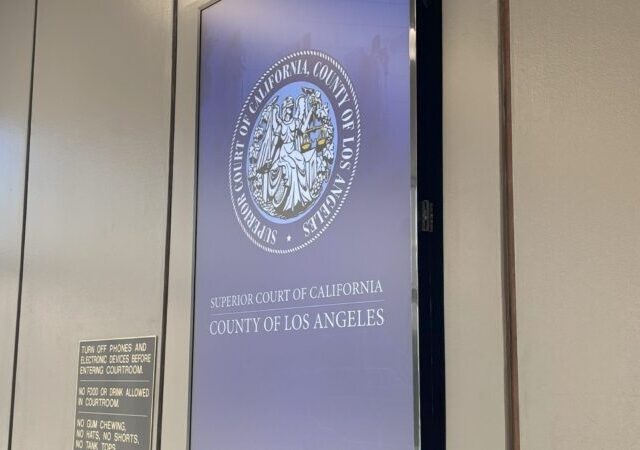
The trial continued in the case of Prof. Gordon Klein versus the UC Regents and UCLA business school Dean Antonio Bernardo.
Legal Insurrection has been following the dispute since inception. Our prior trial reports are here:
- Trial Starts In Suit Against UCLA By Prof. Gordon Klein, Targeted and Smeared For Refusing Exam “Leniency” For Black Students
- Gordon Klein v. UCLA Trial Update – Expert and Student Take The Stand
- Gordon Klein v. UCLA Trial Update – Cross of Prof. Klein Wraps Up, Dean Bernardo Takes The Stand
- Gordon Klein v. UCLA Trial Update – Dean’s Cross-Examination Continues, Supervisor Testifies
- Gordon Klein v. UCLA Trial Update – Plaintiff’s Expert Values Damages At Over $13 Million
Court resumed Tuesday, July 28, and Wednesday, July 29, with Dean Antonio Bernardo still on the stand for continued questioning.
Plaintiff’s counsel zeroed in on whether Dean Bernardo relied on faulty assumptions, specifically about the motivations of another student’s viral tweet and the context of Professor Gordon Klein’s email to student Leslie Giovanny.
Bernardo testified that he found Klein’s message “flippant” and “mocking,” particularly the references to mixed-race students and the comparison to a white student from Minneapolis. Though he admitted he would have denied the student’s request for race-based leniency himself, he said the issue wasn’t about Klein refusing preferential treatment, but how Klein delivered his denial. “All he had to do was say no,” Bernardo said, maintaining that Klein’s tone was unnecessarily cruel.
Bernardo also acknowledged that he had not reviewed Giovanny’s original email before reacting to Klein’s reply, which he described as “callous” and “incredibly disheartening.” He further confirmed that Klein forwarding the full email chain days later did not alter his initial view.
A pivotal moment came when Bernardo admitted he had no knowledge of whether the 200+ student complaints against Klein referenced unique grievances or were duplicative. He said he leaned heavily on a committee of 10-15 campus leaders, including legal, Title IX, academic, and communications personnel to weigh how best to respond.
Plaintiff’s counsel questioned why the university issued a mass email the same day Klein was placed on leave, speculating it aimed to shape public perception. Bernardo denied targeting that day and emphasized the reputational concerns, both for the business school and the broader university amid the unfolding media storm. Though he approved the message, he claimed no intent to damage Klein’s career, including his expert witness practice.
When asked why UCLA sent a public message the same day Professor Klein was placed on leave, Dean Bernardo said there were concerns Klein might promote a “false narrative” suggesting that he had been exonerated. The university wanted to prevent further misinformation, given the scrutiny already building online. However, when pressed on why the message didn’t directly address the alleged falsehoods or clarify UCLA’s policies, Bernardo cited privileged conversations and said university policy aimed to be “very minimalist” in labor-related communications. He maintained there was no intent to target that day specifically and simply put, “That was my understanding of what we could say.”
He also pushed back on suggestions that Klein’s reinstatement email contradicting subsequent messaging referencing an “ongoing process,” stating that UCLA needed to remain vague due to labor policy constraints.
Associate Dean Patricia Godefroy
On Wednesday afternoon Bernardo’s testimony wrapped and the defense called Patricia Godefroy, UCLA Anderson’s Associate Dean for Marketing and Communications. She served on the crisis response team convened after Klein’s email went viral.
Godefroy testified that she found Klein’s email “inappropriate” and “insensitive,” and clarified that while she never personally called it “racist,” she previously testified that it could be construed as so. She took particular issue with Klein’s use of a Martin Luther King Jr. quote, which she viewed as disrespectful and out of context.
Plaintiff’s counsel confronted Godefroy with internal emails showing she was among the first administrators calling for action against Klein. In one message dated June 3, she wrote: “This is actually an opportunity now to clearly demonstrate our commitment to our values.” Another message read: “We should be able to share some action that shows absolute rejection of what he said.”
Godefroy also reviewed emails for another professor who was Klein’s former supervisor who referred to a student complaint as coming from a “hysteric student” and warned against a “witch hunt”. In response, Godefroy wrote that Klein needs to be enlightened.
She admitted that she had never before seen UCLA issues public condemnation of a professor’s conduct and confirmed that Klein’s mid-quarter removal was unprecedented to her knowledge. Asked whether she believed any public statements undermined due process, Godefroy denied it.
Professor Emeritus Steve Lipman
Also testifying via video was Professor Emeritus Steve Lipman, who said he drafted Klein’s 2021 merit review letter and supported a raise. Lippman testified that the final version was “substantially” different from his draft, one of the only times that had ever happened.
Michael Simidjian, UCLA’s Director of Academic Affairs
The day concluded with live testimony from Michael Simidjian, UCLA’s Director of Academic Affairs. He clarified the contractual limitations in place under the expired UC-AFT agreement, distinguishing between voluntary and involuntary leave. Simidjian confirmed that Klein had not violated UC policies regarding faculty-student relationships or classroom intimidation and acknowledged that UCLA does not typically publicize faculty suspension.
Upcoming Trial Dates
Trial continues August 1 and then August 12-15.
[Featured Image credit: Rianna Dy]
======================
Rianna Dy is a recent UCLA graduate with a Bachelors of Arts in Business Economics. Coverage of Wednesday’s court session provided by Jadon Soriano, a recent UCLA graduate with a Bachelors of Arts in Economics.
Donations tax deductible
to the full extent allowed by law.







Comments
If I hear one more university talk about its “values”, my head will explode.
The DEI racism these schools follow is directly opposite to MLK’s dream of a day when everyone is judged by their individual character and merit instead of by their skin color.
Since they have no logical or moral answer for their complete rejection of MLK, their constant and only reply is that it is somehow offensive for whites to embrace or cite this national hero, because he was black apparently.
And sure enough: “She took particular issue with Klein’s use of a Martin Luther King Jr. quote, which she viewed as disrespectful and out of context.”
Out of context? It is the exact center of the issue. Klein was supporting meritocracy as the correct answer to racism, exactly as King had done, where the aspirational goal is a day when everyone is judged as an individual.
The anti-Kings hate that. They absolutely hate Martin Luther King, so of course they “take issue” with hearing his name. That is putting it very lightly.
But is it “disrespectful” or “out of place”? No. Their actual objection is that it is RESPECTFUL, not disrespectful, to a figure they hate, and also that King’s position here, far from being beside the point, is precisely on the mark, exposing their own radical moral perversity.
Actually, I follow The Reverend Doctor Martin Luther King, Jr’s teachings to the letter. I DO judge them by their character. (And, pattern recognition.)
and thats why malcomx is more revered