


Harvard Kennedy School Develops Workaround for International Students
“we will not officially launch these programs unless there is sufficient demand from students who are unable to come to the United States”
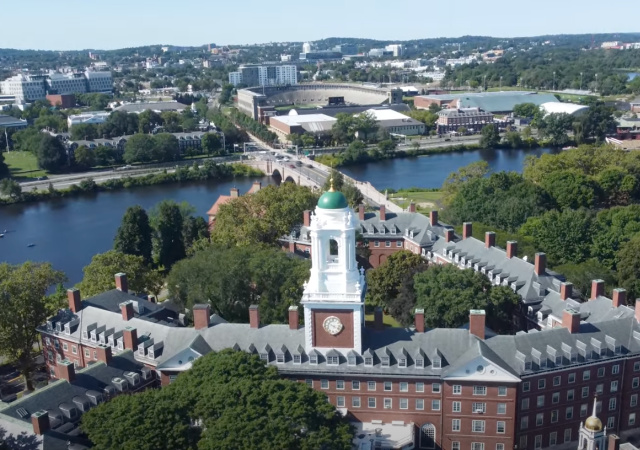
The Harvard Kennedy School of Government has discovered remote learning. They’re also partnering with a school in Canada.
Inside Higher Ed reports:
Harvard Kennedy School’s Plan B for International Students
The Harvard Kennedy School announced a contingency plan for its international students Tuesday in the event that the Trump administration successfully bars the university from enrolling foreign students, according to The Boston Globe.
The Kennedy School, Harvard’s postgraduate college of government, public policy and international affairs, said that both incoming and returning students could study remotely, and returning students would be given the option to finish their degree at the University of Toronto’s Munk School of Global Affairs and Public Policy.
“We are announcing these contingency plans now to alleviate the uncertainty many students feel, but we will not officially launch these programs unless there is sufficient demand from students who are unable to come to the United States,” Kennedy School dean Jeremy Weinstein wrote in an email Tuesday.
Harvard needs the approval of its accreditor, the New England Commission of Higher Education, to allow students to complete their degrees online, and current students who want to study in Toronto would have to apply for a Canadian visa next month.
The Kennedy School is the first college at the university to release its formal contingency plan; others are working on developing their own. HKS is particularly vulnerable to a foreign student ban: 59 percent of its students are international, compared to 24 percent of Harvard’s total student population.
Harvard is currently suing the Trump administration over multiple attempts to ban its foreign student population, including by revoking the university’s Student Exchange and Visitor Program certification and issuing an executive proclamation. Last Friday, a federal judge granted Harvard a preliminary injunction in one of its court challenges.
Donations tax deductible
to the full extent allowed by law.







Comments
This is predictable and fine. If they aren’t bringing students HERE from hostile foreign countries, great!
Those remote students won’t overstay their (non existent) visas, they won’t be staging disruptive or even dangerous protests on US soil and they won’t be spying for some foreign power in between protests.
But will they also be less likely to get tenured positions where they can teach American students to hate America?
if this method of earning a sheepskin would be OK for foreign students, why not U.S. students? why only PG students, why not undergrads as well?
in that case, what would be the reasons for a huge campus and its buildings with their high cost of maintenance?
Note that the Kennedy School simply doesn’t teach undergraduates.
Toronto is perfect for Muslim students since Jews can no longer live safely in Toronto, due to Muslim violence against Jews. It would be almost like their own countries (except for the weather).
Since it’s online, they could just roll their whole program into Harvard Extension. (A more or less open admission online school that gives diplomas that say Harvard Extension on them, and is a whole lot cheaper than regular Harvard.) That would be funny.
Harvard’s schools are heavily populated by foreign students. Fifty-nine percent of students at the Kennedy School are from foreign countries. Many are sons and daughters of leaders of those countries. They come to Cambridge to meet ‘the right people’ in preparation for their future roles back home. Remote learning from Canada will not be very appealing to them.