


The Good, the Bad, and the Beautiful of the Starship 9 Test Launch
Much valuable data was collected and some important milestones achieved.
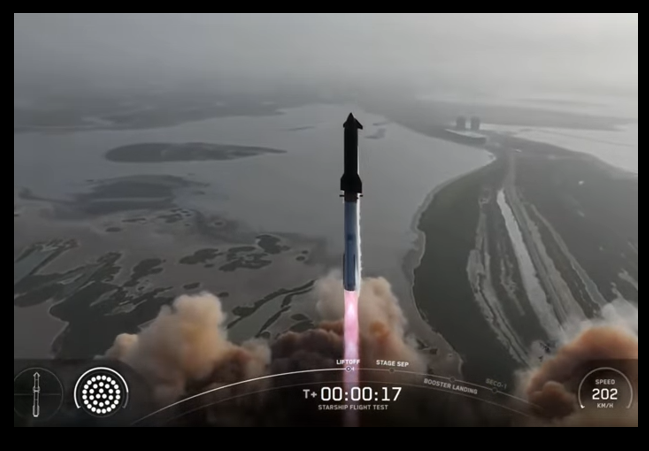
SpaceX conducted the ninth test flight of its Starship launch system this Monday from Starbase, Texas. This mission marked several firsts and aimed to further SpaceX’s goal of developing a fully reusable, heavy-lift rocket system for missions to the Moon, Mars, and beyond.
Starship 9 was the first flight to reuse a Super Heavy booster and attempt significant hardware reuse on Starship. The mission reached its planned engine cutoff and achieved a higher apogee than previous flights, providing valuable data for future improvements.
However, as with every test, there were a few hiccups. I will summarize the good, the bad, and the beautiful results from this test.
🚨BREAKING: Starship 9 lifts off from Starbase, Texas. pic.twitter.com/bsTcNkWFJV
— DogeDesigner (@cb_doge) May 27, 2025
THE GOOD
As noted previously, this flight marked the first time SpaceX launched a previously flown Super Heavy booster (B14-2), an essential step toward full vehicle reusability. The booster executed a boost-back burn and attempted a splashdown in the Gulf of Mexico under deliberately more stressful conditions to gather data on off-nominal flight profiles.
The Super Heavy, meanwhile, used a different method for flipping around for the trip back to the launch site in a bid to save propellants. It was also programmed to fly a much steeper descent than usual to learn more about the thermal and aerodynamic stresses it can safely endure.
“The booster will attempt to fly at a higher angle of attack during its descent,” SpaceX said on its website. “By increasing the amount of atmospheric drag on the vehicle, a higher angle of attack can result in a lower descent speed which in turn requires less propellant for the initial landing burn.”
“Getting real-world data on how the booster is able to control its flight at this higher angle of attack will contribute to improved performance on future vehicles, including the next generation of Super Heavy,” SpaceX said.
The Starship upper stage also managed to make it into its planned suborbital trajectory after an apparently flawless performance from its six engines. Additionally, there was no significant loss of heat shield tiles during ascent.
THE BAD
Sometimes, more is learned from failure than success. There was a series of technical glitches affecting both the Super Heavy booster and the Starship upper stage that resulted in the loss of both units.
The booster executed a boost-back burn as planned, targeting a hard splashdown in the Gulf of Mexico to test a steeper, more stressful descent trajectory. However, at the moment of engine reignition for splashdown, the booster suffered a catastrophic failure and was lost over the Gulf.
This loss was not unexpected, given the intentionally high-stress flight profile, but it meant that the planned recovery and data on booster reuse were not achieved.
The mission also aimed to deploy eight Starlink satellite simulators to test the payload deployment system. However, the payload bay door failed to open fully, preventing the release of the simulated satellites and missing a key demonstration of Starship’s operational capability.
Furthermore, a propellant leak developed in the main tank of the upper stage during the coast phase. This leak caused a loss of tank pressure, resulting in a gradual loss of attitude control. As a result, the spacecraft began to spin slowly in space, making it impossible to perform the planned in-space Raptor engine relight and do a controlled reentry and splashdown..
The uncontrolled spin meant Starship reentered the atmosphere at an incorrect angle, leading to its breakup over the Indian Ocean.
SpaceX later confirmed that the spacecraft experienced “a rapid unscheduled disassembly,” or burst apart. “Teams will continue to review data and work toward our next flight test,” the company said in an online statement.
Musk noted in a post on X it was a “big improvement” from the two previous demos, which ended in flaming debris over the Atlantic. Despite the latest setback, he promised a faster launch pace moving forward, with a Starship soaring every three to four weeks for the next three flights.
🚀Starship Test 9 detected just before splashdown over the Indian Ocean by Cocos-Keeling magnetometer station (CKI). Magnetic anomaly was generated at maximum plasma. Using a typical anomaly speed of 30km/min, estimate the magnetic signal origin ~ 1,110 km to the west @SpaceX pic.twitter.com/5NWvptARLu
— Richard Cordaro (@rrichcord) May 28, 2025
THE BEAUTIFUL
The SpaceX team has a wealth of new data to plan the next flight. Flight 10 is expected to incorporate fixes for the issues encountered during Flight 9, including enhancements to the propellant system, attitude control, and the satellite deployment mechanism.
The date has not been announced. However, with an administration willing to work with Musk and SpaceX, and not against them, hopefully rapid progress can be made over the next several launches.
The deadline for required success may have been pushed up with news of hard-to-detect asteroids in the orbit of Venus.
Here's hoping the next Starship tests have even more success! https://t.co/nZHLJdsopy
— Leslie Eastman ☥ (@Mutnodjmet) May 28, 2025
Donations tax deductible
to the full extent allowed by law.







Comments
Gulf of America……
Ad Astra!
It’s all digital. Lacks the interest of the analog launches in the old days.
Ridiculous. This is a private company moving at a remarkable pace, learning exponentially. Doing things it took the government decades to do.
The world has passed you by, Hardin. Time for you to unplug your Trash-80
Everything is an independent add-on. You just keep launching and replacing what didn’t work as you get further and further. Like debugging a program. Fix the first error, then fix the second, then fix the third. You haven’t been fixing a big thing but always some tiny thing until you run out of tiny things. Like a big program there are always hidden flaws that turn up much later in unusual conditions but it hasn’t gotten that far yet.
The old days mostly had an all or nothing feel, design from the beginning. Few test launches comparatively.
One of Elon Musk’s engineering precepts is no part at all is the best part. Old space over engineered everything. SpaceX tries to minimally engineer the Starship and then add parts back in as needed.
Tell us more about your experience as an aerospace engineer.
I’ve watched each starship launch. Their awesome.
“The booster executed a boost-back burn as planned, targeting a hard splashdown in the Gulf of Mexico”
Um, Gulf of America.
That’s why they call them test flights.
Yet if you only ever get your news from the Democrat media you would never know this was anything other than a failure.
“… the spacecraft experienced “a rapid unscheduled disassembly…” Unhoused persons and person with uteruses hardest hit.