

It’s Way Past Time to Defund PBS and NPR
“We do not seek to favor any political party at all. We seek to ensure that Americans have a wide range of perspectives available to them”
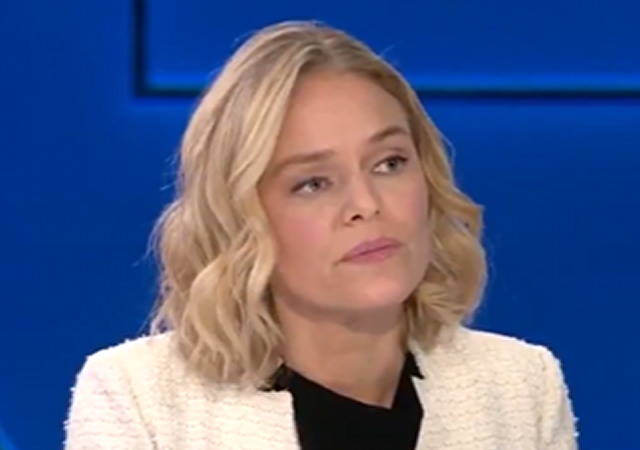
This week, PBS launched a lawsuit against the Trump administration, claiming that their First Amendment rights to free speech are being infringed. This follows a nearly identical suit filed by NPR last week.
The claim is absurd. No one is trying to stop people at these networks from speaking, we just don’t want to fund them with tax dollars. It’s funny, we have been told for years that federal tax dollars make up a small portion of their funding, but when a Republican president finally decides to yank it, they act like it’s the end of the world.
Axios reports:
PBS sues Trump administration over funding cuts
The nonprofit Public Broadcasting Service (PBS) and one of its local affiliates on Friday said they sued the Trump administration over the executive order seeking to cease all federal funding to National Public Radio (NPR) and PBS.
Why it matters: The lawsuit follows a similar complaint filed by NPR earlier this week.
- PBS CEO Paula Kerger had alluded to the broadcaster’s willingness to take legal action in an interview with Axios last month, saying she would would “vigorously” defend PBS’ board from any political interference.
State of play: The complaint, which was filed in a U.S. District Court in Washington D.C., argues the president doesn’t have the authority to serve “as the arbiter of the content of PBS’s programming, including by attempting to defund PBS.”
- It argues the president lacks the power to influence funding decisions made by the Corporation for Public Broadcasting, which is a non-government entity. (CPB allocates around $535 million in federal funding annually to NPR and PBS.)
- It also says the president’s executive order violates PBS’ First Amendment rights.
- With the complaint, PBS is seeking declaratory and injunctive relief from Trump’s executive order and asks the court to declare that the order violates the Constitution.
What they’re saying: “After careful deliberation, PBS reached the conclusion that it was necessary to take legal action to safeguard public television’s editorial independence, and to protect the autonomy of PBS member stations,” a spokesperson said.
When talking about NPR’s lawsuit, CEO Katherine Maher actually claimed that they are “a non-partisan news organization,” which is laughable.
FOX News reported:
NPR CEO rips Trump order to defund as ‘retaliation,’ insists media outlet is ‘non-partisan’
In an interview on “PBS NewsHour,” the NPR boss trashed Trump’s executive order to “cease Federal funding for NPR,” calling it “viewpoint discrimination” and saying that Trump is just taking it out on NPR because it goes against his views.
“And so, it is a textbook example of viewpoint discrimination from a First Amendment standpoint,” she said, adding, “Essentially, by blocking funding to NPR and PBS, it is a form of retaliation against our organizations for airing editorial programming that the president might disagree with.”…
Maher responded to the critiques, declaring, “Well, first of all, I respond by saying we’re a non-partisan news organization. We seek to be able to provide a range of different viewpoints in terms of who we bring on air, the stories that we tell.”
Watch this clip:
CEO of NPR: “We're a nonpartisan news organization. We do not seek to favor any political party at all." 🤣
pic.twitter.com/QnAYyygnFy— Benny Johnson (@bennyjohnson) May 29, 2025
Yes, non-partisan. Of course…
This is the CEO of NPR
DEFUND NPR pic.twitter.com/P0cJPVReV8
— Libs of TikTok (@libsoftiktok) May 14, 2025
It’s ironic for Maher to hide behind the First Amendment on this, considering she once derided it.
EXCLUSIVE: Katherine Maher says the "the number one challenge" in her fight against disinformation is "the First Amendment in the United States," which makes it "a little bit tricky" to censor "bad information" and "the influence peddlers" who spread it.
NPR's censor-in-chief. pic.twitter.com/0vY6hIpbmO
— Christopher F. Rufo ⚔️ (@realchrisrufo) April 17, 2024
Frankly, I don’t see why my tax dollars should fund this.
This is how NPR – National Public Radio – covered the Tea Party movement as it was emerging in the 2010s. Seems fair and balanced, doesn't it? pic.twitter.com/WbyNciGa1Y
— Mike LaChance (@MikeLaChance33) March 31, 2025
Featured image via Twitter video.
Donations tax deductible
to the full extent allowed by law.




Comments
I’m fed up with this First Amendment BS. The first amendment does not say that you get my tax dollars to fund programming I disagree with while censoring potential views and programming I agree with. Any suit like this falsely based upon the first amendment should be slapped down and any judge who doesn’t should be impeached and kicked out on their ass.
Ms. Maher is the worse thing to happen to NPR/PBS. Time to defund.
Nobody with two ears believes they are nonpartisan. Regardless, it is not a justified use of tax revenue.
NPR and PBS can say whatever they want (nobody is saying they can’t) but that doesn’t mean they should be financed by the tax payers, especially me. Let them beat the bushes for funding like the other broadcasting operations.
.
Could NPR have picked a less likeable leader than Ms. Maher?
NPR is a special interest. It has ample ability to reach out to progressive oligarchs to make up any difference. It is so far gone that it believes it’s objective and non-partisan. Delusional like Biden is fit as a fiddle and Trump is Hitler. And they want to report and explain reality?
They went bad when the fired Louis Rukeyser.
Putting aside the federal funding issue, it seems to me that NPR can argue that it’s nonpartisan or that there is viewpoint discrimination, but not both at the same time.
It’s rather ironic that the entire point of the First Amendment is to say whatever the hell you want to say without worrying about the government throwing you in the gulag, which presupposes that you’ve got an opinion on something that falls somewhere on the political spectrum. This vapid twit claims a right to my money under the First Amendment because she thinks she’s impartial. Good for you, sweetheart. Finally, someone dopey enough has come along to derail the NPR/PBS gravy train.
“saying that Trump is just taking it out on NPR because it goes against his views…
“we’re a non-partisan news organization. We seek to be able to provide a range of different viewpoints in terms of who we bring on air, the stories that we tell.”
Well, make up your mind, chickie… either you cater evenly to all sides, or the vast majority of your content pisses off the president enough for him to defund you. Which is it?
Does the federal government really see a need to subsidize a news organization that caters only to citizens so deluded as to buy this “evenhanded content” gaslighting?
I recall the last time I listened to NP was 2016 when odious Bernie Sanders was running for president. While I despise Bernie he didn’t deserve the hate he got on NPR who immediately accused him of dual loyalty to Israel. I mean he’s a self hating Jew through and through but stupid NPR pressed on playing into every nasty antisemetic stereotype you can think of to make him seem like a sneaky spy. I remember listening in shock, and thinking if you can’t even give one of your own socialists wackos a fair shake simply because he’s Jewish than NPR is completely lost.
How about cutting off all funding to every single line item outside core Federal functions? If individual Citizens choose to make sufficient voluntary donations to these activities then they survive precisely b/c they have adequate public support. Those that can’t keep their doors open fail precisely b/c not enough of the public supports their activity.
This isn’t 1955 when the options were 3 networks, AM radio and a very few folks with kinda expensive shortwave radio sets and smaller # with ham. There’s no need for a gov’t funded TV or radio network in 2025.
Their audience is small, so why the need for funding from all pockets?
Let them self-loathe in silence.
Best way to handle this is to spin it off as a private entity. Do an IPO and see if all those limousine liberals buy the shares. If no one buys any shares it’s dead in the water. Put up or shut up libs.
PBS like so many government programs was started to help communitees that had little or now outside news products. As the electronic world expanded, there are very few places that do not have a plethora of news and information product to choose from. PBS’s time has come and gone as a necessity and we should cancel it as a government program. If they want to continue as a private corporation, fine but no more tax dollars.
How ’bout an EO to change the P in PBS and NPR to “Partisan”?
Was this not obvious 40 years ago?
PBS might have been sense when only broadcast TV was available and you had few choices. It ceased to make sense as soon as cable TV became a thing, and became nonsensical after wide internet adoption. For similar reasoning NPR never made sense.
PBS has some valuable IP and should be fine. NPR nor so much.
Long past time to cut the cords.
I admit I listened to NPR but only to listen to Tom and Ray Magliozzi, aka Click and Clack, the Tappet Brothers. I miss their show to this day. It was sad when Tom died and the show with him. Two brilliant and funny (and apolitical) gentlemen. Don’t drive like my brother …
I worked as a news reporter for an NPR affiliate (KANU in Lawrence, KS) during the 70’s post Watergate. . Saw how the sausage is made. Answered phones during the interminable pledge drives. Talked to NPR reporters when I phoned in stories. It was a “Right On Israel” nest of Marxists.
Way way past time since it should never have been funded in the first place. Can anyone show me where in the Constitution the Government is justified in creating and funding a quasi independent propaganda channel. If it is not quasi independent then it is part on the executive branch and Trump should hire all new people to staff it and see if the Dems will defund it then.
The 1st Amendment argument is absurd. The bigger question on whether the President has authority over the CPB, indeed who has authority over it, is a much better fight. Let’s settle that as I’d like these “independent” government agencies like CPB, Federal Reserve, CFPB etc reigned it and held accountable.
The time to defund NPR and PBS was 20 to 40 years ago.
In a time of existential threatening deficits, PBS and its ilk need to be beaten off the gov’t teat. Gov’t exists to perform what private enterprise can’t. Producing radio & TV content isn’t gov’t / taxpayer functions anymore.
again
even if they were pro maga
they shouldnt not get tax funding
fund your own messages
Both NPR and PBS are funded by the Corporation for Public Broadcasting, which, according to its website, is “a private, nonprofit corporation authorized by Congress in the Public Broadcasting Act of 1967.”
The website also states that “CPB is the steward of the federal government’s investment in public broadcasting and the largest single source of funding for public radio, television, and related online and mobile services.”
It distributes funds according to a formula in the Public Broadcasting Act of 1967 (Subpart D). The relevant statute is 47 USC 396.
– CPB shall have a nine member Board of Directors appointed by the President, with the advice and consent of the Senate. No more than five members can be from the same political party.
– There is a Public Broadcasting Fund administered by the Secretary of the Treasury. Funds are provided by Congress through the appropriations process.
So, it seems to me that the President and Congress end up fighting this out–the Presidency long had a right to hold back funding (i.e., decline to spend funds allocated by Congress), but Congress can force him to spend the money (or impeach and remove him if he doesn’t).
The planned funding for FY2026 and 2027 is over $500 million per year. At the station level, the average radio station got almost 15% of its funding from the Feds while the average TV station got just over 18% from the Feds. But some (radio) stations are over 90% dependent on Federal funding. The most subsidized stations, on average, are those in West Virginia (37%), Alaska (36%), New Mexico (35%), and Montana (32%) while the least subsidized are in South Carolina (1%), Vermont (2%) and Georgia (4%).
The NPR stations that would be most hurt by loss of Federal funding are those affiliated with Native American tribes and the African-American Public Radio Consortium. But, of course, the prominent voices are those that serve largely rich, white constituencies, like the stations affiliated with universities in east coast cities (including, of course, Washington DC and Boston, which are the home stations for most of the very well-paid NPR radio personalities–several make more than $300k per year–who set the tone).