

Native American Warriors Shatter Academia’s Colonialism Narrative
On this Columbus Day, I am celebrating patriotism that is more powerful than the politics of resentment.
Reading the news from American colleges and universities, professors at these leftist indoctrination centers are inclined to make America sound less like a nation than a crime scene.
When Native Americans enter the discussion, the script is especially predictable: “colonialism,” grievance, lecture, repeat. History includes real wrongs, and honest people shouldn’t hide them. But history also contains courage, loyalty, and sacrifice.
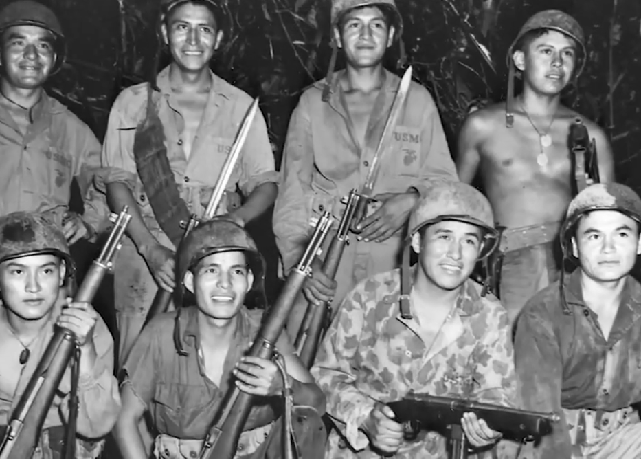
So, on this Columbus Day, I wanted to highlight the remarkable Native American love for this country and its warrior culture.
This post is inspired by a video shared by Mike “Wild Horse” Kobe.
Kobe, a retired Green Beret, describes himself as a Comanche-American who covers military and frontier history.
It shows the Veterans Grand Entry at the 2026 Black Hills Powwow in Rapid City: Native dancers and veterans entering an arena behind a forest of American, tribal, and military flags. Kobe’s caption notes that the Northern Cheyenne, Arapaho, Dakota, and Lakota fought the U.S. Army and that their ancestors defeated Custer. Then come four simple words: “This is them. Today.”
That picture is worth more than a semester of ideological seminars.
"Hey Mike, I know you CLAIM that Native Americans are mostly patriotic Americans, but I'm just not convinced."
This is the 2026 powwow for the Northern Cheyenne, the Arapaho, the Dakota and the Lakota, the largest Plains Nation, the one that fought the US Army to the bitter end… pic.twitter.com/d5o1DQjVD5
— Mike "Wild Horse" Kobe 🇺🇸 (@Wild_Horse) October 11, 2026
Native military service is not a historical footnote. Native Americans have served in every major American conflict since the Revolutionary War. In World War I, more than 12,000 served, even though many were not yet U.S. citizens (that changed when President Calvin Coolidge signed the Indian Citizenship Act in 1924).
About 6,000 volunteered, while another 6,500 were drafted; roughly five percent were killed in action, five times the overall American rate. World War I marked a transition in their service.
Unlike previous conflicts, when they served primarily as scouts or auxiliaries, Native Americans were fully integrated into all branches of the military. The U.S. also created the “Code Talkers” at this time.
They served as sailors and marines, engineers and aviators, doctors and ambulance drivers, and artillerymen and foot soldiers. Indians assigned to front-line infantry units were among the first combat troops to reach France and they saw extensive action on the Western Front during the decisive Allied offensives of 1918.
Cultural stereotypes of Indian males as natural and gifted fighters led commanders to assign Native soldiers the more dangerous duties, employing them as snipers or sending them on scouting mission behind enemy lines. Soldiers from the Cherokee, Choctaw, and several other tribes also rendered invaluable service as code talkers. They transmitted military communications by field telephone in their Native tongues to prevent the Germans from deciphering intercepted messages.
Then came World War II. More than 44,000 Native Americans served from a total Native population of fewer than 350,000. Nearly 800 Native women also joined the armed forces. They were infantrymen, sailors, nurses, pilots, scouts, and communications specialists. They did not merely participate. They helped America win.
The Code Talkers remain the best-known example, and deservedly so. Choctaw soldiers pioneered code talking in World War I. During World War II, the Marines recruited 29 Navajo men to build a military code, and they began work at Camp Pendleton.
In May 1942, the first 29 Navajo recruits attended boot camp. Then, at Camp Pendleton, Oceanside, California, this first group created the Navajo code. They developed a dictionary and numerous words for military terms. The dictionary and all code words had to be memorized during training.
Once a Navajo code talker completed his training, he was sent to a Marine unit deployed in the Pacific theater. The code talkers’ primary job was to talk, transmitting information on tactics and troop movements, orders and other vital battlefield communications over telephones and radios. They also acted as messengers, and performed general Marine duties.
Praise for their skill, speed and accuracy accrued throughout the war. At Iwo Jima, Major Howard Connor, 5th Marine Division signal officer, declared, “Were it not for the Navajos, the Marines would never have taken Iwo Jima.” Connor had six Navajo code talkers working around the clock during the first two days of the battle. Those six sent and received over 800 messages, all without error.
The tradition continued. More than 42,000 Native Americans served during the Vietnam era, and over 90 percent of them were volunteers.
A study conducted between 1985 and 1988 concluded that while heavy recruitment, especially in reservation territory, played a role, most Native Americans were more than willing to serve their country, and this has been evident throughout history. Tradition, both familial and tribal, and dedication to protecting their land have inspired Native Americans to serve in every major conflict for more than 200 years. Native Americans serve in the Armed Forces at five times the national average, having the highest per-capita involvement of any other ethnic group in the US.
Native men and women have since served in every branch of the armed forces, carrying forward family traditions, warrior traditions, and the duty to defend both ancestral homelands and this country. Interestingly, Native Americans account for 49 Guardians and 20 Officers in the US Space Force.
On Veterans Day 2022, a formal procession and dedication marked the National Native American Veterans Memorial. More than 1,500 Native veterans representing over 120 Native nations participated.
Native military service is not an exception. It is a living, multigenerational tradition of honor.
On a rainy #VeteransDay in Washington, D.C., our Cherokee Warrior Flight veterans joined the Cherokee Nation Veterans Color Guard and tribal nations from throughout America for the National Native American Veterans Memorial procession and dedication ceremony @SmithsonianNMAI pic.twitter.com/Yj4TZhaSne
— Cherokee Nation (@CherokeeNation) November 11, 2022
Interestingly, Native American soldiers can wear traditional regalia with their uniforms when authorized through an individual religious accommodation under Army Regulation 600-20; the approved items and conditions vary. This welcome accommodation shows respect for Native American warrior traditions while maintaining military uniform standards, and it honors their service.
The powwow procession tells a richer truth than any campus grievance seminar: Native patriotism did not erase tribal identity; it carried that identity into the defense of a shared nation.
I'm Comanche, and yes, I celebrate Columbus Day.
Those of you who know my story will probably figure it out quickly, but for those who don't, I was adopted as a child by a White Oklahoman couple.
Columbus could never have foreseen how many lives he would affect–positively… pic.twitter.com/YLORFgbxTX
— Mike "Wild Horse" Kobe 🇺🇸 (@Wild_Horse) October 12, 2026
For more than two centuries, Native Americans have answered America’s call because courage, duty, and love of homeland are stronger than the academic cult of perpetual resentment.
This Columbus Day, I am glad to celebrate warriors who chose to make this country theirs to defend.
Donations tax deductible
to the full extent allowed by law.


Comments
Don’t worry. The elites occupying the professor ranks in our colleges will set us rubes straight. Especially those downtrodden oppressed red men who have obviously wandered off their reservation. They know better and they will make sure you know they know better.
Change of subject but where else to ask. Where is the media coverage of the revolution taking place in France and may soon come to the USA?
Mount Suribachi flag raiser. It does not get more patriotically iconic than that.
Watch 1961’s The Outsider starring Tony Curtis.
Nor is anything more iconic than what happened to him after the war.
The high percentage of Native Americans serving in the U.S. military, as well as their effusive patriotism, make for inconvenient facts for the subversive, vile, stupid and evil Islamo-Marxist Dhimmi-crats.
More than 25 Native Americans have received the Medal of Honor.
To this day, Native Americans are proud of those who served and celebrate and honor their memories.
Their legacy is commemorated nationally by the National Native American Veterans Memorial in Washington, D.C.
This is a good opportunity to mention Ernest Edwin Evans, of Cherokee/Creek ancestry, awarded the MoH as Captain of the USS Johnson (DD-557) for his service in the Action off Samar, Oct. 25, 1944.
For a good read, check out James D. Hornfischer’s “Last Stand of the Tin Can Sailors.”
Thanks.
It is sad that any one would cast doubt on the service of our Native American warriors. They have more than others in the country have served proudly and honorably.
I’ve attended multiple Powwows in New Mexico. They always start by parading the US flag and recognizing veterans, both tribal and visitor by having them enter the powwow circle.
Hold on. Academia does not give a rat’s arse about the Native American warriors. Why on earth would they?
Don’t forget the 45th Infantry Division, the “Thunderbirds”. Three of the 9 MOH recipients were Native Americans:
https://www.okhistory.org/learn/45th7
One niece’s husband is partly Ojibwa. Between Afghanistan and Iraq he got 5 Purple Hearts. The military had to medically retire him.
I encourage you to read the code talkers book (it’ll come up if you search on Libby).
What struck me hardest about the Navajo stepping up was the fact that Roosevelt had f***ed them over royally on culling their livestock.
Picture this.
You are a dirt poor child, on the res and you tend sheep. They are your friends, they are your life.
Then the US government comes in, digs a trench, herds the sheep in and burns them alive. Then they pay you pennies on the dollar for them.
That’s what Roosevelt did to the Navajo. Needless to say, it left a pretty bad taste in their mouth.
I can’t say that I’d be jumping into the fight for a government that did that to me. But jump up and fight they did. To brilliant effect.
not to mention the forced boarding school of all of the Navajo children… it is a wonder any of those children knew enough Navajo to create a code.
One of my favorite books on this is for youth: Code Talker by Joseph Bruchac
Gee. another r……….t democrat? Took many Americans too long to get past thinking all Indians
were not equal. They had their culture but over time, understood at some level, that what
was taking over may be better. It was a rough and sometimes long and unfair road, but many were smart enough to get over the past and participate – yet keep their culture alive.
Counting coup….”Joe Medicine Crow (1913–2016) is credited with achieving the feat while serving with the US Army during World War II, as on one occasion he overpowered and disarmed a German soldier,[6] and later stole horses from an SS unit.[7]”
Counting coup… I hadn’t heard that term since college (Plenty Coup book). But I guess it’s been used on Yellowstone and made its way into pop culture.
Counting cuop has been a major part of Native American Sioux culture. Crazy Horse was a proud practitioner of it. TV and pop culture have very little to do with it.
Army helicopters are named after American tribes. The name is only given after permission and blessing from the tribe. As one person put it….they didn’t name the Apache gunship because of their bead work.
I LOVED this post. My awareness of “Code Talkers” was due to our son. After attending a Pow Wow in AZ/NM many years ago, I (erroneously) identified Code Talkers with the Navajo only.
I taught US History for 5th graders, decades ago – no text mention of the Code Talkers as I recall. Years later, our son picked up “Code Talkers” in his education so better. But this article!!! So needed. Perhaps you can include it every Columbus Day?
Thank you, Leslie
Janissaries were the shock troops of the Ottoman Empire.
They also were former Christians who’d been forced into serving the caliph.
Even if the Indians’ service looked voluntary, ya gotta ask just how voluntary it really was.
Your meager attempt to lead us to your illogical conclusion fails.