


Amazon Pledges $1 Billion to Communities Hosting Data Centers
“There is urgency to this data center buildout because we aren’t the only country that sees the benefits of AI for the economy and national security, and the countries that lead in AI will shape it and get the most from it in the short and long run.”
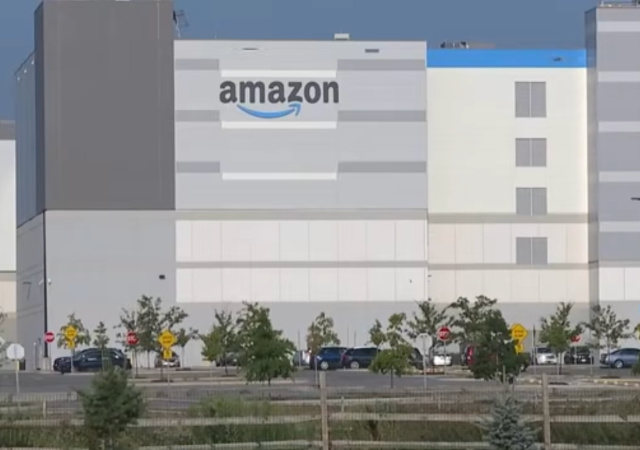
Amazon has vowed to invest $1 billion in towns with data centers as states and cities push back.
Amazon Web Services CEO Matt Garman explained the move in a blog post, comparing the building of data centers to America’s transportation system:
The buildout of America’s modern transportation system transformed the U.S. economy and way of life, creating countless new businesses and jobs, and connecting communities in ways that reshaped how Americans lived and worked. Seventy years later, we’re in the midst of the largest infrastructure buildout since the highways—our digital infrastructure. The rapid adoption of the Internet starting in the late 1990s, and then cloud computing in the mid-2000s, changed the way we interact with information and services, and substantially lowered barriers for entrepreneurs, companies, and governments to provide new customer experiences. Today, virtually everything we do each day—shopping, banking, stock trading, ride hailing, booking travel, receiving healthcare, streaming entertainment, as well as critical research in everything from preventing and curing disease to finding ways to use less energy and natural resources—is digitally driven and enabled by data centers, which manage the computing, storage, and access necessary for these activities. In the last few years, there’s been a rapid acceleration of data center construction across the country with the advent of Artificial Intelligence (AI).
“Just like the national highway system, our country’s economy, national security, and everyday lives stand to benefit immensely,” Garman added. “And, unlike the railroads and highways, this buildout is being financed without taxpayer money because private industry is picking up the tab.”
Garman promised transparency, saying Amazon would work with communities and state governments.
The data centers would also create thousands of jobs before, during, and after construction. Most of those jobs would go to people who live in the community. Amazon would also use supplies from local small businesses.
The $1 billion commitment stems from the community program “Built Together.” The investment would go towards education and workforce pathways, including free community college and workforce training.
Garman assured everyone the money would also have grants available to upgrade energy efficiency in schools, community buildings, and even homes.
This is interesting: No more nondisclosure agreements with government agencies.
“We host open houses in communities where we operate to share information about what we’re doing and encourage open dialogue,” explained Garman. “We share information about our plans as early as possible, listen to concerns, and ensure communities have the facts and the ability to engage with us as projects progress.”
Garman and Amazon know each state and its communities are different. Therefore, Amazon would work with local nonprofits and foundations to address any issue in the community.
“This is just the start and we’re going to keep at it—doing our part to build responsibly and with the communities with whom we partner,” concluded Garman. “We’re building our future, together.”
Leslie recently wrote about data centers facing fines and permit delays, acting as if these places are the boogeyman.
It doesn’t shock me that Virginia fined Microsoft $2.5 million for exceeding emissions limits last year.
Of course, New Jersey fined a Vineland data center with a $17 billion AI deal with Microsoft because it operated 62 natural gas-powered generators without a permit.
But in Texas, of all places, Gov. Greg Abbott halted data centers that require state permits so officials can investigate how those centers impact local utilities and resources.
Texas Attorney General Ken Paxton started investigating all data centers to confirm they comply with the Texas Water Development Board reporting requirements.
“Environmental protection matters, but AI development should not be allowed to suffer death by 1,000 permits and 10,000 regulations, especially as the Chinese are linked so closely to environmental lawfare in this country,” wrote Leslie.
Bingo.
Garman agreed with Leslie:
It’s still very early, yet AI is already transforming businesses, industries, and customer experiences in ways we couldn’t have imagined just a few years ago. AI will power the next generation of businesses, hospitals, schools, and other critical public services, as well as critical defense systems, intelligence analysis, cyber defense, and satellite operations—and new kinds of skilled jobs will be created to help make it all possible. Just like the national highway system, our country’s economy, national security, and everyday lives stand to benefit immensely. And, unlike the railroads and highways, this buildout is being financed without taxpayer money because private industry is picking up the tab.
There is urgency to this data center buildout because we aren’t the only country that sees the benefits of AI for the economy and national security, and the countries that lead in AI will shape it and get the most from it in the short and long run. The choices we make today will determine that outcome, and a lapse in our nation’s focus or resolve could put us behind, and potentially irreparably so.
Donations tax deductible
to the full extent allowed by law.







Comments
Still nada for Picard and Troy…. 🙂
Now I’m really worried because n my suburb
They just built a Amazon package delivery building, not as large as I’ve seen, but they have about 50 acres available to them and now just found out a ranch 1200 acres , sine 1820’s in a family… sold, one can only imagine to whom…
If they want to buy my property, make me an offer. I’m reasonable.
Money reduces friction but still there may be a money crisis in the future when it turns out that all this capital is misallocated. Concealing that is the problem with the plan. They borrow the money they pay you off with.
You’d think if there we so many advantages to having a one of these data centers in your area that they wouldn’t need to bribe people to stop resisting them.
I’d rather have one of those in my area than the train/truck transfer station they’re currently continuing to build despite having all their permits rejected so far. If you take the number of trucks they admit wanting to service per day and do the simple math, you’d quickly discover that not only would the trucks have to completely monopolize (to the ezclusion of all other traffic) the modest but well-utilized state highway that’s the only way in and out, but they’d all have to be traveling at 90MPH just to get the daily throughput they’re quoting. But as it turns out, all that is overridden by simpler math that goes CH-CHING in government offices.
I love Trump, but he is a builder and I don’t think he appreciates wide open spaces, the wild
But America is getting over whelmed with cement, the ranches and farms are disappearing at an alarming rate
The Wild life has no where to go and we humans NEED those wide open spaces too!
I go crazy when I’m away from nature for too long. My backyard has a creek, and no neighbors to the left, can’t build on it, or they would have years ago. So I can sit in my back yard and see deer and coyotes by my fence line, birds , possums, raccoons.. but if I leave my backyard it’s nothing but houses and cement .
I literally go nuts.
You think of wide open spaces in Texas, no, it’s gone for the most part
12 million people have moved here in the last 2 decades.
There is little water and much less land
We don’t even have any wild horses for God sakes
And Trump wants to open the west
I have to say. HELL NO
350 million people
Enough!
That’s 300 million more than at the turn of the last century!
There has to be a happy place that population replenishes itself but does not grow anymore.
Heh heh. My town could use a billion dollars, as long as Amazon can get by without any water (like we do).
Do they send the people the check or the city?
Does my tax bill go down?
No, but your homeless programs come with canapes.
You get an amazon gift card and $20 off your first grubhub order.
I am not at all persuaded by arguments that boil down to ‘we gotta build it or the commies win’. Lead with that jingoism crap and I’d throw your butt right off my property, that’s assuming I didn’t follow the 3 S out of pure principled outrage.
All legitimate criticism of data center build out could be taken off the table where the projectors would:
1. Put power generation behind the meter
2. Use closed loop water system
3. Build acoustic walls to eliminate noise
4. Site them away from residential areas (including the little cabin in woods off by itself) so that vibrations don’t create a problem
5. Fund a performance bond of 5 years worth of the salaries/benefits the projectors are promising will be created by the data center
6. Stop attempting to (mis)use eminent domain to secure land/property for the site itself or right of way
7. Don’t be arrogant ahole, coming into rural areas and in essence demanding the community alter itself and its character to serve them.
Unfortunately many of the projectors haven’t been willing to do most or any of those things. Instead they’ve often chosen to ride roughshod and now these projectors seem upset that folks noticed what happened elsewhere and ain’t at all receptive to a build out in their community. Folks in rural areas ain’t rubes or marks waiting to be taking advantage of by a pretty slide deck presentation of some slick salesman. Bump that noise, go build it in Manhattan if it is so super worthwhile and beneficial.
Agreed. I’ve advocated for a couple of years now the idea of putting the new data centers in locations that were used for heavy indistry that has moved out. Think steel mills in the Birmingham, AL, area where there is lots of unused or barely used open area where the locals are still familiar with large installations. A data center would be much quieter and cleaner than a US Steel plant. Easements for power lines are still in place – sometimes the old transmission towers are still there – and rail ways and major highways are close. The Black Warrior River isn’t far away. The locals need jobs. So why not? Who knows.
The ideas you mention would be very simple to include in the basic design of the installation. It makes so much sense it may never get done.
.
The data centers are run. Y like 6 people I hear, so employment is a minimal factor
I have heard they are crazy loud, unnerving for over a mile
Musk said , he’d build in space.. let him till he proves himself wrong
# of permanent employees depends on size. Larger regional centers or hyperscale centers might ‘promise’ several hundred jobs. Medium size is 100-200 jobs and most smaller facilities are a dozen to maybe 50. All.depends on what the role of that particular data center is gonna be and the level of automation used.
Requiring the performance bond foe 5 years worth of salary/benefits sets a minimum floor and keeps the projector more honest. That way if they later ‘change their mind’ after approval and build a smaller facility or decide to use more automation or otherwise fail to meet their hiring promises they forfeit the bond.
The vibration is probably biggest issue to overcome. It requires distance and ‘dirt’ to absorb the vibration and that’s really a front end issue of site selection; choose to locate too close to a home/neighborhood and it will cost real $ to fix later and that’s assuming it can be fixed. Noise and vibration should be handled like any other nuisance; issue an injuction to halt whatever is creating the nuisance until the company complies with abatement. If it costs them millions per day? Tough cookies, shouldn’t have tried to cut corners on site placement or noise barriers by building too close or making assurances they knew were BS but through they could get by with.
Damn right, there’s plenty of urban blight they could buy up, remediate and then put to use. They don’t have to come destroy the countryside
I’m all for building the dang things BUT …not with arrogant ahole riding into town demanding special treatment, use of eminent domain, driving up costs on the community, creating noise/vibration nuisances and generally acting as if the community should thank their lucky stars these cool guys showed up. If the industry had dealt honestly and transparently early on in the first few projects and behaved with a little more humility, remembering they’re the new kid and must work hard to fit into the harmony of the existing community then there’d be far less organic/legitimate push back. Instead they’ve tried to ride roughshod, folks saw it and now are very wary of granting approval in their communities. It’s really very fixable but only if they follow the sorts of suggestions I made above.
They act like the new railroad barons.
“I’ll give you one billion dollars to poison your wells”
What a deal!
It seems to me there are plenty of places they can build. Underground. Old mines. Highway medians. Rural areas. Old factory locations. etc… Small nuclear reactors should be co-located to provide power with excess going to the grid when possible. Water maybe a problem. I;d rather have a few of these then the zillion of windmills and solar panels that are blighting the land after they clear it specifically for that purpose.
Please scratch ‘rural areas’ off your list. Those of us who reside in rural areas do so b/c we didn’t want traffic, light pollution, noise. Almost everyone in rural areas appreciates the peace and quiet which is why we moved there, came back there or stayed there.
If these things are so necessary build them in places no-one objects, like the Cities which these corporations call home. Heck build them along the Acela corridor in the major cities NYC, Boston, DC, Philly …and they can have the solar and wind farms as well. Leave rural USA alone and unbothered by the bright idea fairies, don’t call us we’ll call you.
Leave a Comment