


New Texas Rare Earth Leases Expand U.S. Critical Minerals Production
Aerospace efforts to replace rare-earth inputs could further reduce China’s leverage over key industrial technologies.
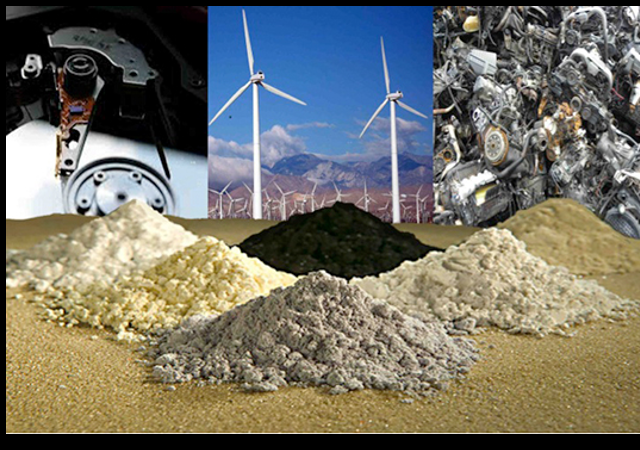
Interesting developments have emerged in the U.S. rare earths and critical minerals supply chain in recent weeks.
To begin, Texas General Land Office Commissioner Dawn Buckingham says significant deposits have been found on state lands in West Texas near the border, and mining operations there are beginning.
She says the state has started mining the minerals in Hudspeth County, which is about 100 miles east of El Paso. She says the minerals have been found just a couple miles north of the Texas/Mexico border and are needed worldwide.
She says the minerals turn into magnets eventually. The program is called “Mine to Magnets,” and she estimates the state will begin producing mines in about 18 months.
“We’re busting China’s monopoly. We’re getting a domestic supply. We’re ensuring our independence and at the same time we’re tens of billions of dollars to public education,” she said.
…She says the state has known about the minerals for a decade “but just didn’t have the ability to process it.” This comes after the state GLO a few decades ago had actually tried to sell that property “to get rid of it,” she said “because there wasn’t any oil and gas there and they didn’t think there was anything else. So it’s the perfect example of how we should retain our state-owned lands because you might not see the value in it today but the full value could show up later when new things get discovered.”
The new Texas General Land Office (GLO) leases give El Paso Minerals Corp. the right to explore more than 1,000 acres in Hudspeth County for heavy rare-earth minerals. The area is part of the Sierra Blanca geologic complex and contains rare-earth-bearing minerals such as yttrocerite, yttrofluorite, and bastnäsite.
Nearby Round Top has known deposits of heavy rare earths (e.g. dysprosium, terbium, and yttrium) and other critical minerals. However, El Paso Minerals’ Frontera project is still in the exploration stage. The company has not yet publicly established the mineral grades, total resource size, or which minerals can be economically mined on the newly leased land.
The new leases expand the Round Top Project, the nation’s most advanced heavy rare earth development, and further the development of the state’s first “Rare Earth Mining District”.
The project contains 16 of the 17 rare earth elements and provides a strategic source of dysprosium and terbium, which are vital for high-performance permanent magnets used in electric vehicles, wind turbines, and missile guidance systems. Round Top plans to begin commercial production in 2028.
“These resources are essential to national defense, advanced manufacturing, and energy technologies. Yet for decades, the United States has depended heavily on foreign adversaries for their supply,” noted the General Land Office.
Covering 1,000 acres in Hudspeth County, the new leases advance Texas’ efforts to establish its first dedicated rare earth mining district.
“Round Top Mountain has already put Texas on the map for domestic rare earth and critical mineral development, with USA Rare Earth serving as the founding partner in advancing this vision. These new leases with El Paso Minerals Corp. build on that momentum and demonstrate what the responsible development of Texas state land can accomplish,” stated Buckingham.
Meanwhile, the aerospace industry is exploring rare-earth-free products.
The NRC [National Research Council of Canada] and several industry partners are evaluating whether zirconium dioxide and other non rare earth ceramic oxides dating back to the 1970s and 1980s can be comparable with modern rare-earth-based coatings.
“Now 50 years later, perhaps with the better instruments and engineering that we have, we can try to improve those materials,” said Rogerio Lima, a senior research officer at the NRC.
European thermal coatings producer Oerlikon Metco said it already sells some rare-earth-free products and has more in development, including zirconia-based thermal barrier coatings made with magnesium and calcium oxides that predate today’s rare-earth-enhanced materials.
Some US thermal-coating suppliers are also exploring non-rare-earth alternatives for less critical components, one industry source said.
These developments align with President Trump’s push to accelerate U.S. critical-minerals development, strengthen domestic processing and manufacturing, and remove China from our supply chains.
Texas is well positioned to translate that agenda into results. The state’s oil-and-gas success shows how long-term resource development, private investment, and supporting infrastructure can turn previously overlooked geology into greater supply-chain security.
Aerospace efforts to replace rare-earth inputs could further reduce China’s leverage over key industrial technologies.
Here’s hoping these efforts succeed.
Donations tax deductible
to the full extent allowed by law.







Comments
The American Way!
Windmills in the photo? Much waste of rare earth minerals could be reduced by eliminating the wind energy industry.
Yes awful
“at the same time we’re tens of billions of dollars to public education”
“Donating”, I presume. A huge mistake. How about donating it to Texas’ school choice program?
They told us the lottery money would go to education in Texas
Then all kinds of excuses
Rare earths in Texas…
Yes, some earths are rare, but not nearly as rare as an honest Democart.
“… an honest Democart [sic].”
A contradiction in terms.
Even after they penned ‘Big Brother???” 🙂
“She says the minerals turn into magnets eventually.”
It’s sort of an electromagnetic abiogenesis.
Here’s Kamala to explain it to us.
Fun Fact: So-called “rare earth minerals” aren’t particularly rare at all.
Uncommon, maybe, and some are quite common.
What has actually made them Rare in practice is that most governments have banned mining of them.
The US actually has enough rare earth minerals in the ground to meet its needs. The problem has been that over-regulation and competition from China have decimated what used to be a strong mining industry.
Leave a Comment