

Appeals Court Rules that Pentagon Can Label Anthropic a ‘Supply Chain Risk’
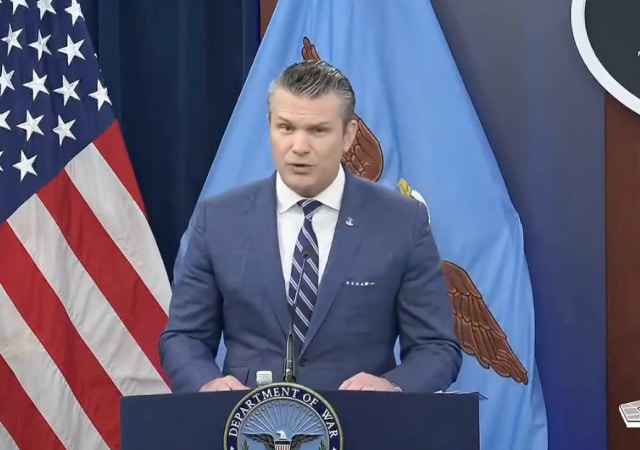
The D.C. Circuit affirmed Sec. of War Pete Hegseth’s central point: The Pentagon need not rely on an AI supplier whose restrictions could interfere with essential military operations.
Back in June, I noted that the U.S. government ordered Anthropic to cut off access to its newest Claude models.
This was done under an export‑control directive barring all “foreign nationals” from using them, citing national security concerns tied to a claimed jailbreak technique that could allegedly bypass safeguards and assist in discovering software vulnerabilities.
Even earlier in the year, my colleague Ben Smith reported that President Donald Trump had ordered every federal agency to cease using Anthropic’s technology, triggering a six-month phase-out and effectively ending the company’s role in classified military systems.
The February move by the Trump administration led to a March lawsuit launched by Anthropic. The San Francisco-based tech firm accused War Secretary Pete Hegseth of designating Anthropic a supply-chain risk (the first U.S. company to bear that label) in retaliation for trying to limit the Pentagon’s use of its Claude chatbot.
Now, a federal appeals court has upheld the Pentagon’s blacklisting of Anthropic from military contracts.
The 2-1 decision by the US Court of Appeals in Washington, D.C. came in a lawsuit by Anthropic challenging its March designation by the Pentagon as a national security supply chain risk, which the startup says has cost it billions of dollars in lost business and damaged its reputation ahead of a highly anticipated initial public offering.
The court’s majority said it was reasonable for the Pentagon to designate Anthropic after it refused to allow its products to be used for autonomous weapons or mass surveillance. It rejected Anthropic’s claim that the Pentagon had retaliated against it for its views on AI safety and ethics.
Siding with Hegseth’s argument that Anthropic’s safety restrictions could compromise military operations, the majority said: “The Secretary raises the deeply sobering prospect of overly constrained AI models shutting down unexpectedly and thus causing important military operations to fail,” in an opinion by Judge Gregory Katsas.
San Francisco-based Anthropic said in a statement Friday that it respectfully disagrees with the decision but remains confident in its position and is considering its options, including review of the three-judge panel’s decision by the full appeals court.
Confirmed: @AnthropicAI = Supply Chain Risk.
The @DeptofWar does what is right for the Country and our Warriors. https://t.co/xERtGRh6Kc
— Pete Hegseth (@PeteHegseth) September 25, 2026
In a nutshell, the federal appeals court upheld that decision, finding that Claude’s built-in restrictions could make it refuse tasks the department considered necessary, thus creating a national-security risk. The court also rejected Anthropic’s claims that the removal was unlawful or violated its constitutional rights.
The court ruled that the Pentagon was justified in its concerns related to national-security functions tied to Claude’s performance.
“Today’s DC Circuit Court ruling completely validates the Department’s position,” the Pentagon’s top spokesman, Sean Parnell, wrote in a social media post.
[…]
“The majority opinion states the Pentagon had “ample support” for its actions. It notes that by Anthropic’s own admission, “the company encodes restrictions into Claude that prevent the model from performing tasks that Anthropic wishes to prevent.”
“The Department reasonably feared that Anthropic might manipulate Claude’s design to prevent it from performing national-security functions that the Department deems contractually authorized and necessary,” Judge Gregory G. Katsas wrote in the majority opinion. Both Katsas and Judge Neomi Rao, who formed the majority, were nominated by Trump. The sole dissenter, Judge Karen LeCraft Henderson, was nominated by Republican President George H. W. Bush.
The judges said that they have “no reason to doubt” that Anthropic acts with “noble intentions” in restricting Claude, specifically with respect to its concerns around privacy and AI safety. But they said the definition of a supply chain risk in this context hinges “on what Anthropic does, not why Anthropic does it.”
JUST IN: A federal appeals court declined to block the Pentagon from blacklisting Anthropic.
The ruling from the U.S. Court of Appeals for the District of Columbia Circuit came in a lawsuit by Anthropic challenging its designation as a supply chain risk. https://t.co/PaPZdlsVSg
— ABC News (@ABC) September 25, 2026
In August, a federal judge in San Francisco struck down a parallel designation under a different law, finding the administration had unlawfully retaliated against Anthropic. U.S. District Judge Rita Lin in San Francisco also blocked Trump’s government-wide ban on Anthropic and Hegseth’s order barring military contractors from doing business with the firm.
The San Francisco ruling leaves a separate legal fight unresolved, but the D.C. Circuit has affirmed Hegseth’s central point: The Pentagon need not rely on an AI supplier whose restrictions could interfere with essential military operations.
When service members depend on a system to work as intended, battlefield readiness must come before a contractor’s preferences and its unhappiness at being deemed a “supply chain risk.”
Donations tax deductible
to the full extent allowed by law.



Comments
Why do we need courts to rule on things like this?
Because we didn’t hang them last time…
Exactly
How nice of the Judicial Branch to ‘allow’ the Executive Branch to make decisions wholly within the purview of the Executive Branch. At some point some ideological, paper mad District CT Judge is gonna get told to pound sand by the Executive Branch and the widespread apoplexy that kicks off will be delightful to watch as the Judiciary is reminded that limits to their power exist and the MOST important limit is the level of respect the Judicial Branch has earned/maintained, lost/squandered in the eyes of the rest of us. When everyone else says ‘No’ the Judiciary has zero independent mechanism to enforce its opinions.
Wow, it actually took a court to decide whether or not an agency that’s tasked with national security could determine if a vendor is or isn’t a security threat?
We really have reached Idiocracy…
the courts have electrolytes….
I don’t know whether Anthropic is a security risk but the DOD or is it DOW now has every right and in fact a responsibility to name them such if they are. They should be explicit and Anthropic should be given opportunities to correct their flaws if they so choose and be restored to the vendor list if they do so.
Why should Anthropic be restored and why would that rest entirely in the hands of Anthropic? Why shouldn’t DoW, like every other entity that fires a vendor for cause, retain the right to continue to bar them at their sole discretion?
They banned them for cause. If that cause is eliminated they can be added back, This is normally how things are done are they not? Remove AI for the moment and just consider suppliers in general. If a supplier does not meet your requirements you don’t buy from them. If they correct the flaws there is no reason not to buy or potentially buy especially if their product or service is superior. To not do so would not be in your own interests.
Anthropic won’t correct them. What they objected to was their AI being used in autonomous weapons systems and mass surveillance. The pentagon is experimenting with autonomous weapons systems, things like perimeter defense systems for drones that can shoot them down without waiting for approval. Anthropic does not want to be responsible if there is a mistake so ok your AI cannot run these then.
That’s fine. Their choice.
So to summarize, the organization that the AI people are begging to regulate them to prevent dangerous abuses have just rejected a supplier who outfitted its product with rules to prevent dangerous abuses.
Doesn’t matter whose side you’re on — as Stan Marsh would say, “This is some Fd up S.”